The remote job market looks great on paper. Work from anywhere, skip the commute, apply to companies across the country from your dorm room. But if you're an international grad, remote doesn't mean simple. You've got visa rules stacked on top of a job market that's already tight for everyone. Good news: you can still win at this. You just need to know the rules and play them smart.

Status | Remote work allowed? | Watch out for |
|---|---|---|
F-1, before OPT starts | No | Off-campus work is off limits your first year |
CPT | Yes, if tied to credit | Work has to connect to your major |
Post-completion OPT | Yes, inside the U.S. only | 20+ hours a week, tied to your field |
STEM OPT | Yes, inside the U.S. only | Your I-983 form has to spell out remote supervision |
H-1B | Yes, inside the U.S. only | Your employer's paperwork has to list your real work address |
It's Not Just AI Making This Hard
Everyone loves blaming AI for the rough grad job market. It's part of the story, but not the whole thing. A May 2026 study from the London School of Economics found that remote work itself predicts the drop in entry-level hiring better than AI does. Makes sense when you think about it: training a junior employee is harder when nobody's in the room to answer their questions.
The numbers back this up. The Federal Reserve Bank of New York reports that recent grad unemployment sits at 5.6%, above the national rate of 4.2%. Four years ago those two numbers were nearly the same. Data from Cadient shows salaried openings open to candidates with zero experience have dropped 73% in four years. Only 1 in 50 jobs will take you with no background now, down from 1 in 15.
If a student is applying to 200 jobs and hearing nothing back, for example, it's not because they're doing something wrong. The math has changed for everyone. That's actually useful to know: it means you need a different strategy, not more of the same one.
Keep Your Visa Status Rock Solid
Here's the part most students get wrong: remote work on OPT or STEM OPT only counts if you're physically in the United States. Working from your home country while your OPT clock runs doesn't fly. U.S. Citizenship and Immigration Services is clear on this, and getting it wrong can cost you your status.
There's also a rule that trips people up: leave the U.S. for more than 5 months and your SEVIS record closes automatically. Your OPT ends with it. If you're planning a long trip home, check your timeline first.
Moving apartments or switching to a new remote setup? Update your address in the SEVP Portal within 10 days. It takes five minutes and it protects you. If a student moves cities for a remote job and skips this step, for example, they're technically out of compliance even though the job itself is fine.
Curious how this looks from the employer's side? Our piece on hiring remote international grads breaks down what companies actually have to think about when they bring you on.
What Actually Gets You Hired
Cold applications alone won't cut it right now. Here's what does the heavy lifting instead.
Get a referral before you apply. A warm intro moves your resume out of the pile and onto an actual desk.
Check the employer's sponsorship history using public H-1B filing data before you spend hours on an application. Don't waste your shot on a company that's never sponsored anyone.
Build something you can show, not just tell. A portfolio, a writing sample, a small project. Entry-level roles now expect proof, not promises.
Keep your credentials easy to verify. Employers move faster when your degree and coursework are documented clearly, which is exactly the gap a service like Scholaro's credential evaluations closes for international transcripts.
If a student spends a week reaching out to five alumni instead of applying to fifty jobs, for example, they'll usually land more interviews. It feels slower. It's not.
Want more on how to actually talk to recruiters about your status? Check out our guide on talking to recruiters about OPT.
Where to Actually Look
Not every job board is worth your time. Here's where to focus your energy.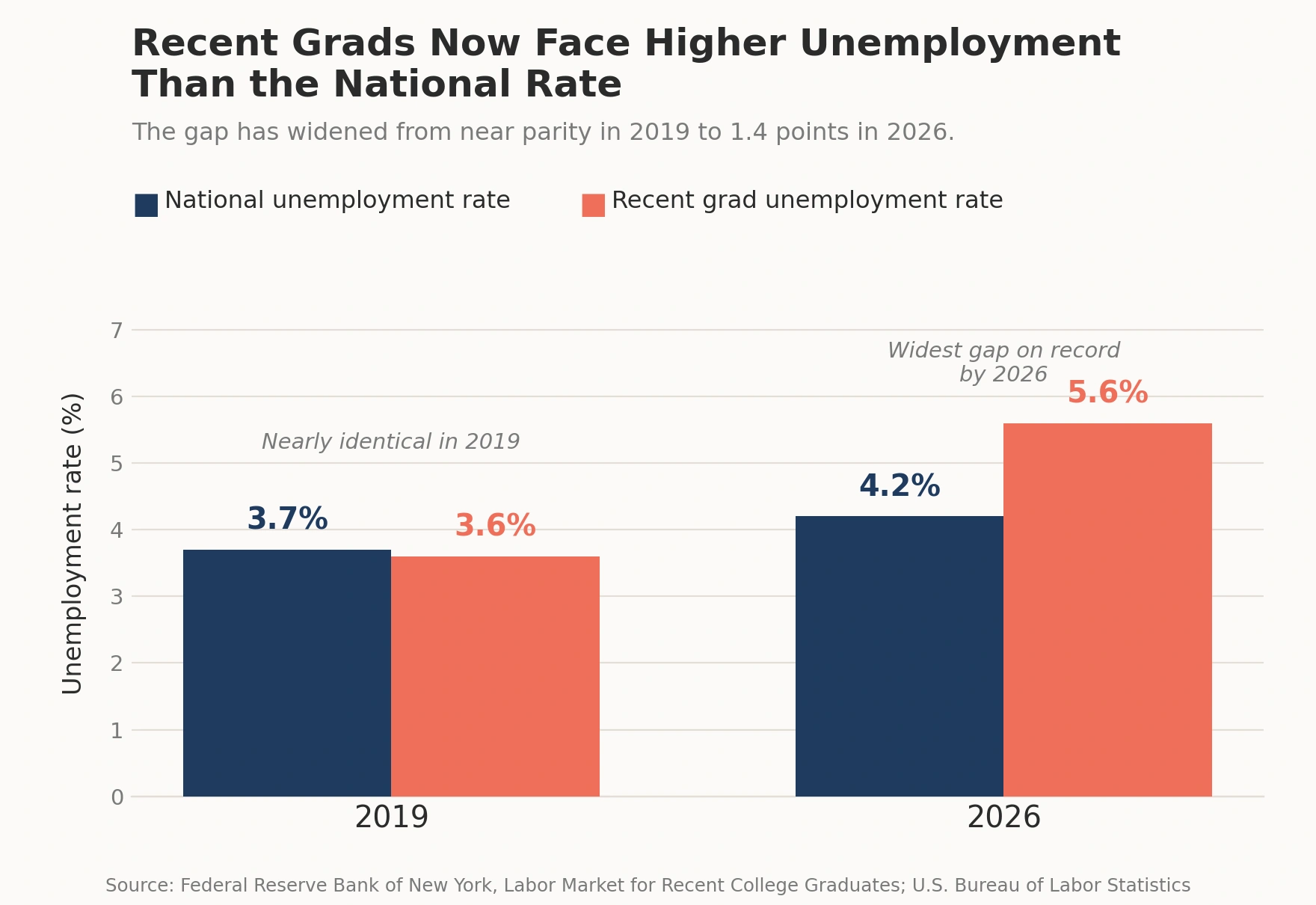
Handshake, if your school gives you access. It's built for college recruiting and has solid remote internship volume.
WayUp and RippleMatch for roles built around entry-level candidates specifically.
College Recruiter, which doesn't require a degree for a lot of its listings.
LinkedIn, for volume and reach, though you'll need to double check sponsorship on each listing yourself.
One thing to remember: when a U.S. company posts a "remote" job, they almost always mean remote within the U.S. It's not an invitation to work from abroad while holding a student visa. Read the fine print before you get excited about a listing.
Play the Long Game
The market's tough right now, for everyone, not just you. Get your paperwork right, lean on real connections instead of cold applications, and pick your job boards with a purpose. That combination beats sending out a hundred identical resumes every time.
 How Universities Use Zero-Waste Swap Programs to Cut Student Costs
 How Industry Partnerships Shape Modern Curricula
 How Post-COVID Aid Programs Help Universities Rebuild Admissions
 Beyond the Acceptance Rate and How Colleges Decide Who Gets In
 How Leveraging Job Placement Strategies Can Reenroll Returning Students