In-state tuition for undocumented students is now the subject of federal lawsuits in 24 states and Washington, D.C. The Justice Department began filing these cases in June 2025. Its 26th lawsuit, filed October 1, targets a single public university in Delaware directly.
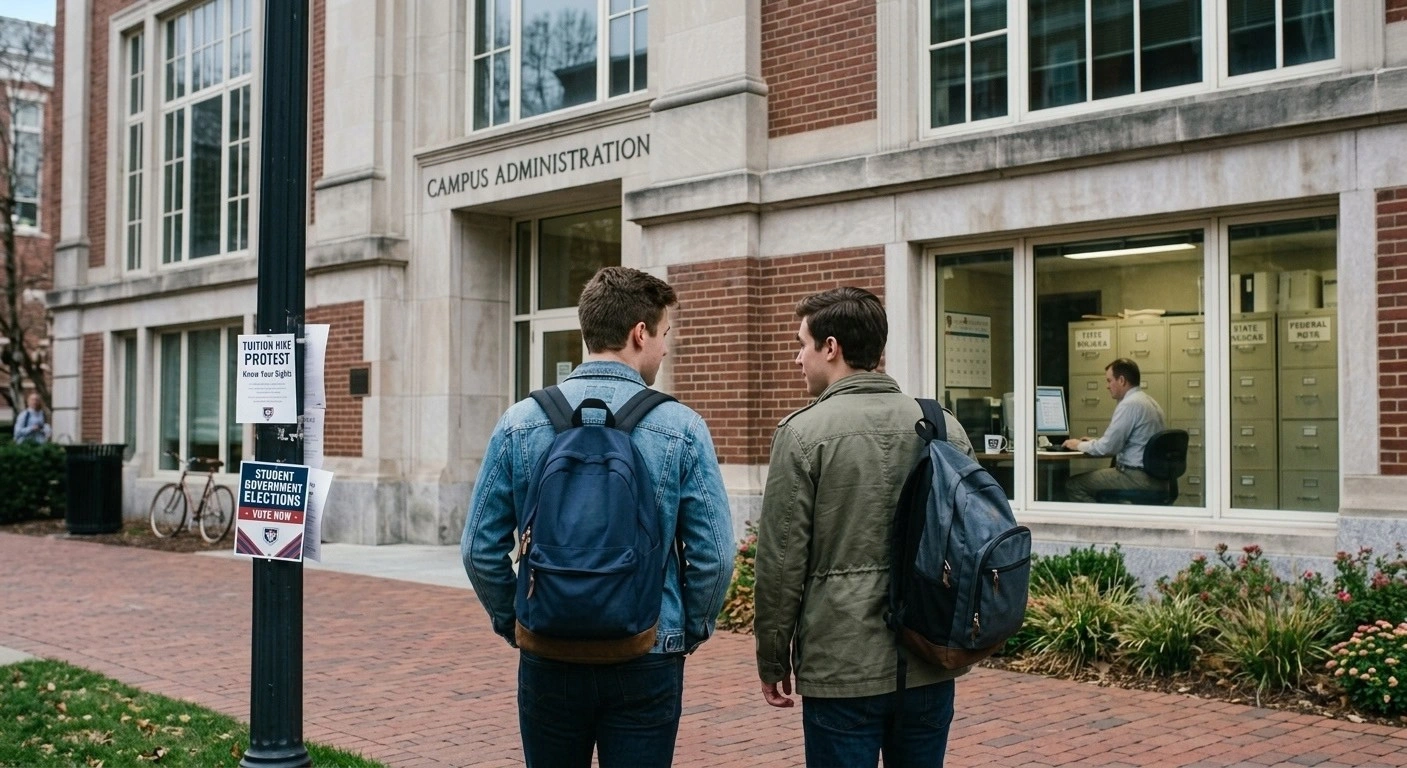
About 180,000 undocumented students live in states where these lawsuits have already ended in-state tuition. At least 220,000 more live in states where cases are still open, according to Inside Higher Ed.
Tuition Can Triple After a Ruling
At the flagship universities in Arizona, New Mexico, Oregon, and Washington, out-of-state tuition runs about three times the in-state rate, according to Higher Ed Dive. Virginia's numbers show a similar gap. Its federal court ruling in October put average in-state undergraduate tuition at $9,987 for 2025–26, compared with $28,591 for out-of-state students.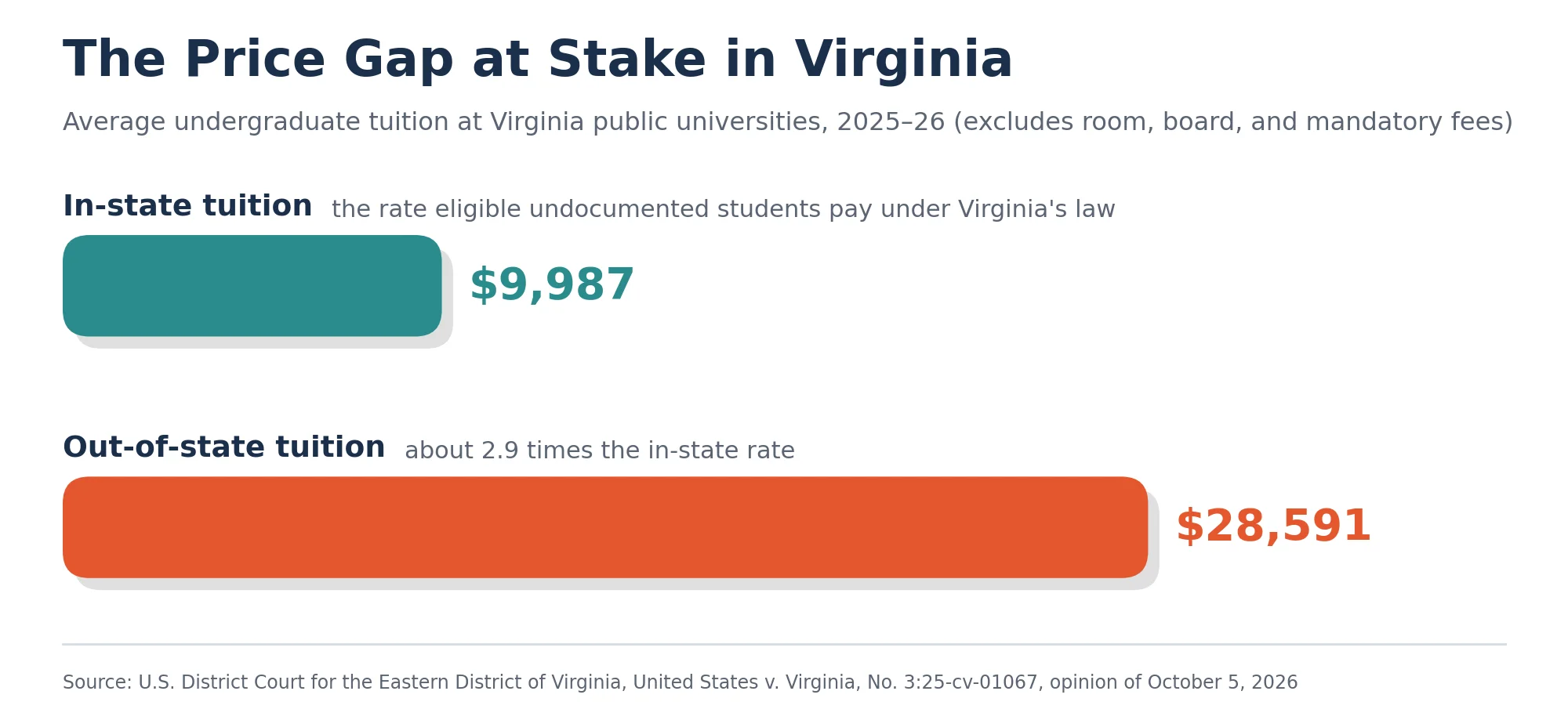
If a student pays in-state tuition at a public university in a state that loses its case, for example, that student can be moved to the out-of-state rate. That happened in Illinois this year. After a July ruling, universities across the state had to update tuition classifications for undocumented students before the 2026–27 school year began.
One 1996 Law Drives Every Case
All of these lawsuits rely on the same federal law. Under it, a state can't give undocumented residents a college benefit based on residence unless U.S. citizens from other states can get that benefit too. The Justice Department argues that in-state tuition for undocumented students breaks this rule. It also argues the policies encourage illegal immigration and put out-of-state citizens at a disadvantage.
States read the law differently. Most of their policies require two to three years at an in-state high school plus graduation, rather than residence alone. That argument has now held up in two courts. In Virginia, the judge ruled that undocumented students qualify based on where they went to high school, not where they live. The Virginia judge also found that the DOJ's reading would force states to drop out-of-state tuition entirely if any undocumented student qualified for the in-state rate, and that no school would do that.
Seven States Have Ended Their Policies
Six states ended in-state tuition for undocumented students after DOJ lawsuits, and Florida ended its policy on its own. Two states have won in court. The rest are still waiting on a decision.
Status | States | Details |
|---|---|---|
Ended by agreement with the DOJ | Texas, Kentucky, Oklahoma, Nebraska, Kansas | States agreed to end their policies rather than fight. Texas agreed in June 2025, the same day the DOJ sued. |
Ended by court ruling | Illinois | July 24, 2026 ruling also blocked state aid and scholarships. A revised state law takes effect for 2027–28. |
Ended by state lawmakers | Florida | Repealed in February 2025, before the lawsuits began. |
Upheld in court | Minnesota, Virginia | Minnesota's case was dismissed in March 2026, and the DOJ appealed. Virginia's law was upheld on October 5, 2026, and the judge expects an appeal. |
Pending | Arizona, Arkansas, California, Colorado, Connecticut, Hawaii, Maryland, Massachusetts, New Jersey, New Mexico, New York, Oregon, Rhode Island, Utah, Vermont, Washington, Washington, D.C. | Policies stay in effect until a final decision. |
Institution lawsuit | One public university in Delaware | Filed October 1, 2026. |
The Higher Education Immigration Portal posts updates on each case on its litigation tracker.
State Grants Face the Same Challenge
Several lawsuits also challenge state grants and scholarships for undocumented students. Washington's case covers both in-state tuition and state financial aid. In Maryland, the DOJ wants a permanent ban on aid and scholarship programs for undocumented residents. Its complaint points to about $9 million a year in tuition savings for these students.
Illinois shows what happens when an aid challenge succeeds. The July ruling also struck down the state's RISE Act aid and Illinois DREAM Act scholarships. The application undocumented students used for state aid is no longer available. About 2,150 undocumented students received state aid through those programs in 2025–26.
Enrollment Data Hasn't Caught Up Yet
No published study has measured how college enrollment changed after states lost in-state tuition for undocumented students in 2025 and 2026. A May 2026 Presidents' Alliance report found the effects aren't yet visible in national data and called for future research on states that end these policies.
The numbers that do exist show how many students are exposed. About 525,000 undocumented students attend U.S. colleges, and nearly three-quarters of them attend public institutions, according to the Higher Ed Immigration Portal. Texas alone enrolled about 57,000 when its policy ended in June 2025. In Virginia, 1,206 students used the state's tuition equity pathway in 2025–26, the same year the DOJ challenged it.
Early reports from the field are anecdotal so far. One Texas college-access nonprofit has seen students delay enrolling since the state's policy changed.
Campus Offices Absorb Each Ruling
The Illinois ruling reached students through campus offices. One public university's financial aid office contacted every student who might be affected and reviewed options including student employment, payment plans, alternative loans, and scholarships. Illinois lawmakers have since amended the law, and the revised version takes effect for the 2027–28 school year. Until then, the tuition and aid changes stay in place.
The DOJ says it has sued every state with a law or regulation granting in-state tuition to undocumented students, and the Delaware case extends that campaign to individual institutions. Federal courts have now reached opposite conclusions on the same legal question, and the Virginia judge expects an appeal. In Illinois, a single ruling changed tuition classifications and aid awards for undocumented students before the next term began.
 5 ways colleges can make career prep 'unavoidable' for students
 The Real Economics Behind Entry-Level Gigs
 Can 3-Year Degrees Solve the Teacher Shortage?
 Does College Public Speaking Really Matter in Today’s Job Market?
 Strategies for Communicating Tuition and Outcomes to Prospective Students