Campus surveillance affects every student who drives through a campus entrance, attends a protest or posts online. License plate readers, stored event footage, education records and social media reviews all create data about where you go and what you say.
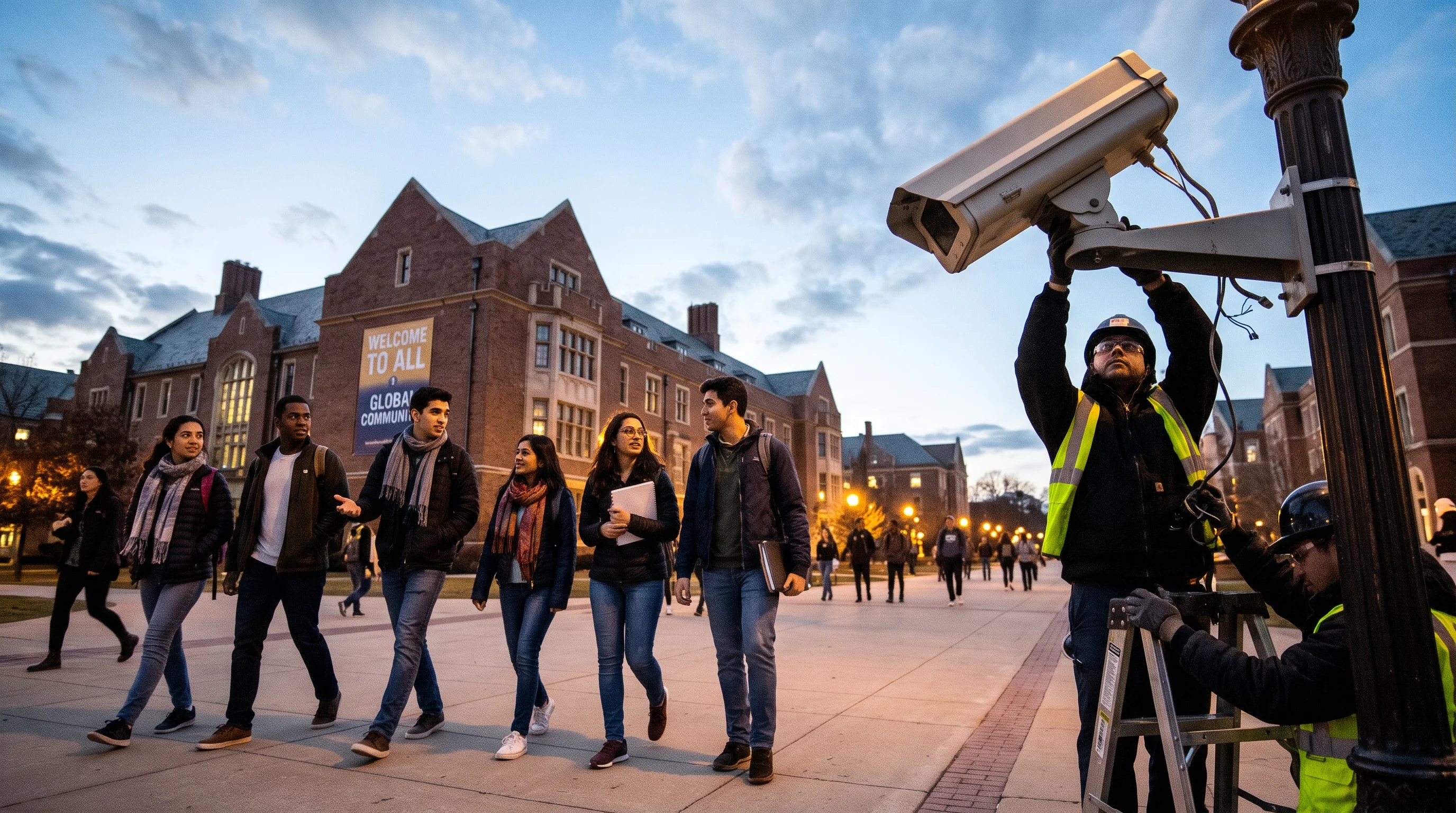
For a U.S. citizen, a citation at a campus rally has no effect on immigration status. For a student on an F-1 or J-1 visa, the same record can reach a federal database. If a student's SEVIS record is terminated, DHS's SEVIS guidance says they must apply for reinstatement or leave the U.S. immediately. The government also cross-checks court records against student data.
Colleges can't change federal reporting rules, but they decide how much extra data they collect, how long they keep it and who can see it.
How Campus Records Connect to Immigration Status
If you're on a student visa, your legal status lives in SEVIS, the Student and Exchange Visitor Information System. In spring 2025, federal immigration authorities ran more than 1 million international student names through a federal crime database, got about 6,400 hits and terminated thousands of SEVIS records. SEVIS data is also available to other federal agencies, including USCIS, CBP and State Department consular offices.
Many hits came from minor police contact, like traffic stops or charges that were later dropped. After dozens of lawsuits, the government said in court it would restore terminated records while it developed a formal policy.
Campus police can play a role too. Since March 2025, at least 15 Florida public universities and colleges have signed 287(g) agreements with U.S. Immigration and Customs Enforcement (ICE), which let local officers carry out certain federal immigration enforcement duties. Under these campus police partnerships, officers can question people about their legal right to be in the country. Officers doing that work answer to federal immigration authorities, not their own department, according to reporting on Florida campus agreements.
Picture a late-night sit-in. At a school without a 287(g) agreement, a police stop there is handled as a campus matter. At a school with one, the officer can ask about immigration status.
What Your School Shares and When
The Family Educational Rights and Privacy Act (FERPA) protects every student's education records. It includes one exception for international students: schools can give DHS the limited information SEVP requires. Another applies to everyone: schools can release properly designated directory information without consent unless you opt out of disclosure. Holland & Knight's FERPA guidance for colleges explains how other requests are handled.
The type of request matters:
A lawfully issued judicial subpoena falls under a FERPA exception.
Administrative warrants don't qualify for that exception.
The Presidents' Alliance notes in its immigrant student privacy guidance that schools don't have to comply immediately with an administrative subpoena.
In July 2025, DHS served Harvard with an administrative subpoena for immigration-related records going back to 2020. It followed months of federal requests for records on the university's international students.
Here is where your main types of data sit right now.
Your data | Who can get it | Can your school limit it? |
|---|---|---|
SEVIS record (enrollment and visa status) | DHS and ICE, plus USCIS, CBP and State Department consular offices | No, federal reporting rule |
Education and conduct records | Generally needs your consent or a lawfully issued subpoena. Directory information, such as your name, can be released without consent unless you opt out | Yes, FERPA protects them, and you can opt out of directory information sharing |
License plate camera data | Other police agencies, including federal ones, depending on sharing settings | Yes, through opt-outs and short retention |
Campus police stops under 287(g) | ICE | Yes, agreements are voluntary for universities, though Florida directed its state universities to sign |
Public social media | State Department consular officers | No |
How Social Media Reviews Work for Visa Holders
In spring 2025, the State Department rolled out "Catch and Revoke." According to an employment law firm's analysis of the State Department AI program, it uses AI to scan social media, news reports and other public information to flag visa holders for review.
The Center for Democracy & Technology says these automated monitoring tools likely rely on keyword filters and are especially error-prone in multilingual settings.
On September 30, 2025, a federal court in Massachusetts issued a First Amendment ruling finding that deporting noncitizen students and faculty for pro-Palestinian advocacy violated the First Amendment. The government appealed, and the appeal is still pending at the First Circuit.
Online Vetting From F-1 to H-1B
Since June 2025, under enhanced social media vetting rules, consular officers review F, M and J applicants' online presence, and applicants must set their profiles to public.
In December 2025, the State Department expanded review to H-1B applicants and their H-4 dependents. If you move from OPT to an H-1B job and travel home for visa stamping, posts from your college years can come up again. Our guide to OPT compliance rules covers staying in status during that move.
License Plate Readers on Campus
Plate readers log vehicles where they're installed, often at campus entrances, so they affect every student who drives. Police at one large public university say these cameras help recover stolen vehicles and locate missing persons.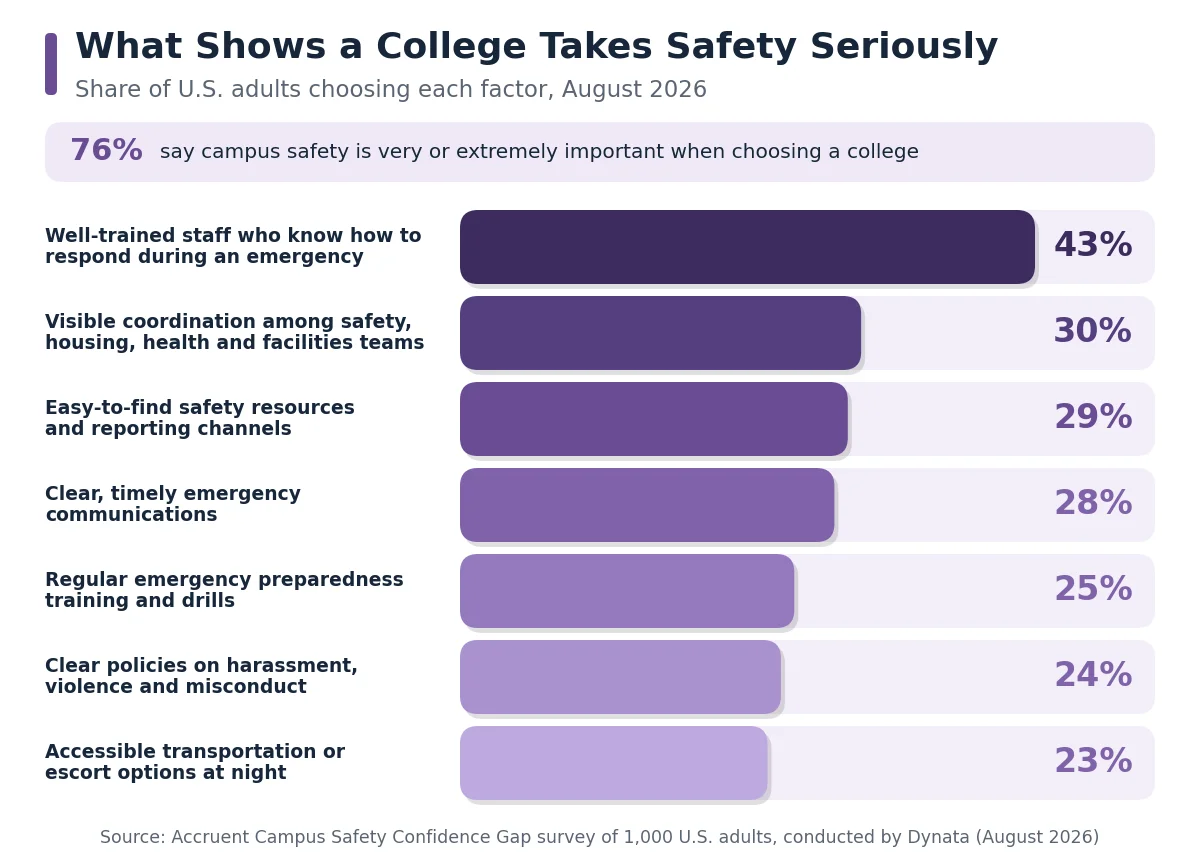
Plate readers can also share what they collect. At one Virginia public university, the cameras photograph every passing vehicle's plate and feed a regional database that city police and other state agencies can search, according to reporting on a campus plate reader network. Coverage of campus Flock camera concerns at another public university notes that federal immigration enforcement also uses Flock data. If you drive to an off-campus event and your campus shares data across a wider network, other agencies may be able to see where your car went.
Schools set these rules differently:
Binghamton University is switching plate reader vendors this fall and cutting data retention from 30 days to 21.
The University at Buffalo's license plate reader policy deletes data after seven days by default and bars use for immigration enforcement.
Foreign Government Pressure on International Students
Some monitoring comes from students' home governments. A 2024 Freedom House campus report calls this transnational repression. It names China's government as the biggest threat to international students in the U.S. and lists Egypt, India, Rwanda and Saudi Arabia among other governments that have done the same.
The pressure often reaches family back home. Chinese students interviewed by Amnesty International described harassment of family members after political activity abroad. A photo from a campus panel can circulate within minutes, and the first sign of trouble might be a late-night call from a parent.
Some of this happens inside student groups. Freedom House found that some Chinese Students and Scholars Associations monitor international students. Amnesty International found deep mistrust inside these student communities, and coverage of its climate of fear findings reports that students worried classmates might report them. Freedom House recommends that schools set up a way for students to report incidents.
How Students Say It Affects Their Speech
In an April 2026 residential center survey by International House Berkeley, 86% of students and scholars who responded said broader issues had influenced their willingness to share views in academic spaces or on social media. Another 83% said conversations about immigration, global conflict or U.S. rules affected how safe they felt expressing themselves.
In a seminar on foreign policy, that can look like a hand that starts to go up, a glance at the lecture capture camera and the hand going back down. If pulling back is leaving you isolated, our piece on student loneliness and belonging covers ways to reconnect.
Questions to Ask Your School
Asking about immigration enforcement agreements alone can feel awkward. Student government, the campus newspaper or a student group can ask together and share the answers.
Start with license plate data: ask if campus police share it outside the school and how long they keep it. Then ask if the school has a 287(g) immigration enforcement agreement, who handles requests for student records and if the school requires a judicial subpoena before releasing them. It also helps to ask if the school stores protest or event footage, and if students have a way to report harassment from a foreign government.
What Campuses Can Control
SEVIS reporting and visa vetting sit outside your school's reach. Cameras, conduct files, police agreements and data sharing don't, and those policies cover every student. Knowing how your school handles them helps you make informed choices about campus life.
 4 Strategies Universities Can Use to Elevate International Placement Rates
 How Skills-Based Hiring is Changing International Student Resumes
 How Coding Stopped Being a Job and Became a Basic Skill
 How State Lawsuits by the DOJ Mean Higher Tuition for Undocumented Students
 5 ways colleges can make career prep 'unavoidable' for students