If you've updated your resume in the last year, you've probably noticed something. Employers care less about the name on your degree and more about what you can actually do. That's skills-based hiring in a nutshell, and it's reshaping how every job seeker builds a resume. For you as an international student, this shift matters even more, because your resume already has to do extra work explaining a foreign degree, a visa timeline, and a career path that doesn't always fit neatly into a U.S. template.

Good news: skills-based hiring can actually work in your favor. Let's break down what's changing and how you can use it.
Old Resume Style | Skills-Based Resume Style |
|---|---|
Degree and university listed up top | Skills section listed up top |
Job duties listed as tasks | Outcomes listed with numbers attached |
Generic keywords sprinkled in | Exact terms pulled from the job post |
Degree does the talking | Proof does the talking |
Why employers stopped screening by degree
Employers got tired of hiring people who looked great on paper and then struggled with the actual job. So a lot of them changed the screening process entirely. Recent research shows plenty of companies have dropped degree requirements for roles where the degree never mattered much in the first place.
According to the National Association of Colleges and Employers, 70% of employers now use some form of skills-based hiring, up from 65% the year before. You can see the full Job Outlook survey for the details. That's not a small tweak. That's most of the job market changing how it reads your resume.
One more thing worth knowing: employers aren't just looking for a list of skills anymore. They want proof you'll actually use those skills correctly on the job. A resume that says "proficient in Excel" gets skimmed past. A resume that says "built a pricing model that cut order errors" gets a second look.
What a skills-based resume actually looks like
Forget the old format where your education sits at the top like a headline. Here's the new order recruiters expect:
Skills section near the top, using the same words the job post uses
Bullet points that lead with a result, not a task
Certifications and projects treated as equal to job titles, not an afterthought
Education listed clearly, but no longer doing all the heavy lifting
If a student switched their resume from "used Excel for data entry" to "built a tracking sheet that cut reporting time in half," for example, that single change is the whole idea of skills-based hiring in action. Same skill, different proof.
And don't worry, you don't need a totally new resume format either. The classic reverse chronological layout still works fine. Recruiters and applicant tracking systems both scan it easily. What's changed is what goes inside each bullet, not the shape of the page.
Why this actually helps you as an international student
Here's the part that matters most for you. Employers know that hiring an international student comes with extra steps. Visa paperwork, sponsorship costs, timing around lottery cycles. That's a real cost on their end, and it means your resume has to earn its spot a little harder than a domestic candidate's does.
Skills-based hiring actually reduces one big source of that friction: your degree. A recruiter looking at a resume with a foreign university name on it doesn't always know how to weigh it. What's that degree worth here? How does it compare? That confusion used to slow things down or knock you out of the pile entirely.
When your skills section leads the resume, the recruiter doesn't have to solve that puzzle first. They see what you can do, in language they already understand, before they even get to the education section. That's a real edge, not a workaround.
A quick, honest note on the visa side: recent H-1B changes from the U.S. Department of Homeland Security shifted the annual lottery to favor higher paying roles. That makes your resume's job even bigger. It has to prove more than qualification now. It has to prove you're worth the higher salary tier that gets you better lottery odds in the first place.
Turning your foreign degree into skill language
Don't just list your degree title and hope for the best. A "Bachelor of Commerce" or "Diplom-Ingenieur" might mean nothing to a U.S. recruiter skimming resumes on a lunch break. Break it down into what you actually learned and did instead.
List specific coursework tied to the job instead of only the degree name
Translate group projects into skills, like "led a 4 person team" instead of "coursework included teamwork"
Mention tools and software by name, since that's what gets you matched in a search
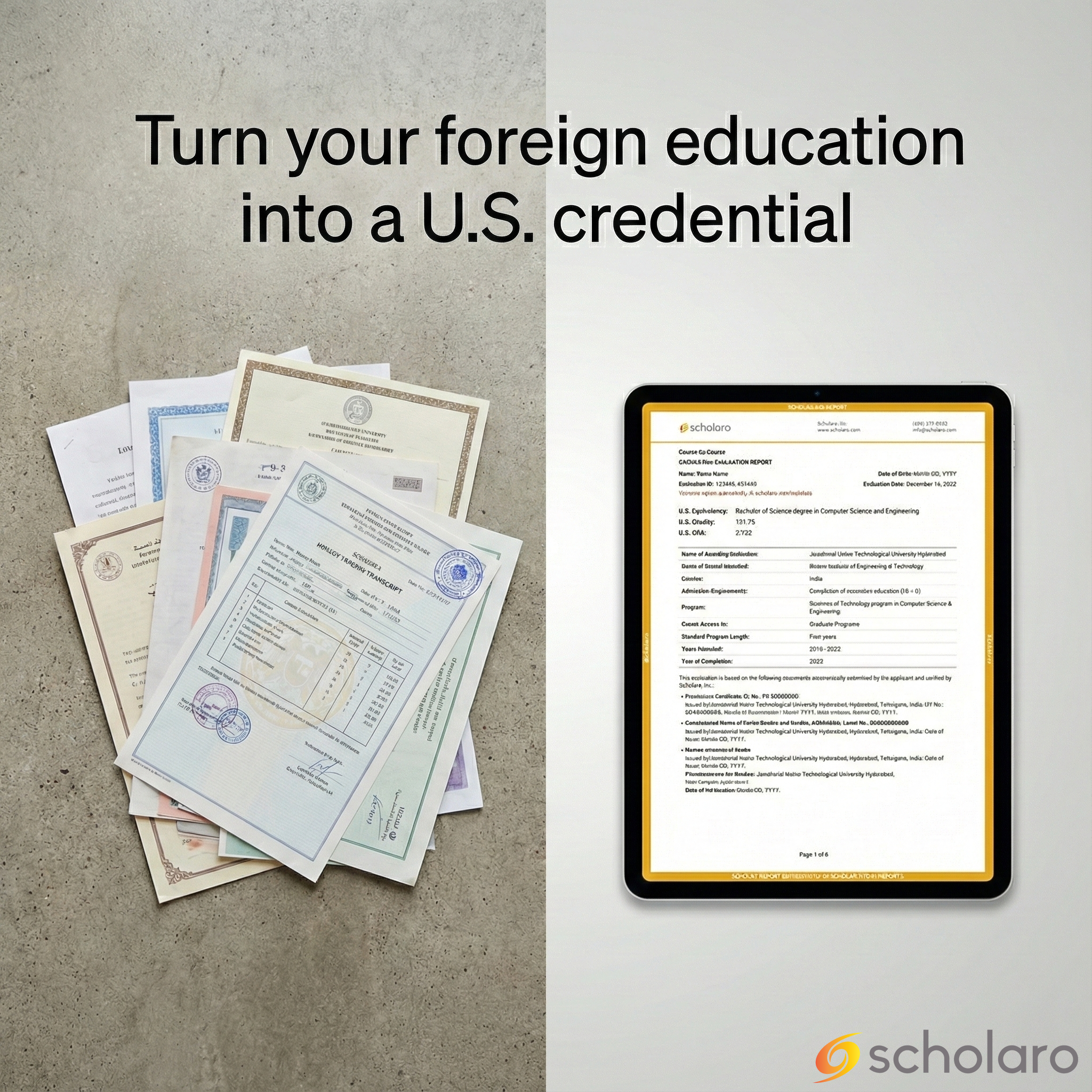
A foreign credential evaluation report can help too, mostly by giving employers a quick U.S. equivalent for your degree. Something like a Scholaro evaluation report lets you add one clean line, such as "evaluated as equivalent to a U.S. bachelor's degree," so your education line does its job in the background while your skills section carries the actual weight of the application.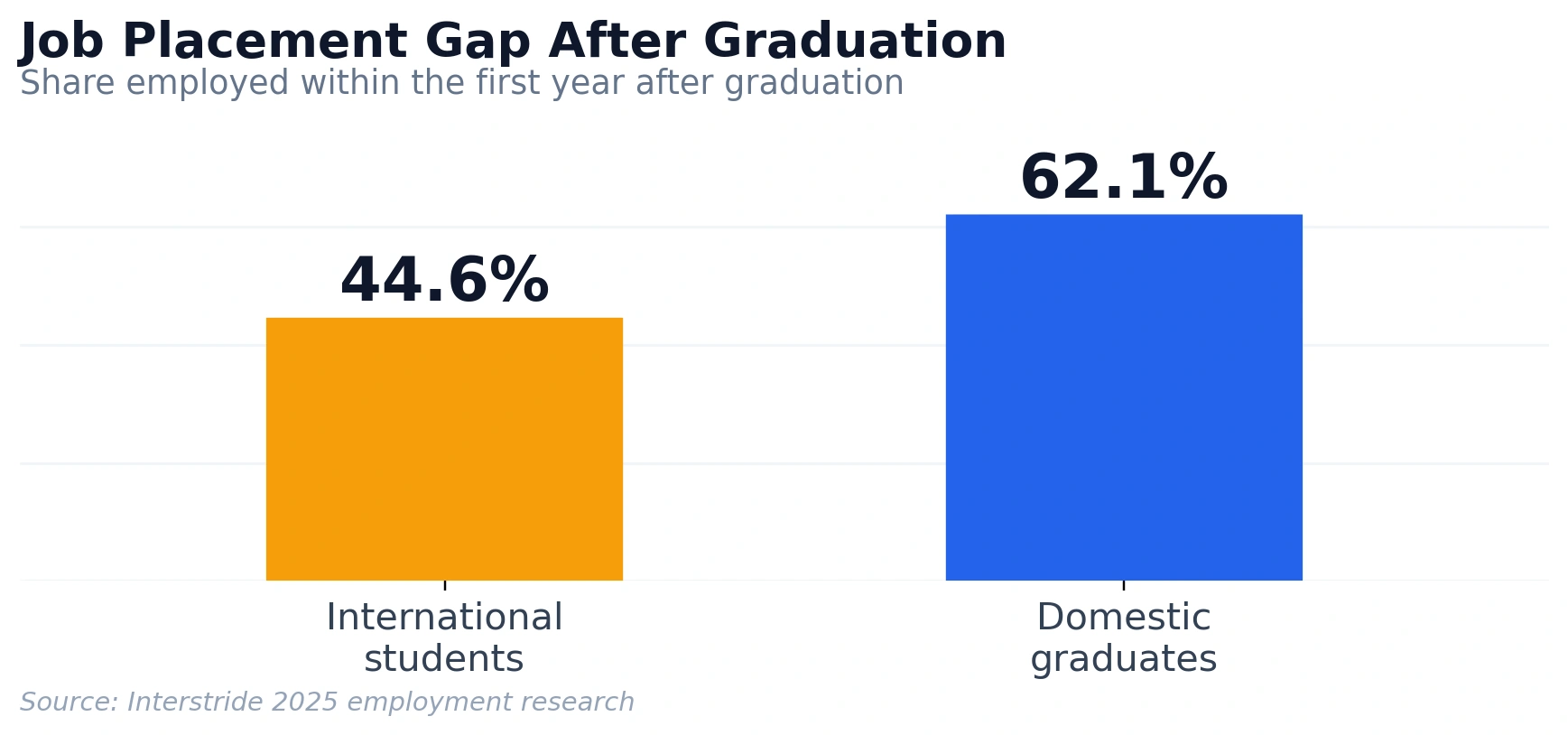
If a student from a three-year degree program worried their resume looked "incomplete" next to a four-year U.S. degree, for example, a credential evaluation clears that up instantly. One sentence, no more guessing.
Building a resume employers actually trust
Put your best proof where it gets seen first. That means:
Lead each role with your strongest measurable result, not your job title description
Use numbers wherever you honestly can, even small ones
Name the tools and platforms you used, spelled out exactly as the job post spells them
Keep your CPT and internship experience front and center, not buried at the bottom
If you're not sure how to frame CPT or OPT experience for a recruiter who's never dealt with it, that's worth a closer look on its own. Check out our guide on explaining OPT to recruiters for the full breakdown.
One more tip that's easy to skip: keep your skills section updated every time you apply. Don't reuse one static resume for every job. Swap the top skills to match each posting. It takes ten minutes and it's the single biggest lever you have.
 How Coding Stopped Being a Job and Became a Basic Skill
 How State Lawsuits by the DOJ Mean Higher Tuition for Undocumented Students
 5 ways colleges can make career prep 'unavoidable' for students
 The Real Economics Behind Entry-Level Gigs
 Can 3-Year Degrees Solve the Teacher Shortage?