International placement rates don't improve by accident. Universities that get this right build the systems before students graduate, not after. Here are four things you can actually put in place, starting this semester.
Support area | Common gap | What works better |
|---|---|---|
Employer access | Generic career fairs | Fairs built around international hiring |
Visa know-how | Left to the student | Built into regular advising |
Alumni ties | Informal, hard to find | Structured mentor matching |
Work pathways | Just CPT or OPT | Layered credit and fieldwork options |
1. Build local employer networks
Most career fairs treat every employer the same. That's the problem. A recent career services research report found a real gap between the partnerships schools have on paper and the job offers students actually land. International students need to know, fast, which companies will actually sponsor a visa.
A few moves that help:
Run a career fair just for employers open to sponsoring international hires
Bring company reps on campus to explain their sponsorship process directly
Partner with your local chamber of commerce for warm introductions
Keep a running list of visa-friendly employers and share it with students
If a student spends a whole semester applying to companies that never sponsor visas, for example, that's months of effort with zero shot at an offer. A filtered list fixes that overnight.
2. Offer visa and career training
Job hunting rules change once a visa is involved. Students need to learn this stuff directly, not figure it out by trial and error.
Cover these basics in your training sessions:
How to explain OPT and CPT to a hiring manager who's never dealt with either
Local job search habits, since cold outreach and networking events work differently by region
Resume formatting that matches what regional recruiters expect
Mock interviews run by actual local hiring managers, not just career staff
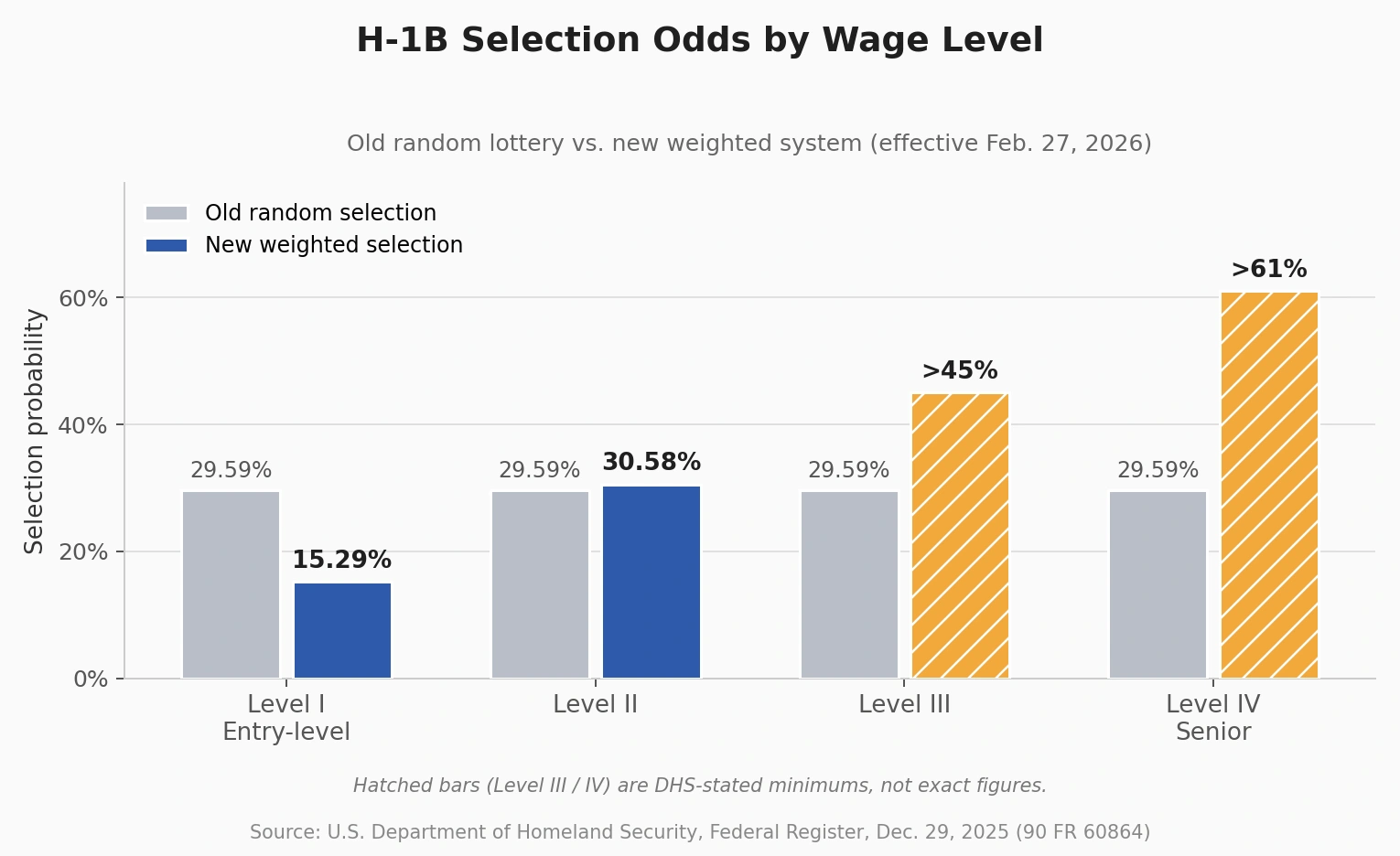
Timing matters here too. Under the new H-1B selection rule that took effect in February, the Department of Homeland Security now weights entries by wage level. A job offer at the top wage tier gives a student roughly a 61 percent shot at getting picked, while an entry-level offer sits closer to 15 percent. That's a big gap, and it means coaching students on wage negotiation now matters just as much as coaching them on the job search itself.
3. Embed alumni mentors
Alumni are an underused resource on most campuses. They've already been through exactly what your current students are facing, and most are happy to help.
Simple ways to put this to work:
Match new students with alumni working in their field and region
Set up shadow days with recent grads at local companies
Build a low-effort online directory so students can ask quick questions
Track and share alumni success stories to make recruiting easier
If a student from a specific country connects with an alum from that same country now working locally, for example, that one conversation often does more than a semester of general advising. It's specific, it's real, and it's someone who's already cracked the code.
4. Provide flexible work-study pathways
OPT and CPT open doors, but they aren't the only tools you have. Students need more than one path to build real experience.
Options worth building out:
On-campus jobs tied to a student's actual career track, not just filing paperwork
Help identifying legal off-campus internships
Academic credit for fieldwork connected to coursework
Short paid or credit-bearing projects with local businesses
Short, structured project-based programs are worth mentioning too. If a program is genuinely unpaid and meets Department of Labor volunteer rules, students may be able to take part without CPT or OPT. That's a solid option for students stuck between authorization periods, though your international student office should confirm on a case-by-case basis since the rules get strict fast.
A student with strong academic performance but zero US work history looks very different on paper once they've completed a fieldwork placement, for example. Employers want proof someone can operate in a US workplace, not just a transcript.
How the four pieces connect
These four strategies work as a system, not a checklist. Employer networks feed the training. Alumni mentors reinforce both. Work-study pathways give students proof to show employers.
Build one piece and placement rates move a little. Build all four and the gains stack.
Scholaro evaluates foreign credentials for employers who need a clear read on a candidate's degree before they consider sponsorship. That step carries as much weight as everything above it.
 How Skills-Based Hiring is Changing International Student Resumes
 How Coding Stopped Being a Job and Became a Basic Skill
 How State Lawsuits by the DOJ Mean Higher Tuition for Undocumented Students
 5 ways colleges can make career prep 'unavoidable' for students
 The Real Economics Behind Entry-Level Gigs