
So you landed the internship. That's the easy part. The hard part is turning your internship into a full-time job before your work authorization runs out, and for international students, that's real math with a deadline attached.
You've got a set number of months on OPT. Every conversation you have with your manager either buys you time or costs you some. Here's how to actually make the conversion happen, and what it looks like specifically for you as an F-1 student.
The Internships Getting the Most Attention Right Now
Before we get into strategy, it helps to know where the action is. Tech, finance, and consulting keep pulling the biggest share of internship hiring, and within tech, a few specific tracks dominate.
Field | Market Demand / Share | What It Means for You |
|---|---|---|
Software Engineering | Largest single tech category | Biggest single category, lots of competition but also lots of open roles |
Data Analytics | High and growing | Growing fast, pairs well with a STEM OPT extension |
Cybersecurity | Smaller, specialized pool | Smaller applicant pool, so fewer candidates competing per opening |
Finance and Consulting | Top-tier, outside tech | Consistently among the highest-hiring sectors year over year |
Business and Marketing | Moderate, high volume | Conversion odds swing a lot by team, so ask early |
Why Internships Turn Into Real Job Offers
Employers use internships to test drive people before they commit. It's cheaper and safer than hiring a stranger off a resume. According to the National Association of Colleges and Employers, the average intern-to-full-time conversion rate hit its highest point in five years for the 2024-25 cycle, per its latest internship report, and acceptance rates climbed right along with it.
Translation: employers want to convert you. Your job is to give them a reason.
An intern who just does what's assigned and clocks out at 5 is easy to forget by September. An intern who asks for extra work and checks in with their manager every couple of weeks is the name that comes up when headcount opens.
Before You Even Start: Pick Smart and Show Up Ready
Conversion starts before day one.
Check if the company has sponsored H-1B workers before. A quick search on the company name plus "H-1B sponsor" tells you a lot.
Ask about sponsorship policy at the offer stage, not three weeks before your internship ends.
Read up on your role so you walk in already speaking the team's language.
During the Internship: Act Like You Already Work There
This is the part people underestimate. An internship is a long interview that happens to pay you.
Take ownership of small tasks early. Don't wait for permission to do more.
Ask for feedback often, and actually apply it. Managers notice who listens.
Build relationships outside your immediate team. Full-time hiring decisions often involve people you've never worked with directly.
Keep a running list of what you've shipped. You'll need it later.
Sticking to your direct manager all summer gets your name onto one desk. Grabbing coffee chats with people two teams over gets your name onto five desks. Guess who gets the callback.
Networking abroad works differently than it does back home, and it's worth doing right. Our networking guide walks through outreach strategies built for international students.
Speak Up: Tell Them You Want to Stay
Here's the mistake that trips up so many interns: they do great work and just assume someone will notice and offer them a job. That's not how it works.
Say the words out loud. Tell your manager, clearly, that you want to convert to full time. Say it more than once over the summer, and again in your exit interview.
Set specific expectations too. Ask what "getting an offer" would actually require from you, in concrete terms, so you're not guessing.
The short version: interns who put in visible effort are converting at a better clip than they have in years. The opportunity is real if you treat it like one.
The Visa Clock No One Talks About
Here's where this gets different from the advice everyone else is reading.
Most F-1 students use post-completion OPT after graduation, which gives you 12 months of work authorization. STEM grads can add up to 24 more months on top of that with a STEM OPT extension.
If your employer files your H-1B petition on time, cap-gap protection covers you, but the rules changed in a way a lot of people still don't know about. A DHS cap-gap rule that took effect in January 2025 moved the automatic cutoff from October 1 back to April 1. That means your status and work authorization carry through automatically only to April 1 of the fiscal year, or to your petition's approved start date if that comes first. If your petition is still sitting with USCIS on April 1 without a decision, the automatic coverage stops right there. It only stretches through to October 1 without a break if your petition gets approved by April 1.
On top of that, the U.S. Department of Homeland Security published a separate final rule in July 2026 that removes the old open-ended duration of status for F-1 students and shortens the grace period after OPT ends from 60 days down to 30. That rule takes effect in September 2026.
Two regulatory changes to know: Cap-gap coverage now runs automatically only through April 1, not October 1, unless your H-1B petition is fully approved before that date. And starting September 2026, the post-OPT grace period drops from 60 days to 30. Loop your employer in on filing dates early.
Translation: getting your employer to file early and push for a fast decision matters more now than it used to, and raising the sponsorship conversation early gives everyone more room to work with. If you wait until your OPT is about to expire to bring it up, you're negotiating from a weak spot. Raise it three months out instead, and both you and your employer have time to plan.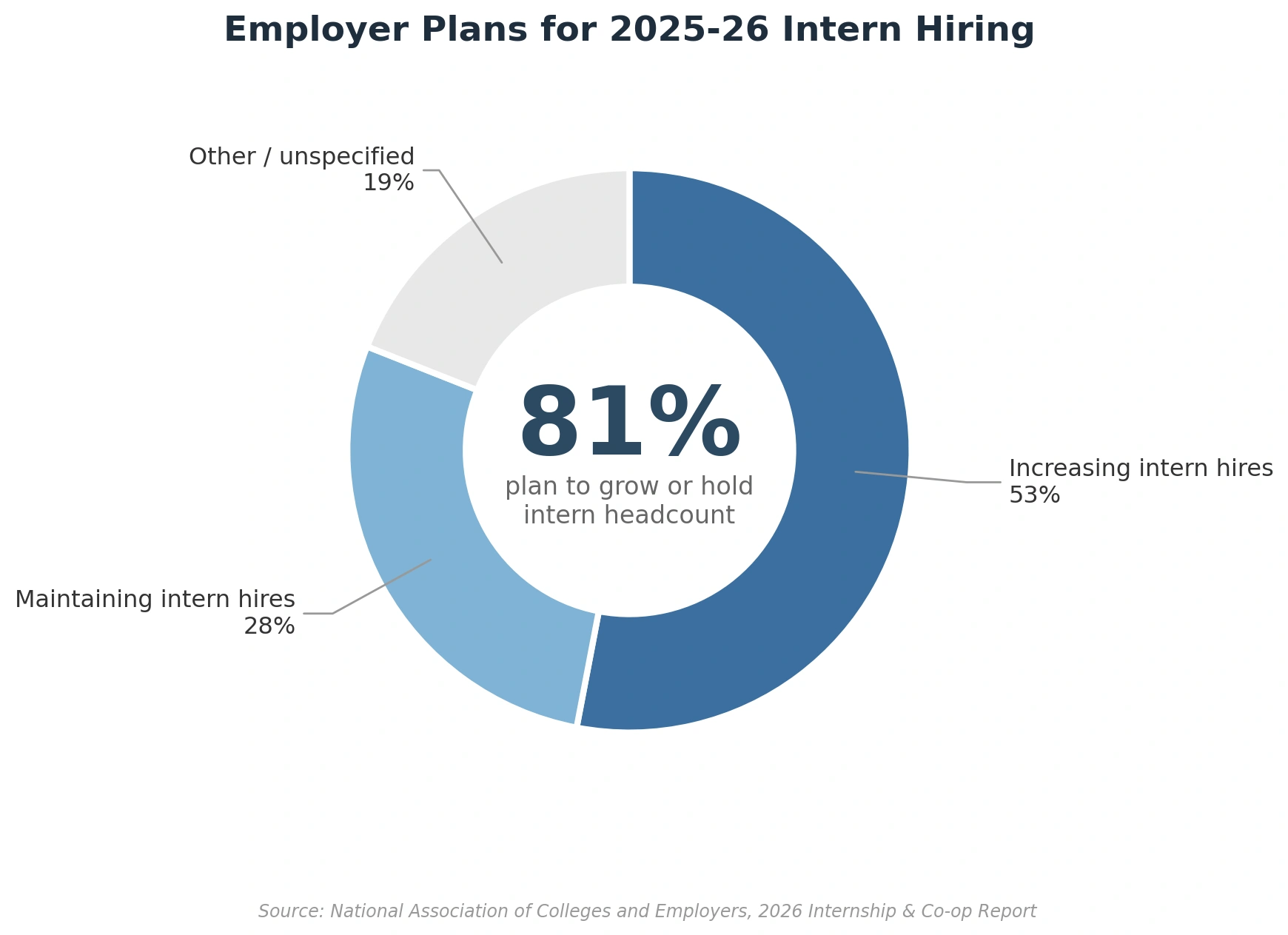
If your field of study is close to your job offer, credential evaluation usually isn't the holdup here since that mostly applies to admissions, not employment authorization. Still, it's worth knowing your documentation is in order before decision season.
The Final Stretch: Your Last Few Weeks
A month before your internship ends, start closing the loop.
Ask directly about next steps and timing for a decision.
Wrap up your projects cleanly. A messy handoff is the last impression people remember.
If sponsorship is on the table, confirm your employer's plan for the H-1B registration window in March.
Common Mistakes That Kill Your Shot
Waiting until the final week to mention you want a full-time offer.
Staying quiet and heads-down instead of building visibility across the team.
Assuming sponsorship is included without confirming it directly.
Treating cap-gap as automatic without checking your petition's actual filing and decision dates.
If It Doesn't Work Out
Sometimes the offer just doesn't come, and that's not always about your performance. Budgets freeze. Teams get restructured. It happens.
If you've still got OPT time left, keep applying elsewhere. If you're STEM-eligible and haven't used your extension yet, that buys you more runway. And if this year's H-1B lottery doesn't go your way, there's always next year's cycle.
One rejection isn't the end of the story. It's a data point.
Make the Summer Count
The students who convert aren't smarter or luckier. They just treated the internship like the job from day one, spoke up early, and paid attention to their timeline instead of hoping it would sort itself out.
Do that, and you give yourself the best possible shot, on your own terms.
 How Universities Use Zero-Waste Swap Programs to Cut Student Costs
 How Industry Partnerships Shape Modern Curricula
 How Post-COVID Aid Programs Help Universities Rebuild Admissions
 Beyond the Acceptance Rate and How Colleges Decide Who Gets In
 How Leveraging Job Placement Strategies Can Reenroll Returning Students