If you are an international student, you already know the job search comes with an extra layer most classmates never think about. You are racing a clock, not simply chasing an offer. Here are 5 key job search secrets for international students that actually move the needle, no luck required.

Status | Duration | What it needs |
|---|---|---|
CPT | Before graduation | DSO approval, role tied to your major |
OPT | 12 months | No employer cost or paperwork upfront |
STEM OPT extension | Plus 24 months | Employer enrolled in E-Verify |
H-1B | 3 years, renewable | Sponsorship and a lottery win |
Keep that table in your head as you read. Each secret below connects back to it somehow.
1. Master your work authorization timeline
A lot of students treat OPT as the starting line. It is not. Curricular Practical Training, or CPT, lets you work in a role tied to your major while you are still enrolled, and it does not use up any of your OPT time.
Your DSO has to sign off, and the job needs to connect to your field of study, but that is a low bar for most internships or co-ops. If a student lines up two CPT internships before senior year, for example, they walk into the OPT job search with real US work experience already on the resume instead of starting from zero.
Once OPT starts, set a real deadline. Count backward from your OPT end date and give yourself at least four months of active searching before it, not two. If you qualify for the STEM OPT extension, apply the moment you are eligible, since USCIS OPT rules require you to file before your current OPT expires.
Something bigger is shifting behind the scenes too. The Department of Homeland Security finalized a new rule that changes how F-1 status duration gets measured, taking effect September 15, 2026. It will not upend your search overnight, but it is worth a quick check with your DSO so you know exactly where your status stands.
2. Target employers with a real sponsorship track record
Here is a mistake I see constantly: students apply to companies with zero idea if that company has ever sponsored a visa. That is like showing up to a restaurant that does not serve food you can eat and hoping they make an exception.
Check first. The USCIS Employer Data Hub shows you exactly which companies filed H-1B petitions and how many got approved. It takes five minutes and saves you weeks of wasted applications.
Looking specifically at new-hire approvals for fiscal year 2025, Amazon led all employers, followed by Meta, Microsoft, and Google. That was the first year US tech companies held all four top spots for new H-1B hires, a real shift away from the outsourcing firms that used to dominate that list. This does not mean you should only apply to four companies. It means you now know what a real sponsor track record looks like, so you can check any employer against that bar before you invest hours into an application.
A few more things worth knowing right now. In 2026, the H-1B lottery started weighing wage levels, so roles offered at a higher wage level get more entries in the drawing. Targeting a senior or specialized posting can genuinely improve your odds, along with your paycheck. On the fee side, the $100,000 supplemental charge that made headlines only ever applied to petitions filed for candidates outside the US, never to an OPT-to-H-1B change of status while you are already here. A federal court struck the fee down as an unlawful tax back in June 2026, and as of late July 2026 an appeals court refused to let the government keep collecting it while the case continues. That fight is not fully over, but for now the fee is not being enforced. Either way, if you are on OPT, that fee was never your problem to begin with.
Do not sleep on alternative routes either. Universities, nonprofits, and government research institutions can sponsor H-1B status without touching the lottery at all. If you have research publications or awards in your field, the O-1 visa for people with extraordinary ability has no lottery whatsoever. And going back for a second master's or a PhD is not a fallback plan. For plenty of students, it is a smart way to buy time while building a stronger case for sponsorship later.
3. Handle the sponsorship question like a pro
This is the question that keeps students up at night. Do you check "Yes" on the application, or wait and bring it up in the interview?
Answer the form truthfully, every time. If it asks "are you legally authorized to work in the US," you say yes while on OPT. If it asks "will you now or in the future require sponsorship," you say yes too, since OPT eventually runs out and H-1B sponsorship is the likely next step. Hiding this does not protect you. It just means an offer gets pulled later when the paperwork catches up with the truth.
Where you have real control is how you frame it out loud. A recruiter's first reaction to the word "sponsorship" is often cost and hassle. Your job is to correct that impression fast.
Try something like this on your first call: "I have up to three years of immediate work authorization through OPT, which means no paperwork or sponsorship cost for you right now. Longer term, I would love to explore H-1B sponsorship if we are a great fit."
That one sentence does a lot of work. It answers the concern before the recruiter even has to ask, and it puts the timeline in their language instead of yours.
4. Say out loud what makes you different
You have something most domestic candidates do not: a genuinely global view of your field. Stop treating that like a footnote.
Put it where the hiring manager cannot miss it. If a student studied logistics abroad before coming to the US, for example, that international sourcing experience belongs in the first few lines of a resume, not buried at the bottom under "additional information."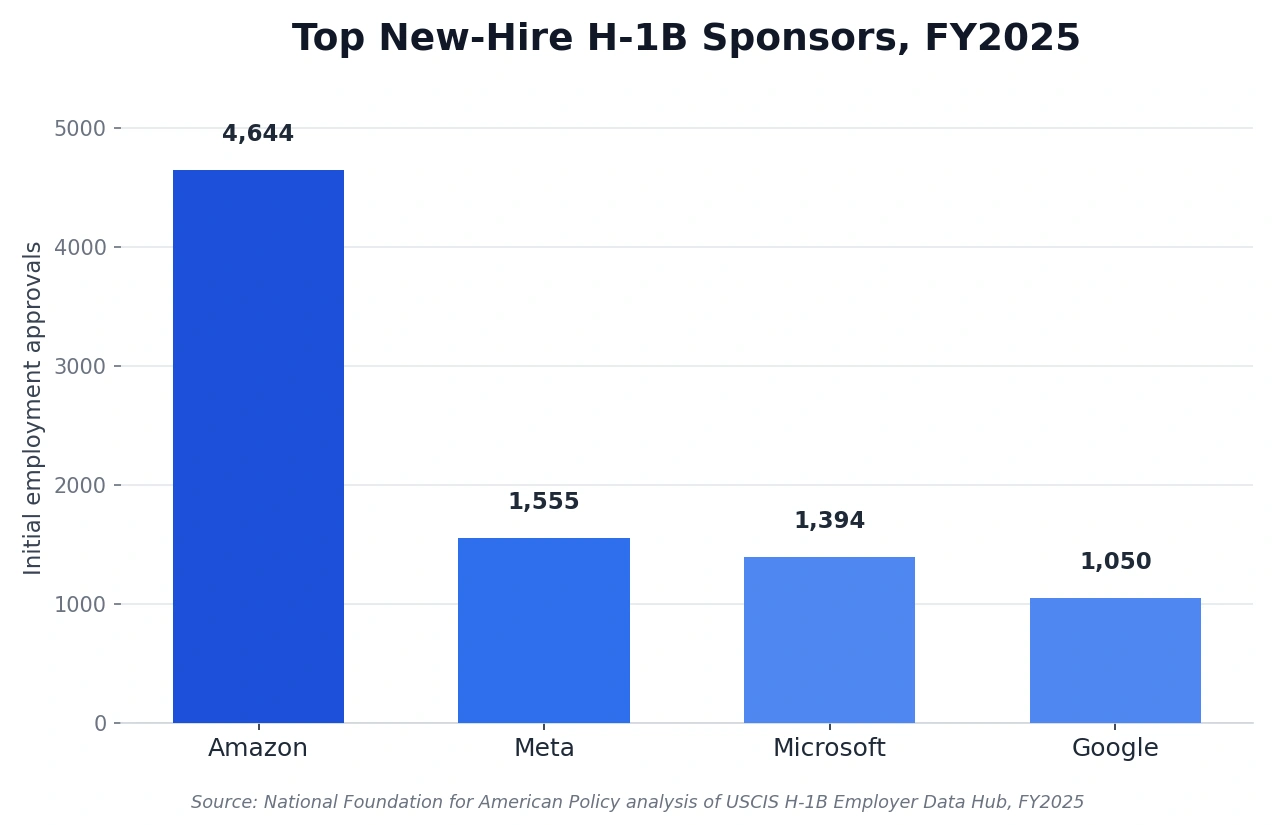
Think about it from the employer's side for a second. Sponsoring you costs them money and paperwork. They are doing it because you bring something the local talent pool does not. So name that thing. Loudly.
5. Build real relationships, not cold applications
Cold applications are rough right now. Recruiters are drowning in resumes, and most postings get flooded within hours. Referrals cut through all of that.
Referrals make up a small slice of total applicants but land a disproportionate share of actual hires, and candidates who get an introduction from someone inside the company interview at far higher rates than candidates applying cold. That gap is too big to ignore.
Alumni are your best shortcut here. They already went through the visa process, they know how your school shows up on a resume, and they are usually happy to help someone from the same program. Start with your alumni network guide and look for graduates working at companies you actually want to join.
How to ask for an informational interview without sounding weird
Find someone specific, not a random title. A name beats a department every time.
Keep the message short and ask for one thing, like fifteen minutes on their path into the role.
Show up with a real question. Something like "how did you approach sponsorship conversations with your manager?" gets a real answer.
Send a thank you note after. It takes two minutes and people remember it.
If a student sends a connection request with no ask attached, for example, it usually goes nowhere. People respond to a clear, small request. They ignore vague ones.
Mistakes that quietly kill a job search
Applying to a company with no idea if they have ever sponsored a visa
Hiding your international experience instead of leading with it
Treating networking as a one-time favor instead of an actual relationship
Waiting until OPT is nearly gone to start the sponsorship conversation
What to do this week
Pick one employer from the data hub and check their filing history. Message one alum. Rewrite the top line of your resume so your international experience leads, not trails. Small moves, done this week, beat a perfect plan you never start.
Immigration policies shift frequently. Always verify specific timelines and requirements with your Designated School Official or an immigration attorney before making a decision.
 How Universities Use Zero-Waste Swap Programs to Cut Student Costs
 How Industry Partnerships Shape Modern Curricula
 How Post-COVID Aid Programs Help Universities Rebuild Admissions
 Beyond the Acceptance Rate and How Colleges Decide Who Gets In
 How Leveraging Job Placement Strategies Can Reenroll Returning Students