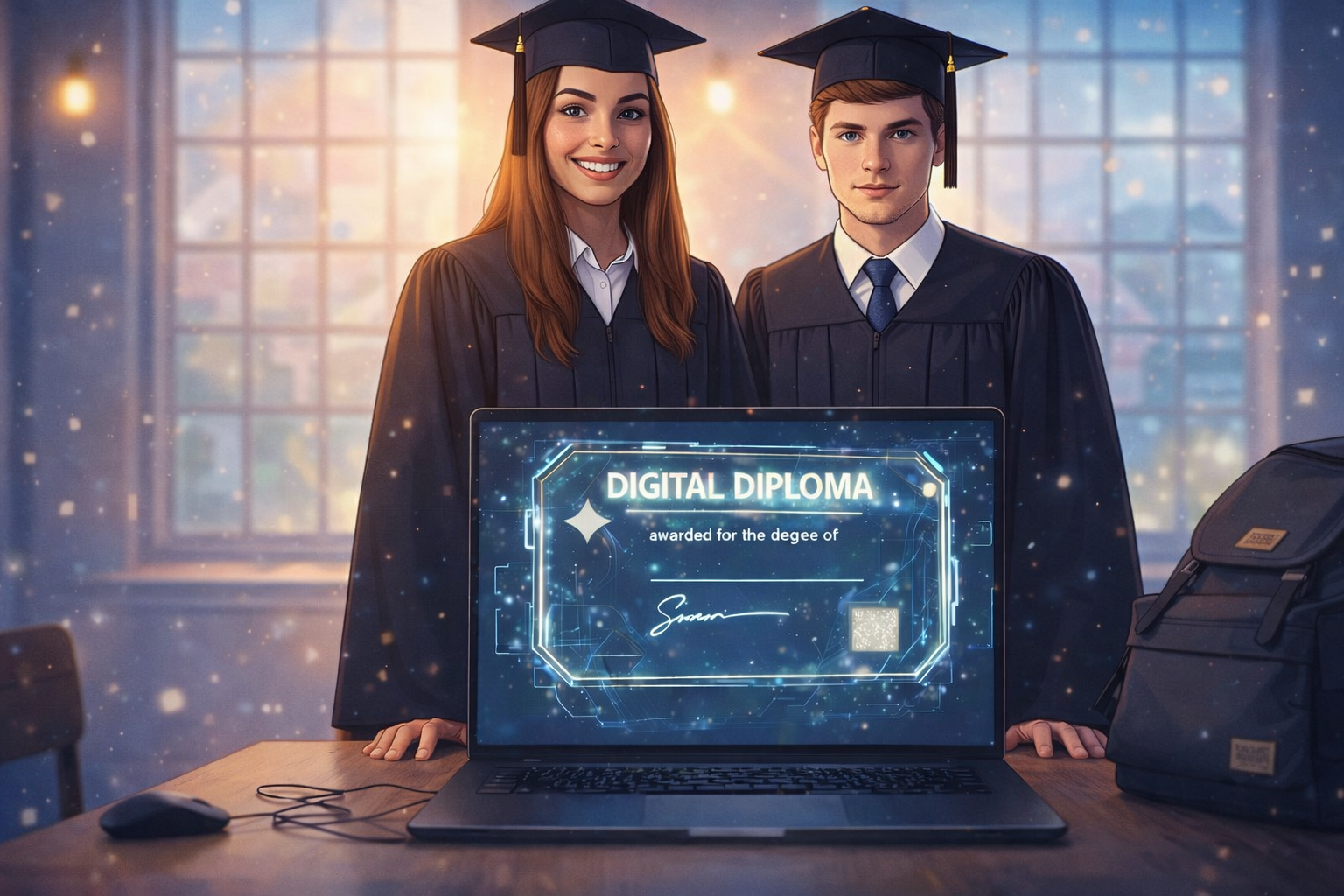
A digital diploma is the electronic version of your academic credential. It contains the same information as a paper diploma but includes verification technology that proves its authenticity. Major U.S. universities like MIT, UCLA, and Temple University now issue digital diplomas alongside paper versions. If you're applying to graduate school or entering the job market, you need to understand how they work and whether they'll be accepted.
What Makes a Digital Diploma Different
A digital diploma is not a scanned copy of your paper certificate. It's a secure electronic file containing your degree information, graduation date, and institution details. The file includes cryptographic signatures and unique identifiers that let anyone verify its authenticity in seconds.
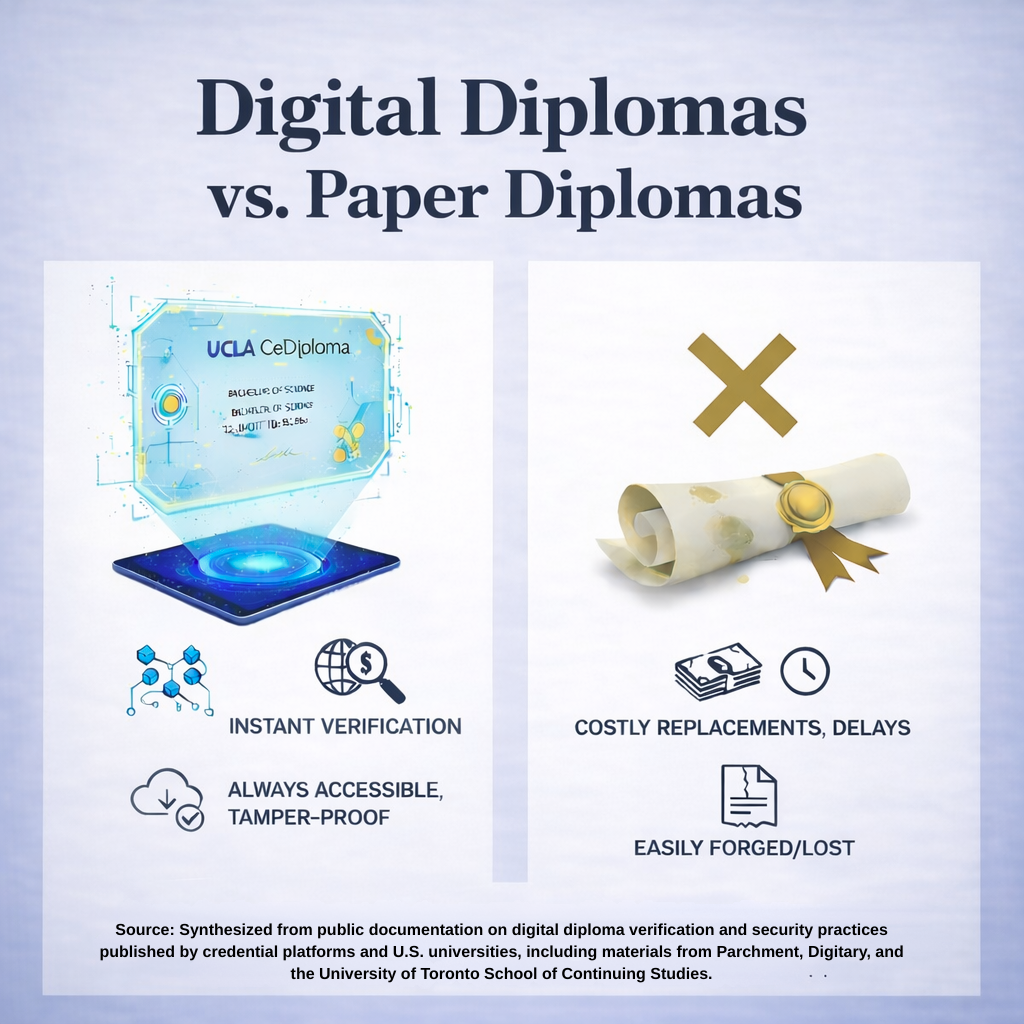
UCLA issues what it calls a CeDiploma. Each one has a unique 12-digit identifier. Employers or graduate schools enter that code on UCLA's validation page to verify authenticity instantly. The document is digitally signed and encrypted, making it tamper-proof.
Paper documents can be forged, lost, or damaged. Replacement certificates cost between $25 and $150 each time, with delays and risk of loss in the mail. Digital diplomas eliminate these problems. Once downloaded, your credential is always accessible and verifiable.
Some institutions use blockchain to secure their digital diplomas. MIT became one of the first universities to issue recipient-owned virtual credentials using Bitcoin's blockchain. With blockchain, a record of your diploma exists on a distributed ledger that cannot be altered or deleted.
How Verification Works
Three parties are involved: the issuing institution, you, and the verifier (an employer or graduate school).
When your university issues a digital diploma, it creates a cryptographic signature tied to your credential. According to Diplomasafe, anyone can access the blockchain and verify a certificate by comparing the digital signature with the one recorded on the blockchain. Employers and schools can confirm validity independently, without calling the registrar's office.
For credentials not on blockchain, verification works through the issuing institution's portal. You share a link or unique code with the verifier, who enters it on the university's website and gets instant confirmation.
The National Student Clearinghouse is the trusted source for education verification in the U.S., covering most colleges and universities. Many employers and graduate programs use it to confirm degrees.
Traditional verification often takes days or weeks. According to Certifaction, the average waiting time per verification request at an educational institution is 60 minutes, and employers typically wait one to two weeks. Digital verification cuts that to seconds.
Do U.S. Universities Accept Digital Diplomas?

Yes. U.S. universities accept digital diplomas from accredited institutions. The format of your credential doesn't determine its legitimacy. Accreditation does.
When you apply to graduate school, admissions offices care about two things: whether your degree came from an accredited institution and whether you completed the requirements. A digital diploma from an accredited university carries the same weight as a paper one.
According to U.S. News, students in online programs typically earn the same degree as on-campus students, and the diploma usually doesn't state how the degree was earned.
Regional accreditation is the gold standard. The Higher Learning Commission, the Middle States Commission on Higher Education, and the WASC Senior College and University Commission are among the most recognized bodies. If your institution holds accreditation from one of these, your digital diploma will be accepted.
Be cautious of diploma mills. According to OnlineU, some schools try to appear legitimate by claiming accreditation from fictitious agencies. Always verify your institution's accreditation through the U.S. Department of Education database before enrolling.
How Long Are Digital Diplomas Valid?
Digital diplomas from accredited institutions don't expire. According to UCLA, once downloaded, the digital diploma is valid for life.
This is different from technical security certificates used for websites. SSL/TLS certificates currently have a validity period of about 398 days, dropping to 47 days by 2029. Academic credentials follow different rules entirely.
The underlying verification infrastructure may change over time, but your credential should remain verifiable. Blockchain-secured diplomas are particularly resilient because the verification data sits on a distributed network rather than a single server.
Best practice: Download your digital diploma and store it in multiple locations, including your computer, cloud storage, and an external drive.
The Risks You Should Know
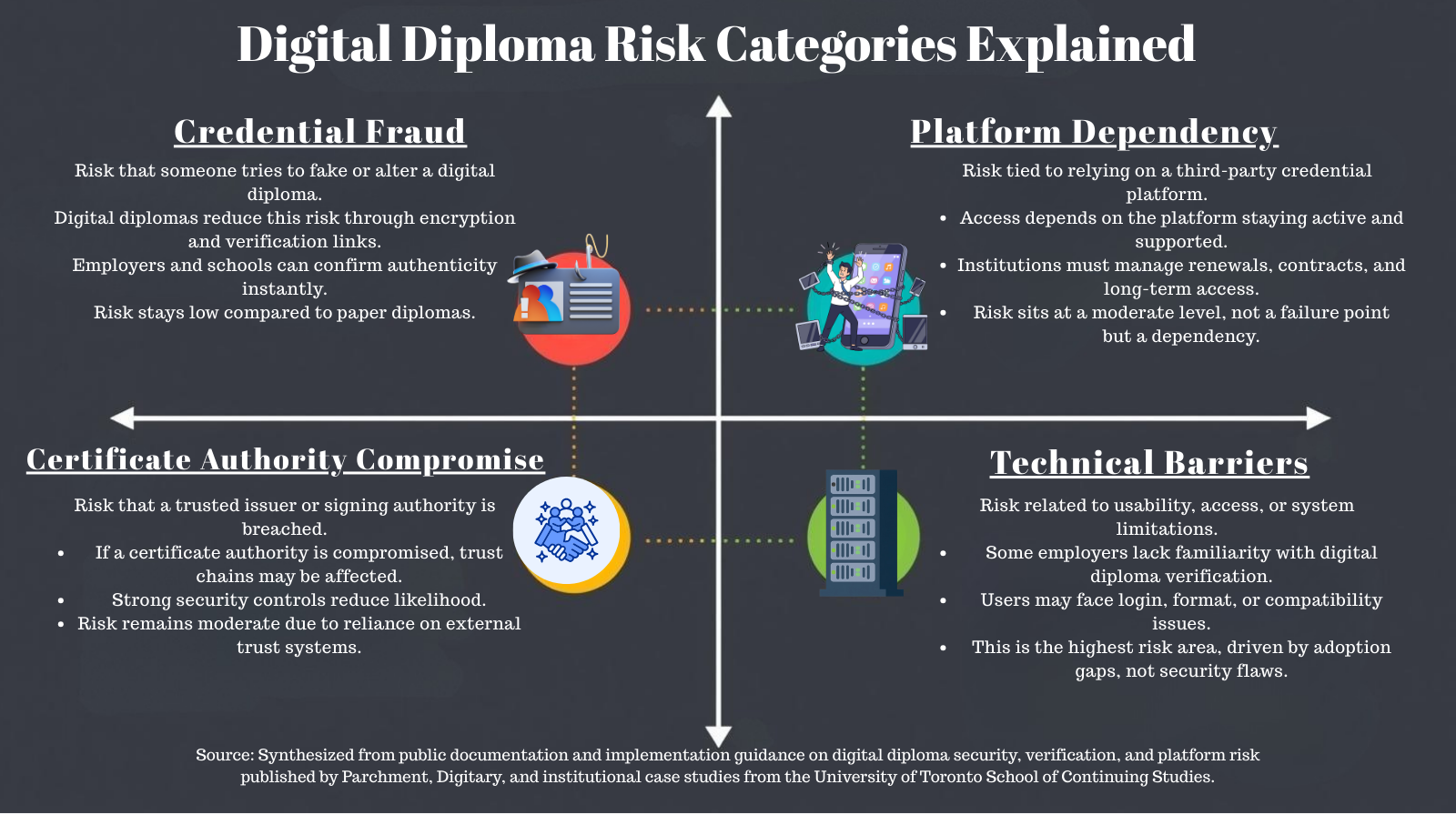
Digital diplomas are more secure than paper, but they come with real risks worth knowing.
Credential fraud. According to Certifaction, searching "fake diplomas" on Google returns over 24 million results. Simple PDF diplomas without verification technology can be forged. A legitimate digital diploma always includes a way to verify it.
Platform dependency. If the verification platform shuts down or the issuing institution closes, access to verification could be disrupted. Institutions like ECPI University use services like Parchment to manage credentials. Problems with those services could temporarily affect verification.
Technical barriers. Some employers may be unfamiliar with digital credentials. You might need to explain how to verify your diploma or provide a paper copy alongside the digital version.
To protect yourself:
Use credentials from accredited institutions only
Verify through official channels (institution websites, National Student Clearinghouse)
Keep backup copies of your digital diploma
Be ready to explain the verification process when needed
What Digital Diplomas Cost
For students, digital diplomas are typically free. Most U.S. universities include the digital version at no extra charge when you graduate. According to UCLA, students can obtain a secure digital diploma in addition to their paper diploma at no additional cost.
The costs fall on institutions. Universities pay for digital credentialing platforms based on volume. According to Certifier, issuing 500 certificates costs around $2,500 on some platforms, working out to roughly $2 per credential.
The real savings come from efficiency. According to VerifyEd, the University of Toronto's School of Continuing Studies saved 170 workdays and $170,000 in overhead after implementing digital credentials.
Why Digital Diplomas Matter for Applications
Speed matters when you apply to graduate school or a job. Digital diplomas let you share verified credentials instantly. You can add your credential to LinkedIn, email it to an admissions office, or include a verification link in your application.
Graduate programs often have tight deadlines. According to UC San Diego, priority degree posting is available for students who need records updated quickly for graduate school admission or employment. A digital diploma is available faster than a mailed paper copy.
Employers increasingly value instant verification. According to the National Student Clearinghouse, 64% of people reported lying about skills, experience, or references at least once. Digital diplomas help employers confirm your credentials quickly.
What You Should Do
If you're enrolled or recently graduated:
Ask your registrar if your institution offers digital diplomas and how to get yours.
Verify your institution's accreditation through the U.S. Department of Education database.
Download your digital diploma and save copies in multiple locations.
Learn the verification process so you can walk employers or admissions staff through it.
Keep your paper diploma too. Some situations still require a physical document.
If you're choosing a school:
Prioritize accreditation over format. A regionally accredited online program beats an unaccredited in-person one.
Ask about digital credentials. Schools that offer them tend to be more current in their technology.
Research verification methods. Blockchain-secured credentials offer stronger protection than simple PDFs.
What This Means for You
Digital diplomas are legitimate, accepted, and increasingly standard at U.S. universities. They offer real advantages: instant verification, permanent accessibility, and protection against loss or damage.
What matters is not whether your diploma is digital or paper. It's whether your degree comes from an accredited institution. Focus on accreditation first. The format is secondary.
As verification technology advances, digital diplomas will likely become the default. Understanding how they work now puts you ahead of applicants who don't.
 Strategies for Communicating Tuition and Outcomes to Prospective Students
 How Politics Is Shaping College Enrollment
 How Top Performers Land US Job Offers
 The College Majors Foreign Students Regret Choosing
 The Tightest Job Market in Years for College Grads