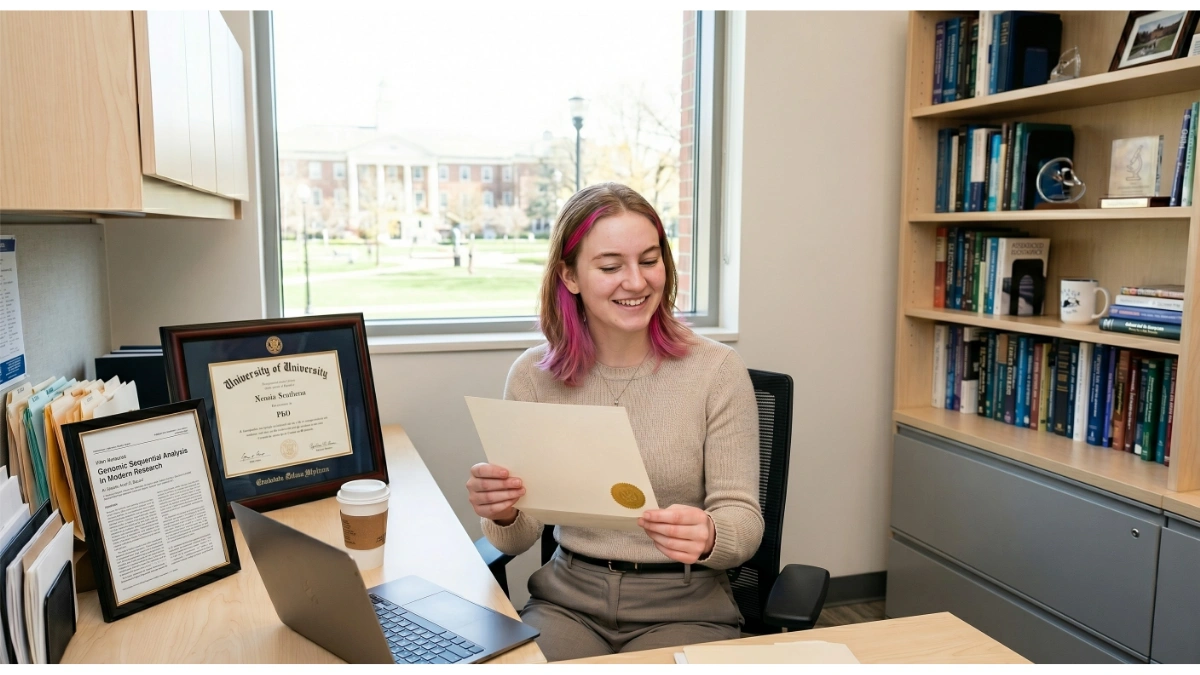
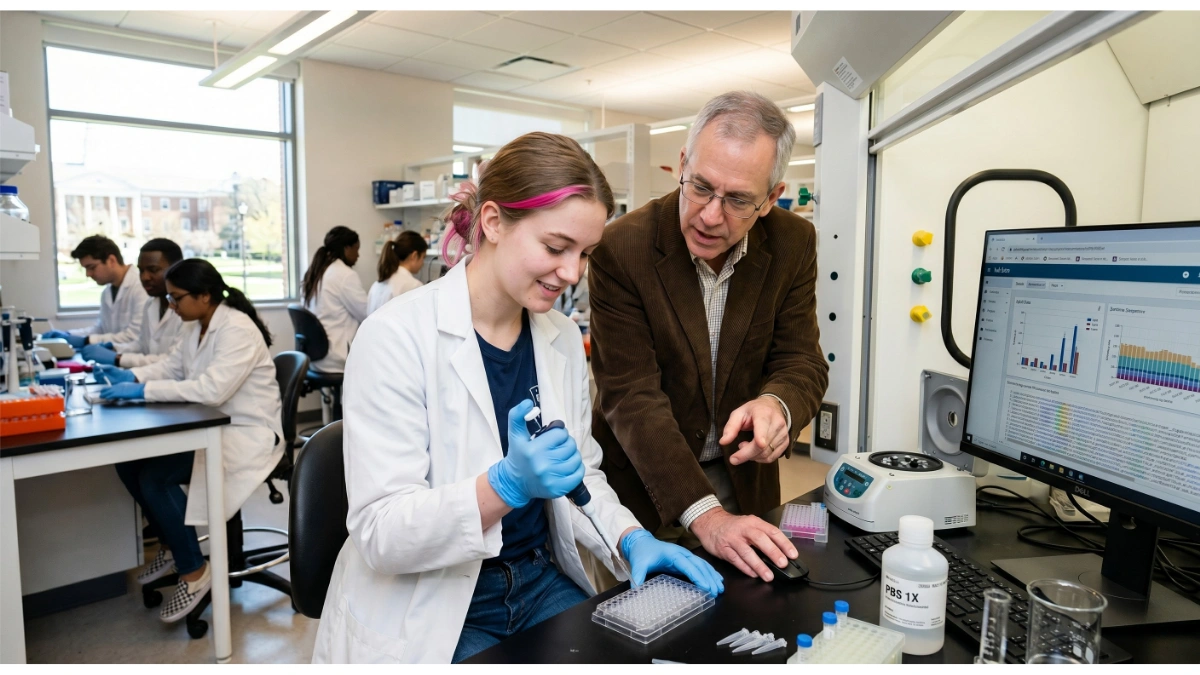
Undergraduate research gives you the chance to work alongside faculty, graduate students, and postdocs on original scholarship or creative projects. The opportunities extend far beyond test tubes and lab coats. Students in history conduct archival research while psychology majors run experiments and English students analyze texts under faculty mentorship. The opportunities span every discipline from chemistry to humanities and arts programs at research universities.

Joining a research team can feel competitive and confusing because not every lab advertises openings and professors don't always respond to emails. The process lacks the structure of registering for classes and requires more initiative on your part. Thousands of undergraduates find positions each year through a combination of direct outreach, networking, and formal programs, and this article explains how they do it.

Making Direct Contact with Faculty

Most undergraduate research positions are filled through direct outreach to professors rather than job boards or formal applications. You create these opportunities by sending a clear and professional email that demonstrates genuine interest in someone's work. Cold emailing works better than you might expect because faculty members want motivated students in their labs, though the challenge lies in standing out from the dozens of other requests they receive.

Crafting an effective email

Keep your message short and aim for two to three paragraphs that introduce yourself, explain your interest, and request a meeting. Your first paragraph should state your name, year, and major while mentioning how you found the professor's work and why you're contacting them specifically rather than sending a generic message.

The second paragraph should show you've done your homework by referencing one of their recent publications or projects. You don't need to understand every detail but mentioning a specific finding or method proves you took time to learn about their research. Doing this homework is most important when emailing potential advisors because it separates serious inquiries from mass emails.

Close by stating your availability and asking for a meeting while including your schedule so they can respond with a single email rather than going back and forth multiple times.

Timing and follow-up

Send emails in the middle of the semester because the first and last weeks are chaotic for professors and your message will get buried under more urgent matters. If you don't hear back within two weeks you should send a polite follow-up by forwarding your original email and adding a brief note expressing continued interest. Faculty are busy and persistence is expected rather than considered rude, though after a second follow-up with no response you should move on to other labs.

Tapping into Professors, TAs, and Advisors for Guidance

You don't need a formal reason to talk with professors because office hours exist for exactly this purpose and provide an easy way to build relationships. Visit office hours even if you're not struggling in the course because professors appreciate curious students who show intellectual engagement beyond what's required for a grade. Use these conversations to discuss your interests and ask about their research, and even if their lab isn't a fit they may know colleagues who are looking for undergraduates.

This approach works especially well if you've taken a class with the professor because they already know your work ethic and intellectual strengths. That familiarity makes them more likely to take you on or recommend you to someone else who needs a reliable student researcher.

Academic advisors and departmental staff

Your academic advisor can point you toward labs actively recruiting undergraduates and some departments maintain lists of faculty seeking student researchers. These lists aren't always well-maintained but they provide a good starting point for identifying potential mentors in your field.

Departmental administrators often know which professors have funding for undergraduates or which labs have recently lost students to graduation. A five-minute conversation with the right staff member can save you hours of blind searching and point you toward opportunities that aren't publicly advertised.

Leveraging Peers and Campus Connections

Word of mouth remains the most common way students find research positions because students typically find labs through networks of peers and mentors rather than formal job postings. Talk to classmates and focus especially on juniors and seniors in your major who can tell you which labs treat undergraduates well. Some professors are known for mentoring students closely while others hand off undergrads to grad students and rarely interact with them, and your peers can tell you the difference before you commit.

TAs are another valuable source of information because they work in labs themselves and know the culture firsthand. If you have a good relationship with a TA you should ask about their research and whether their lab or others in the department might have openings for someone at your level.

Campus events

Attend research seminars, poster sessions, and department talks because these events let you see faculty present their work in person and give you a better sense of who studies what and whose style matches your interests. Poster sessions are particularly useful because undergraduates often present at these events and you can talk directly to students who are already doing what you want to do. Ask them how they joined their lab and what the experience has been like so you can learn from their path.

Building Relationships with Graduate Students and Postdocs

Faculty members are often too busy to provide daily guidance so that role typically falls to graduate students and postdocs who spend more time in the lab. Students show faster skill development when postdocs actively mentor them because postdocs provide the hands-on training and daily supervision that faculty can't offer given their other responsibilities.

This means your relationship with grad students and postdocs matters as much as your relationship with the professor, and before committing to a lab you should try to meet the people you'll actually work with on a daily basis.

How to connect with them

Reach out to grad students or postdocs in labs you're considering and ask about the lab culture, mentorship style, and time expectations. They'll give you an honest picture that the faculty member might not provide because they experience the lab environment from a perspective closer to your own. If possible you should ask to sit in on a lab meeting before you commit because lab meetings reveal how the group communicates, whether questions are welcomed, and how undergraduates are treated within the team hierarchy.

Graduate students also have a good sense of the type of research being done across the department and TAs and grad students can offer ideas about which faculty mentor well based on their observations and conversations with other students.

Formal Programs and Structured Entry Points

Not every path into research requires cold emails because many universities run formal programs that match students with faculty and provide structured support throughout the experience.

University-sponsored programs

Check whether your school has an Undergraduate Research Opportunities Program or equivalent because programs like Boston University's UROP connect students with faculty mentors and provide funding for research projects. Similar programs exist at most research universities and your undergraduate research office is the best place to start. These offices maintain databases of available positions, host workshops on finding mentors, and sometimes offer grants to support student research throughout the academic year.

Summer research programs

The NSF REU program places students in labs at universities across the country and participants receive stipends of around $450 per week plus housing and travel support. The program covers all areas funded by NSF including the physical sciences, social sciences, and engineering. REU sites typically host eight to ten students who work on related projects under faculty mentorship and the experience includes professional development workshops, seminars, and networking opportunities with applications usually due between January and March.

The Leadership Alliance SR-EIP supports students from underrepresented backgrounds in sciences, social sciences, and humanities. Participants spend eight to ten weeks at one of twenty research institutions where they receive stipends and housing while working toward presenting their findings at a national symposium. Summer programs for undergraduate research offer opportunities in virtually all academic fields including arts, humanities, and social sciences and are designed for students considering graduate school and academic careers.

Research for course credit

Many departments offer research courses that formalize your lab work and these courses let you earn academic credit while conducting research under faculty supervision. The arrangement benefits everyone because you get credit toward graduation and the faculty member gets a committed student with a structured obligation to the project. Research courses typically require a minimum time commitment of around ten hours per week and some include additional requirements like attending lab meetings or presenting your work at the end of the semester.

Completing a Senior or Undergraduate Thesis

A senior thesis is a year-long project resulting in an original paper or creative work that addresses questions without known answers and demonstrates your ability to conduct independent research. Length varies by discipline but typically runs between 40 and 80 pages depending on your field's conventions and your department's requirements. Some departments require a thesis for all majors while others make it optional or limit it to honors students, so you should check your department's requirements early to plan accordingly.

Benefits of writing a thesis

A thesis demonstrates your ability to conduct independent research in a way that graduate schools and employers recognize as meaningful preparation for advanced work. The thesis develops valuable skills and habits of mind that support future success in any field that requires sustained analysis and original thinking.

The process also offers close one-on-one mentorship with a faculty advisor who guides the development of your project, provides feedback on drafts, and helps you refine your arguments over the course of an entire year. This relationship can lead to strong recommendation letters and professional connections that extend well beyond graduation. Completing a thesis may also qualify you for graduation with honors or distinction, and at many schools this designation appears on your transcript and diploma as recognition of your achievement.

Planning ahead

Start lab work by your junior year if you plan to write a thesis because you need time to learn research methods, identify a viable project, and conduct the work itself before your senior year begins. Jumping into a thesis senior year without prior experience is difficult and often leads to rushed or incomplete work. Discuss your plans with your research advisor before committing because not every project is suitable for a thesis and not every advisor has the bandwidth to supervise one effectively. Students interested in a thesis should join labs by junior year to give themselves adequate time for meaningful work.

Paying for Research: Stipends, Grants, and Work-Study

Research takes time and you need to know whether you'll be paid, earn credit, or volunteer before committing to a position that might conflict with your other obligations.

Funded opportunities

NSF REU programs offer stipends plus housing and travel and these competitive positions are available across disciplines for students who apply early. The NSF also funds international research opportunities through the IRES program which places students at foreign institutions for summer projects that combine research experience with cross-cultural learning.

Many universities provide internal grants for undergraduate research that cover expenses like supplies, travel to archives, or summer stipends when external funding isn't available. Check with your undergraduate research office for deadlines and eligibility requirements because these opportunities often go unclaimed by students who don't know they exist.

Unpaid vs. paid positions

Many campus lab positions are unpaid at the start because new undergraduates require significant training before they can contribute meaningfully to ongoing projects. You should ask about funding possibilities during your initial conversations because some labs have discretionary funds or know of scholarships you might qualify for based on your background or interests.

First-generation students and those from underrepresented groups may have access to targeted funding that other students cannot receive. Sharing these parts of your identity with your mentors can help them identify opportunities specifically designed to support students like you.

Course credit as compensation

If paid positions aren't available then earning academic credit can justify the time investment because research courses often fulfill major requirements or elective credits. This makes the work count toward your degree even if it doesn't pay and gives you a formal structure for your lab involvement. Some students begin as volunteers and transition to paid positions once they've proven themselves while others use course credit throughout their undergraduate careers, and both approaches are common and acceptable paths through the research experience.

Putting It Together

Finding undergraduate research requires effort because you'll need to send emails that don't get answered, attend events where you don't know anyone, and ask questions that feel awkward at first. Start by identifying your interests and browsing faculty profiles on department websites while reading abstracts of recent publications even if you don't understand everything you encounter. Make a list of five to ten professors whose work sounds interesting and send personalized emails to three to five of them while visiting office hours for professors whose classes you're taking.

Ask classmates and TAs about their experiences and apply to formal programs like NSF REU sites if you want structured summer research with guaranteed funding and mentorship. Expect rejection because some labs are full, some professors don't take undergraduates, and some emails will go unanswered no matter how well you write them. Keep trying because the students who find research positions are the ones who persist through initial setbacks.

Your transcript matters less than you think because faculty want students who are motivated to learn, show up reliably, and take the work seriously. Demonstrating genuine interest in someone's research goes further than a perfect GPA when professors are deciding whom to invite into their labs.

Start early because sophomore year isn't too soon to begin looking and the earlier you start the more time you have to develop skills, build relationships, and pursue opportunities like thesis projects or competitive summer programs. Undergraduate research can shape your career by helping you decide whether graduate school is right for you while building skills that transfer to any profession and connecting you with mentors who can support you for years after you graduate.