
University tutoring is one of the most accessible side jobs for students and recent graduates. It offers flexible income, reinforces your own knowledge, and looks strong on a resume. You have two main paths: work for your university's tutoring center, or tutor privately through platforms or your own client base. Campus positions offer stability and training; private tutoring pays more but requires you to find students.
Popular subjects include math, chemistry, biology, physics, writing, and test prep. With several Ivy League schools reinstating SAT/ACT requirements for 2025/26 admissions, demand for test prep tutors is growing.
Requirements
You don't need a teaching degree to tutor privately or at most campus centers. The barrier is lower than most people expect.
Campus programs typically require:
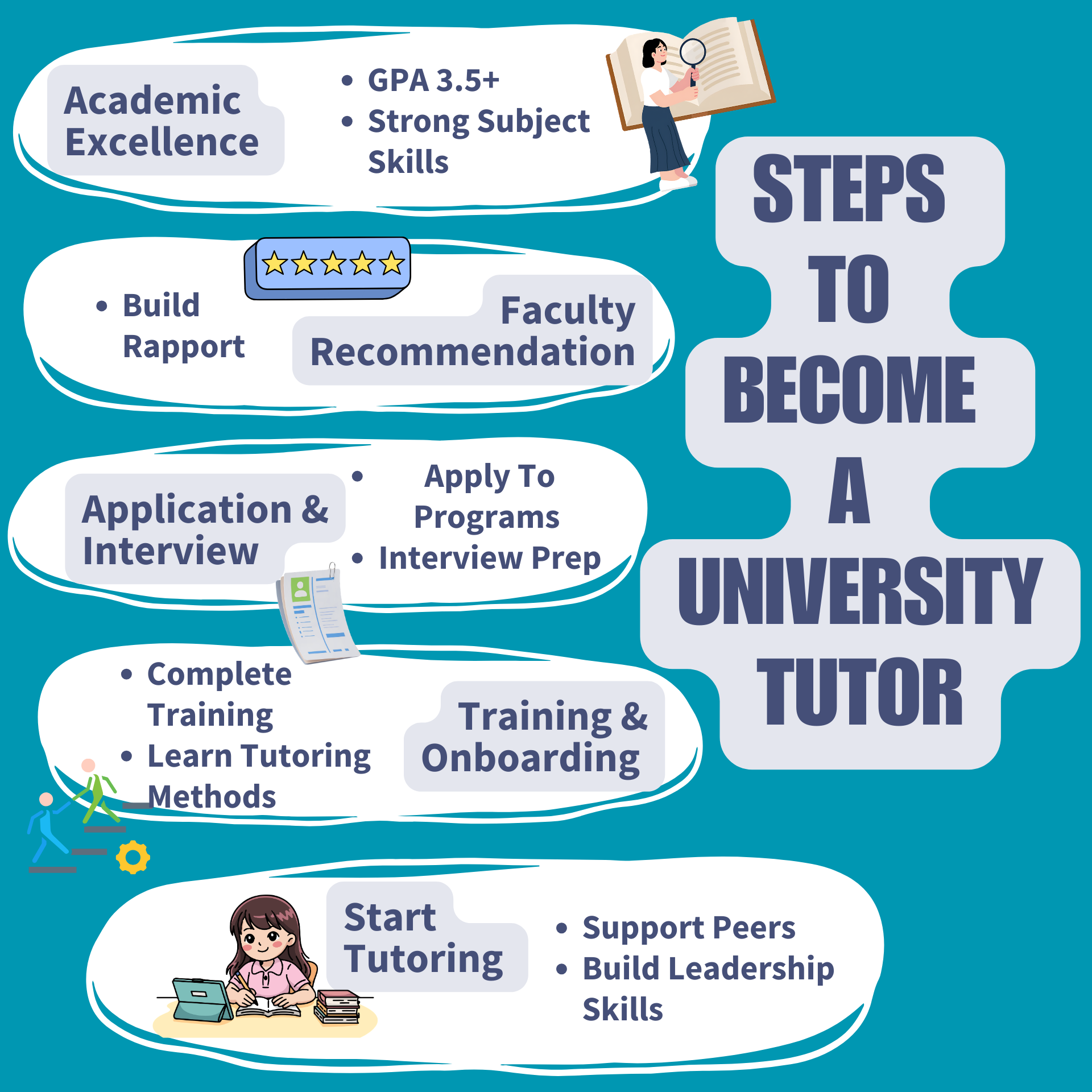
A minimum 3.0 cumulative GPA
A B+ or A in the specific courses you want to tutor
At least one faculty recommendation letter
Build relationships with instructors in your strongest subjects before you apply -- their endorsement is often the deciding factor.
Background checks are standard when working with minors. Most universities and platforms run one before hiring. If you plan to tutor privately, getting a proactive background check builds trust with parents.
Soft skills matter as much as subject knowledge. You need patience, clear communication, and the ability to read how each student learns. Some need visual explanations; others learn by doing. The best tutors switch approaches on the fly.
How to Get a Campus Tutoring Job
Campus tutoring is the easiest entry point. Your university already has the infrastructure, the clients, and the training programs.
Visit your academic success center or learning center website -- most post tutor openings there.
Check deadlines carefully. Some programs have rolling applications; others hire at the start of each semester. Stony Brook University, for example, had all fall 2025 positions filled and opened spring 2026 recruitment in late October.
Submit an unofficial transcript, a short application, and faculty recommendations. Some programs also require proficiency assessments or a brief interview.
Complete paid CRLA training. The College Reading and Learning Association certification is recognized internationally. You get paid to attend weekly training sessions, and the credential carries weight on a resume.
Expect to commit 5 to 15 hours per week. STEM courses carry the highest demand -- math, chemistry, biology, and physics tutors are consistently needed.
The main advantage: you don't handle clients, rates, or payments. The university manages all of that.
Getting Hired on Tutoring Platforms
Platforms connect you with students, handle scheduling, and process payments. Popular options include Varsity Tutors, Wyzant, and Tutor.com (which became 100% U.S.-owned and operated as of July 2025).
Varsity Tutors has a selective process. You'll complete a video interview and record a 3-to-5-minute teaching demonstration. Interview difficulty is rated 2.49 out of 5 -- moderately challenging. The process typically takes one to three weeks.
Platform fees are worth understanding before you sign up:
Platform | Fee Structure |
|---|---|
Varsity Tutors | Retains ~50% of client payments |
Wyzant | Takes 25% from tutors + 9% student fee |
Tutor.com | Pay typically $10--$22/hr depending on subject |
All platforms require identity verification and background checks. Test prep subjects may require minimum score documentation.
Pay: What to Expect
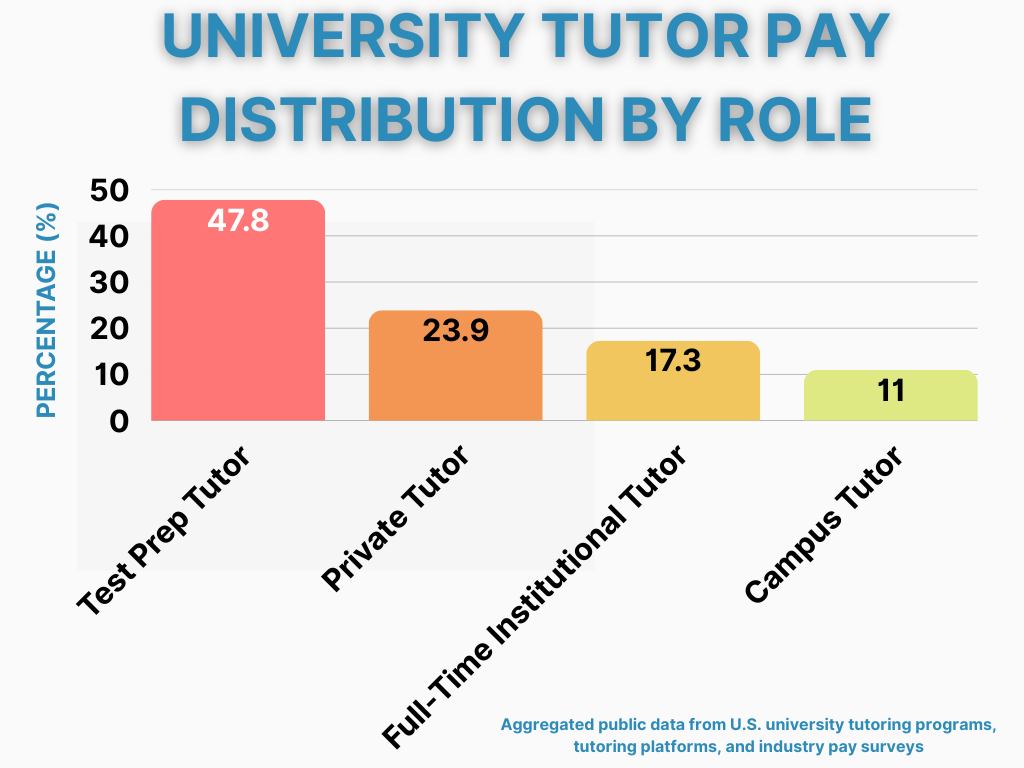
Pay varies widely based on whether you work for a campus center, a platform, or yourself.
Campus peer tutors: $17 to $20/hr to start. Hunter College pays $19.12/hr; the University of Pittsburgh starts at $12/hr. California minimum wage ($16.50/hr) sets the floor at some programs.
Private tutors: $25 to $80/hr on average, with $40/hr serving as a reasonable benchmark for most academic subjects.
Test prep tutors: $60 to $100+/hr for SAT, ACT, GRE, and GMAT. LSAT tutors often charge $100 to $300/hr.
Full-time institutional tutors (staff roles requiring a bachelor's or master's degree): $45,000 to $72,000 annually.
Part-time private tutors can earn $500 to $2,000/month. Experienced full-time tutors with strong reputations and in-demand specializations can clear $50,000 to $100,000+/year.
Geography affects rates. Tutors in New York and California earn more. Online tutoring has compressed this gap somewhat, but location still factors into competitive pricing.
Do You Need a License?
No. There is no federal license required for tutoring in the United States. You can legally tutor math, science, writing, test prep, and most other subjects without credentials.
If you run your own tutoring business (rather than work as an independent contractor), you may need a general business license. Requirements vary by state and city -- check with your local city or county clerk.
Specialized fields like speech therapy and occupational therapy require specific licenses, but general academic tutoring does not.
One thing that does apply: report your tutoring income and pay taxes on it. If you earn more than $600 from a single platform in a year, expect a 1099.
The 70/30 Rule and Effective Techniques
Good tutoring isn't lecturing. It's guiding students to understand concepts themselves.
The 70/30 rule: students should do 70% of the talking while you guide with 30%. This flips the traditional classroom model. Active learning beats passive learning -- when students explain concepts back, work through problems, and ask questions, they retain more.
In practice:
Ask questions instead of giving answers. When a student is stuck, ask what they've tried, where they got confused, and what they think the next step might be.
Let students make mistakes. Working through an error and identifying where it went wrong sticks better than watching you solve it correctly from the start.
Adapt to each student. Some need visual explanations; many learn by doing. Pay attention to what works and adjust.
Students feel more accomplished when they solve problems themselves. That keeps them coming back.
Building Your Reputation and Raising Rates
Tutoring is reputation-based. The stronger your track record, the more you can charge.
Get certified. The National Tutoring Association and CRLA both offer credentials. They're not required, but they signal professionalism.
Collect testimonials. After a successful tutoring relationship, ask the student or their parents for a short review. Concrete results -- a grade jump from C to B+, a 150-point SAT score increase -- justify higher rates.
Specialize. Calculus, organic chemistry, physics, SAT/ACT prep, Spanish, and computer science all command premium rates.
Raise rates gradually. A good rule: increase by $5 to $10/hr every six months of consistent work and positive feedback.
Offer packages. Five or ten prepaid sessions at a slight discount gives you predictable income and encourages regular commitment from students.
How to Apply: Quick Checklist
Confirm your GPA meets the 3.0 minimum and you have strong grades in target subjects
Request a faculty recommendation from an instructor in each subject you want to tutor
Visit your academic success center and submit a campus tutor application
Complete CRLA training during your first semester
Once you have experience, create profiles on Wyzant or Varsity Tutors for private work
Track student results and collect testimonials
Raise your rates every six months as your track record builds
 How Global Education Hubs Are Redefining University Expansion Strategy
 Why Colleges Need Brand New AI Majors
 The Financial Crisis Shrinking Small Colleges
 The Real Risks Behind Social Media Screening
 Why Expanding Higher Ed Access in SIDS and LDCs Matters for Global Progress