The standard picture of college admissions is an 18-year-old applying straight out of high school. But that student is now the exception, not the rule. A nontraditional student is anyone who does not follow that path: adults returning after years in the workforce, parents balancing family and study, veterans, and people who started college but never finished. According to federal education data, about 74% of undergraduates have at least one nontraditional characteristic. There are now structured paths that can lead to a top college without going through the standard freshman application process.
Who Counts as a Nontraditional Student?
The Common Application tracks this group as "independent students": anyone over 23, active-duty military personnel or veterans, students with dependent children, or those not living with a parent or legal guardian. In practice, the definition is broader. A student who works full-time while enrolled, or who took several years off before returning to school, fits the profile even if they are still in their early twenties. You might be nontraditional if you:
Are 24 or older
Work full-time while enrolled
Have children or other dependents
Took time away from education before enrolling or returning
Served in the military
Are financially independent from your parents
All four independent-student sub-groups tracked by the Common Application more than doubled their application volumes between 2016 and 2024. This is not a niche group. It is the majority of people currently sitting in college classrooms.
Why Colleges Are Recruiting These Students
The traditional pool of 18-year-old applicants is shrinking as birth rates decline. Many institutions face real enrollment shortfalls, and nontraditional students are increasingly filling that gap. There is also a regulatory dimension. The 90/10 rule is a federal regulation that limits how much revenue for-profit colleges can draw from federal student aid programs. It shapes how institutions think about enrollment diversity and funding sources.
Institutions are also responding to demographic pressure by rethinking who they recruit. For the 2024-25 cycle, 117 colleges joined a proactive admissions initiative targeting first-generation and low-to-middle-income students. Minnesota's state-run direct admissions program grew from 31 high schools in its first year to 245 schools covering more than 37,000 eligible students by 2025-26. Schools that used to wait for students to come to them are now reaching out first.
Pathway 1: Community College Transfer
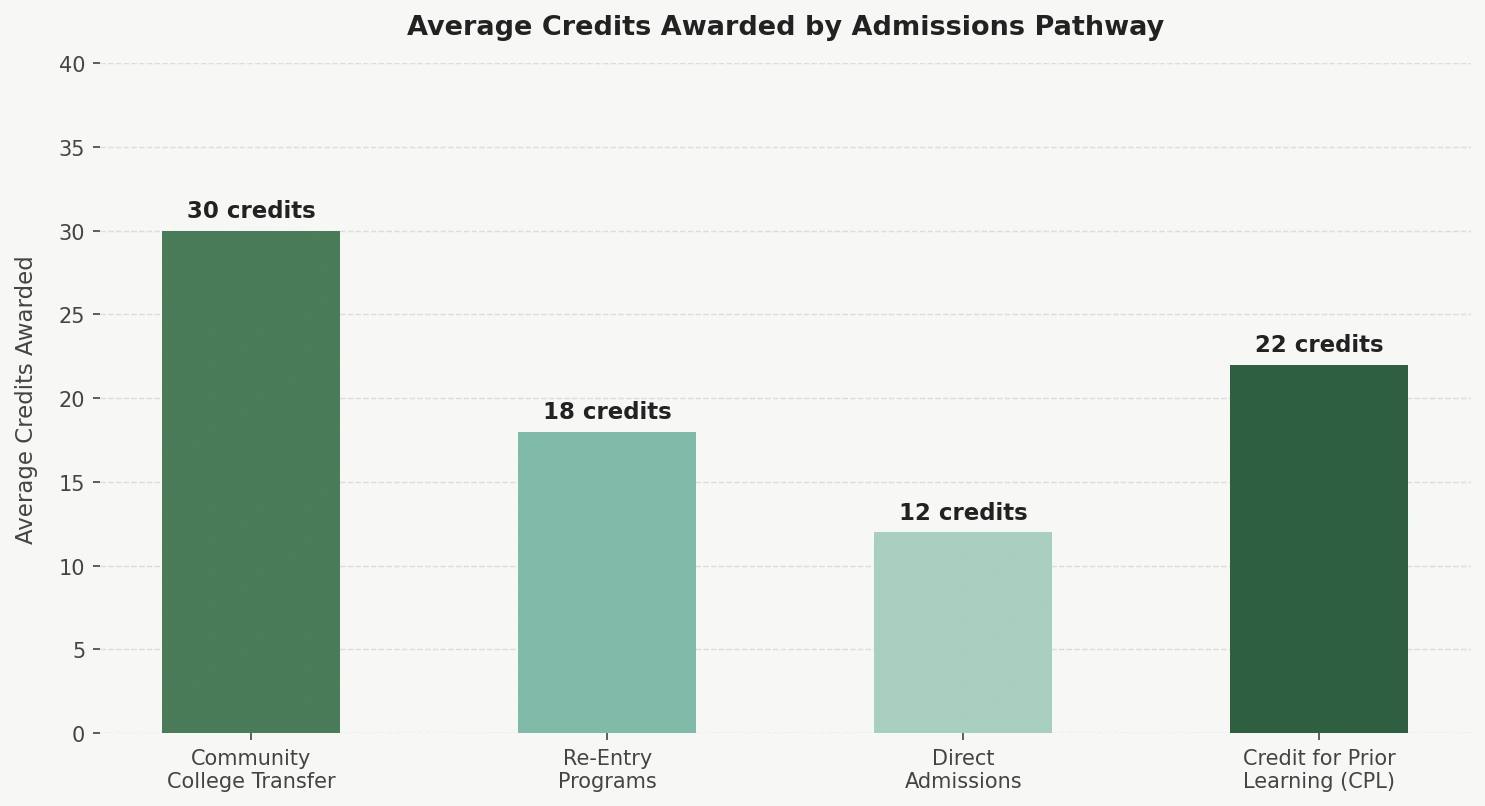
You start at a community college, build a strong academic record over one or two years, and transfer into a four-year institution as a sophomore or junior. According to the Clearinghouse Research Center, about 40% of four-year university graduates previously enrolled at a community college. It is one of the most established nontraditional college admissions routes available, and it works across a wide range of fields and degree programs.
On average, transfer students lose about 13 credits in the process, and 40% receive no credit at all for some prior coursework. Articulation agreements, sometimes called "2+2" programs, reduce that risk significantly. They set out in advance which credits transfer and how they apply toward your intended degree. Students who use them are significantly more likely to transfer on time. Map your courses against your target school's requirements before you start, not after.
Pathway 2: Re-Entry Programs
Re-entry programs are structured pathways designed for students returning after a gap. They are separate from standard freshman admissions and typically include:
No standardized or placement testing requirement
Faster review of previously earned credits
Flexible scheduling to accommodate work and family commitments
Dedicated advising for adult learners
Veterans and active-duty military: Say so upfront when you contact an admissions office. Most re-entry programs have specific provisions for military applicants, including GI Bill compatibility and credit for military training. Your status changes what financial aid and accommodations are available to you in ways that do not apply to civilian applicants.
Re-entry programs do not always appear prominently on a college's website. Call the admissions office directly and ask whether the school has a dedicated pathway for returning adult students. Many do, even if they do not market it widely. Some programs also offer bridge courses or orientation sessions specifically designed for adult learners re-entering academic study after a long break.
Pathway 3: Direct Admissions
Direct admissions flips the standard process. Instead of you applying to a college, the college offers you a place based on your academic record and sometimes your demographic background. You receive the offer first, then decide whether to follow through. It is not available at every college, but the number of participating institutions has grown steadily since the model was introduced.
That proactive model reached 117 colleges in its 2024-25 cycle. A Chronicle of Higher Education analysis of 64 participating colleges found that fewer than a third saw undergraduate enrollment grow in both years of participation, so the model is still being tested at scale. What it does well is remove the anxiety of rejection for students who might not otherwise apply. One important caveat: direct admissions offers do not always include a guaranteed financial aid package. Get the full cost picture before committing.
Pathway 4: Credit for Prior Learning
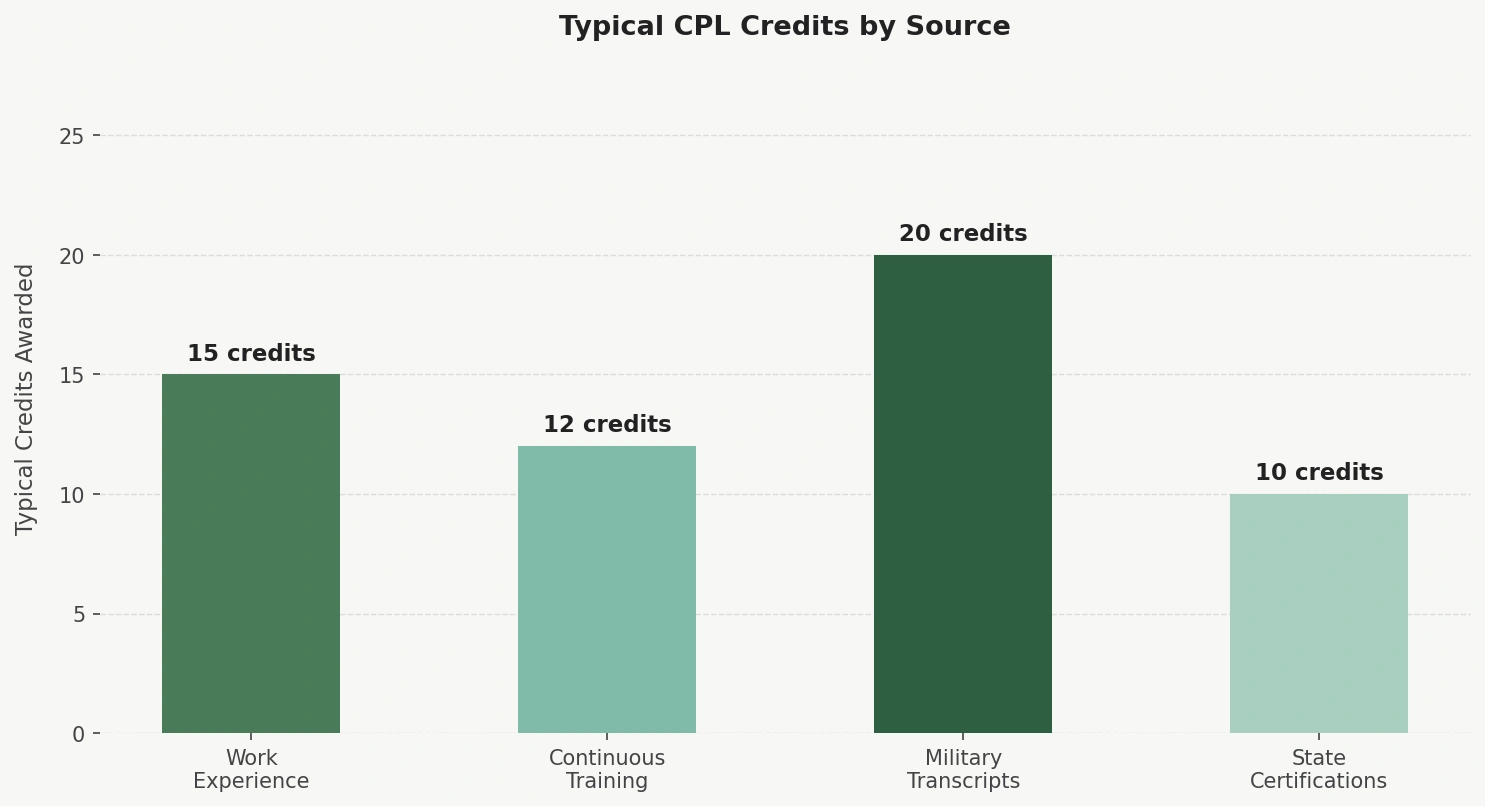
Credit for Prior Learning, or CPL, converts existing knowledge and experience into college credit. That includes professional certifications, military training, standardized exams like CLEP or AP, apprenticeship programs, and in some cases portfolio assessments of work experience.
CPL can cut the time and cost of completing a degree. The key variable is how each institution counts and applies those credits. Check with the specific school before assuming your prior learning will reduce your required coursework.
What to Know Before You Apply
FAFSA is still required on every pathway. Submit it regardless of which route you take. Many nontraditional students qualify for Pell Grants, subsidized loans, and institutional aid that is not available without a completed FAFSA on file. Do not assume you will not qualify before checking.
Talk to admissions offices directly. Ask specifically about re-entry options, CPL policies, and provisions for veterans or working adults. Many accommodations exist but are not prominently advertised.
Map your credits early. If you have taken college courses before, get a transcript evaluation done before committing to an institution. Understanding which credits transfer can change which school makes the most sense.
Write your personal statement plainly. Your work experience, time management skills, and reasons for returning are genuine strengths. State them specifically. Around 80% of higher education institutions anticipated using AI in admissions review by 2024, and vague language is more likely to be filtered out.
Can You Get Into a Highly Selective School?
It is possible, but the bar does not lower for nontraditional applicants. Highly selective schools with acceptance rates under 10% rarely have formal alternative pathways. Transfer admissions at selective schools is more forgiving of non-standard backgrounds than freshman admissions, since a strong college GPA carries more weight than high school records.
If you are a veteran: Your status may open up specific accommodations and financial aid options not available to other applicants. Ask the admissions office directly about what applies to you.
If you are transferring: A strong college GPA carries more weight than your high school record at most selective schools. Transfer admissions is generally more open to non-standard academic backgrounds than freshman admissions.
The realistic picture: These routes are most useful for reaching institutions strong in your intended field without unnecessary debt. Set your target based on your goals and your field, not the name on the diploma.
Final Thoughts
The traditional admissions model is one route among several. If it does not fit your situation, that does not mean college is out of reach. Pick the pathway that matches your timeline, get your paperwork in order early, and build a plan around it.
 5 ways colleges can make career prep 'unavoidable' for students
 The Real Economics Behind Entry-Level Gigs
 Can 3-Year Degrees Solve the Teacher Shortage?
 Does College Public Speaking Really Matter in Today’s Job Market?
 Strategies for Communicating Tuition and Outcomes to Prospective Students