Some 59 million Americans care for an aging parent, a spouse, or another adult, putting in about 27 hours a week, AARP estimates. That's a part-time job with no paycheck, and some of the people doing it are student caregivers, fitting that work around their classes.
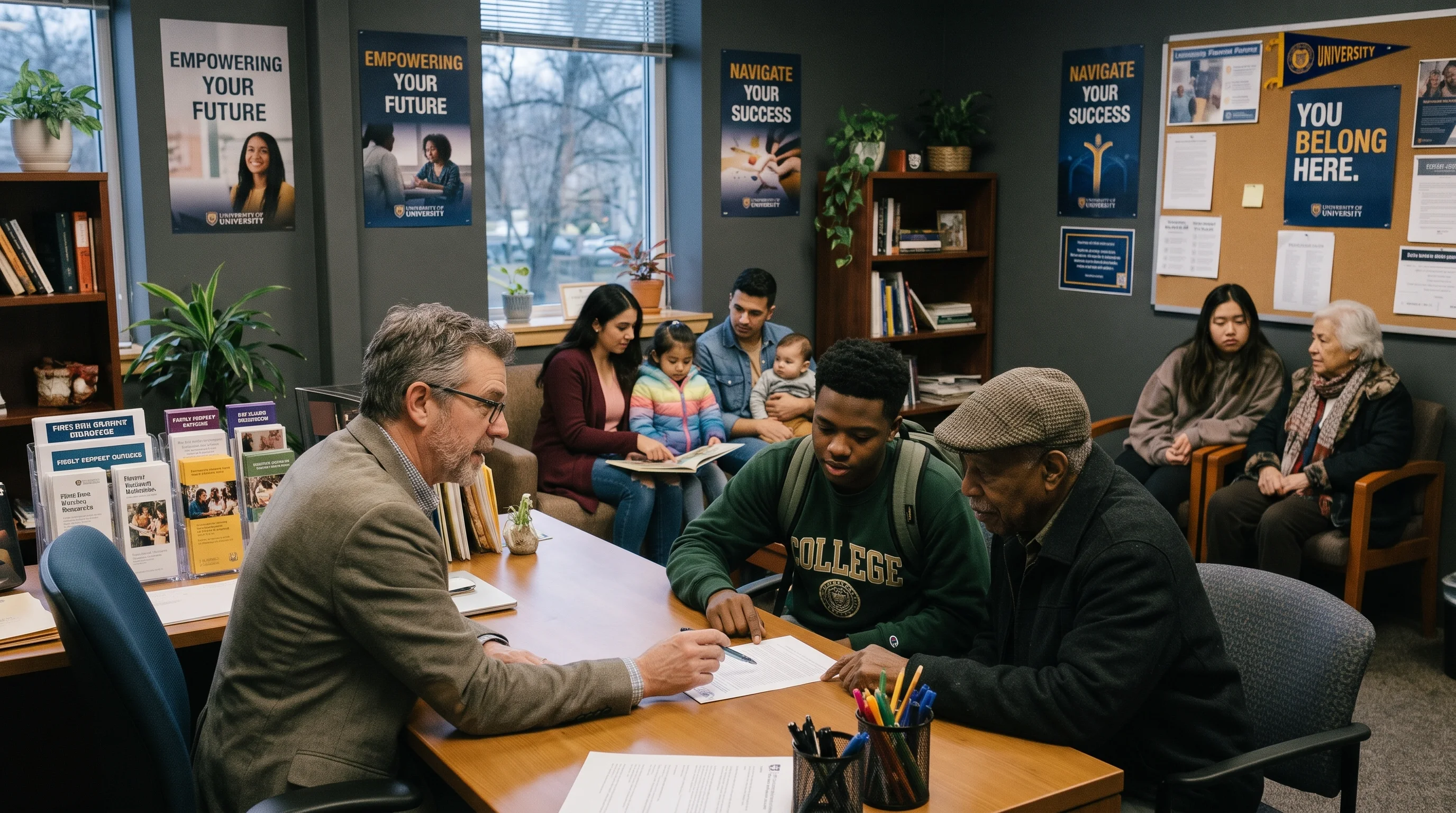
Student caregivers rarely show up in campus data, but they show up in the stop-out numbers. Between classes, paid work, and someone at home who depends on them, there's almost no slack in the week, so when something has to give, it's usually the degree.
The strain doesn't stay on campus, either. It shapes who can take an internship, who has time to network, and who moves up after graduation. If you want student caregivers to finish and land good jobs, colleges need to stop designing schedules like students have nothing else to do.
Caregiving Pushes Students Toward the Exit
A third of enrolled students have thought about stopping out in the past six months, and the latest Lumina-Gallup data puts students with caretaking duties among the groups at higher risk. Emotional stress and mental health lead the list of reasons, with cost not far behind.
More than eight in ten students already feel emotional stress at least some of the time, and caregivers carry that load plus a second shift at home. The bills add up too, since caregivers spend roughly $11,500 a year out of pocket, about a third of their household income, according to AARP.
Adult care is especially easy to miss. A parent with a chronic illness doesn't come with a campus daycare center or a support office, and most students never bring it up because nobody asks.
Student Parents Run Out of Time, Not Ability
About one in five undergraduates and one in four graduate students are parents, New America reports. Their GPAs are on par with classmates who don't have kids, yet fewer than one in five finish within six years, compared with half of their peers. They aren't struggling academically. They're starved for time.
Community colleges show how tight that time gets. More than four in ten student parents there work at least 30 hours a week, and just over a quarter earn a degree or certificate within six years, compared with about four in ten students without kids, the Community College Research Center found. Childcare support makes a difference here: student parents who earn a credential are more often enrolled at colleges that offer full-time care, drop-in slots, or help paying for care.
Scheduling can undo all of that. A 5:00 p.m. lab meeting is impossible when daycare closes at 5:30, and a graduate student stuck in that spot has to choose between burning a bridge with an advisor and being the parent who shows up after the doors are locked.
State lawmakers have started to notice. Education Northwest counted 137 student parent bills introduced nationwide from 2023 through 2025, including 16 that passed in 2025 alone, as ECMC Foundation notes.
Caregiving and Student Outcomes by the Numbers
The Metric | The Numbers | The Source |
|---|---|---|
U.S. adults caring for an adult family member or friend | 59 million, averaging 27 hours a week | AARP, 2026 |
Average yearly out-of-pocket caregiving costs | $11,508, nearly a third of household income | AARP, 2026 |
Enrolled students who considered stopping out | 1 in 3 | Lumina Foundation-Gallup, 2026 |
Students who are parents | About 1 in 5 undergrads, 1 in 4 grad students | New America, 2026 |
Student parents who graduate within six years | 17% vs. 50% of their peers | New America, 2026 |
Community college student parents earning a credential within six years | 27% vs. 41% of nonparents | CCRC, 2026 |
Employed sandwich generation caregivers who have kept their caregiving from employers | 66% | Care.com, 2026 |
Employees who left a job for better family care benefits | 23% | Care.com, 2026 |
Internships Assume an Empty Calendar
Most students enroll for the career payoff, with about two-thirds naming job opportunities as their reason in the Lumina-Gallup survey. Caregiving chips away at that payoff long before graduation.
Unpaid summer internships, research assistantships, evening networking events, and on-site employer mixers all assume an open calendar. Students working 30 hours a week around daycare pickups or a parent's medical appointments can't fit them in, so many leave with the same degree as their classmates and a much thinner resume.
Career offices often never see these students at all. In one survey cited by the Community College Research Center, six in ten community college student parents had never used career counseling, and nearly nine in ten had never used job placement help.
A few changes would put career services within reach:
Run some employer events online and record them, so students can watch after the kids are asleep.
Lead with paid, part-time, and remote internships instead of burying them in the listings.
Help students describe the jobs they already hold, like retail shift lead or logistics coordinator, as real work experience.
Offer career advising early in the morning, in the evening, and online.
Caregiving builds skills employers want, too. Nearly every caregiver in Care.com's sandwich generation research said the role made them grow, most often in empathy, patience, time management, and resilience, and students should feel comfortable talking about that in an interview.
The squeeze continues after commencement. More than half of the employed caregivers in that same research have passed on a promotion, a raise, or another opportunity to keep up with care. Family care benefits now drive job decisions as well, with nearly one in four employees saying they've left a job for an employer with better ones in a separate Care.com survey. And while more than eight in ten working parents say paid leave would help them, only half have it at their current job, Pew Research found.
Graduates who managed care in college will keep managing it at work. Show them how to spot employers that support caregivers and which questions to ask before they accept an offer.
The People Who Advise Students Are Caregivers Too
Colleges are employers, and the advisors, instructors, and lab managers who keep students on track carry the same load. When they burn out or quit, students lose the people who know them best.
Academic schedules hide this well. A chair building next semester's schedule might see a professor with no classes before noon and assume those mornings are free, when they actually go to a parent's medical appointments and the grading gets pushed past 10 p.m.
Most employees won't volunteer that information. Two-thirds of employed sandwich generation caregivers have kept the full scope of their caregiving from their bosses, and more than half worry they'll be seen as less dedicated. Even when help exists, people miss it: nearly four in ten employers offer childcare benefits, but only about one in five employees know about them, and fewer than a third of employers say their managers are very ready to help with caregiving issues.
Those figures come from the general U.S. workforce rather than campuses, so they're worth checking against your own staff.
Predictable Scheduling Costs Nothing
Keeping required lab meetings, group project check-ins, and mandatory advising inside a 9:00 a.m. to 4:00 p.m. window takes a calendar change, not a grant. So does posting course schedules and syllabi early enough for students to line up child or elder care before the term starts, and the same rule works for faculty and staff meetings.
Flexibility also brings people back. Among adults who stopped out, nearly half say flexible class formats would get them to re-enroll, and just as many point to a faster path to finishing. Some colleges in ECMC Foundation's parenting student program have already added evening and weekend courses.
Part-Time Shouldn't Mean Dropping Out
Dropping to part time for a rough semester shouldn't turn into dropping out for good. Spell out how to reduce a course load, what happens to financial aid and assistantships, and the exact steps for returning full time once care demands ease.
Plenty of students want to come back, with nearly seven in ten stopped-out adults saying they've considered enrolling again in the past two years. A clear re-entry process makes that return easier. Employees deserve the same option, with a defined path back to full time.
You Can't Help Caregivers You Haven't Counted
No national data tracks student parents at the student level, and only a handful of states require colleges to collect it. A short caregiving question on intake surveys, early-alert systems, and first advising appointments fills that gap on your own campus.
Counting can change the picture fast. One community college in ECMC Foundation's program assumed about a quarter of its students were parents, and once it collected the data, the share topped 40%.
Students also tend to leave without telling anyone at the college. In a small CCRC study of first-generation students who stopped out, most cited family, financial, or personal pressures, only 7% talked to an advisor about the decision, and none talked to a professor.
Once you know who's caregiving, the support has to match the problem. A senior caring for a parent with dementia can get through one deadline with a two-week extension, but respite care and counseling are what address the exhaustion that pushes students out.
Nobody Uses Help They Don't Know Exists
More than four in ten parenting students in ECMC Foundation's survey didn't know their campus offered any family-friendly resources, and employees have the same blind spot with workplace benefits. Put caregiving resources where people already look, in syllabi, orientation, advising notes, benefits enrollment, and new-hire onboarding, and train advisors and supervisors to bring them up early.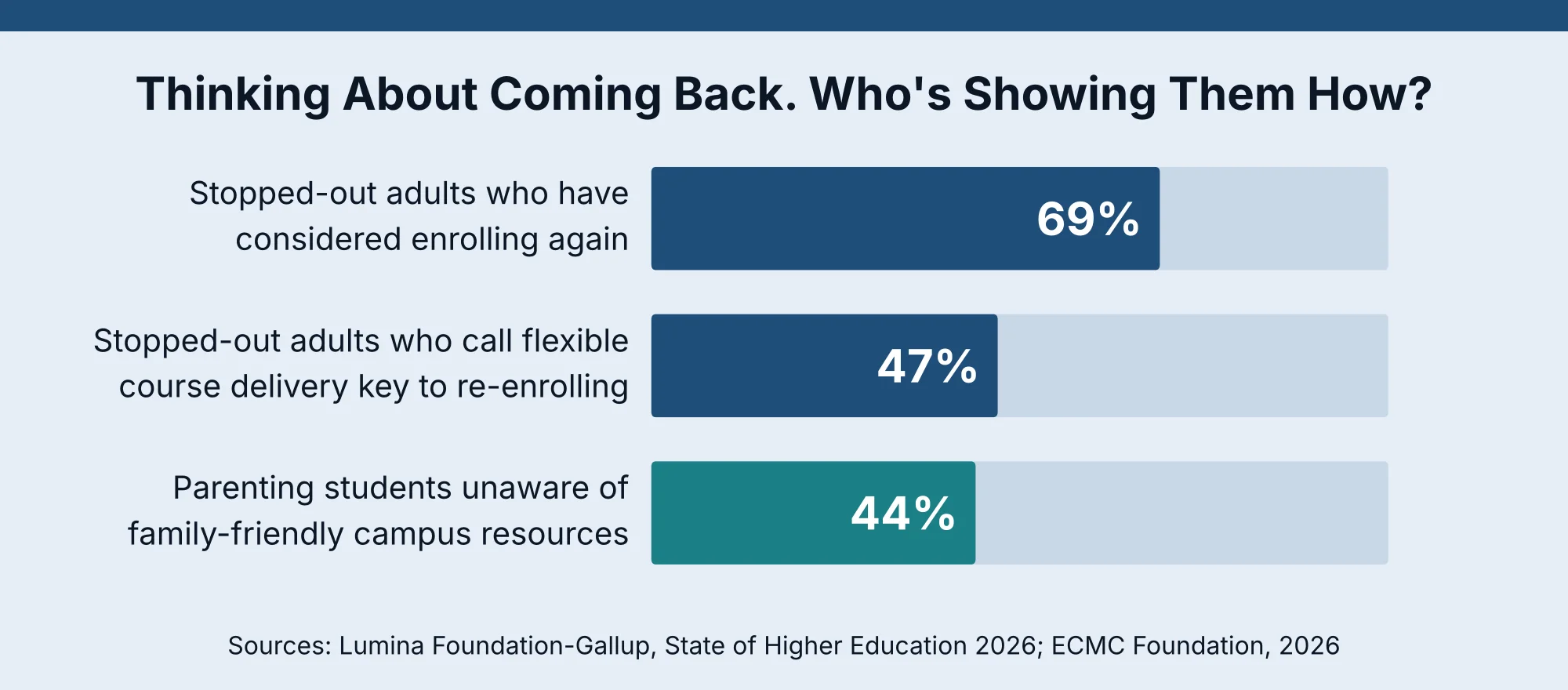
What Invisible Caregiving Costs
When caregiving stays invisible, colleges lose students who were passing their classes and staff who were good at their jobs, and employers lose graduates who had the skills but not the hours. Many never tell anyone at the college why they left, and most stopped-out adults have thought about coming back. Getting them back depends on a college willing to make room for the life they're already living.
 The Status of Higher Ed Accreditation Standards Under New Federal Guidance
 How Campus Surveillance Affects Students
 4 Strategies Universities Can Use to Elevate International Placement Rates
 How Skills-Based Hiring is Changing International Student Resumes
 How Coding Stopped Being a Job and Became a Basic Skill