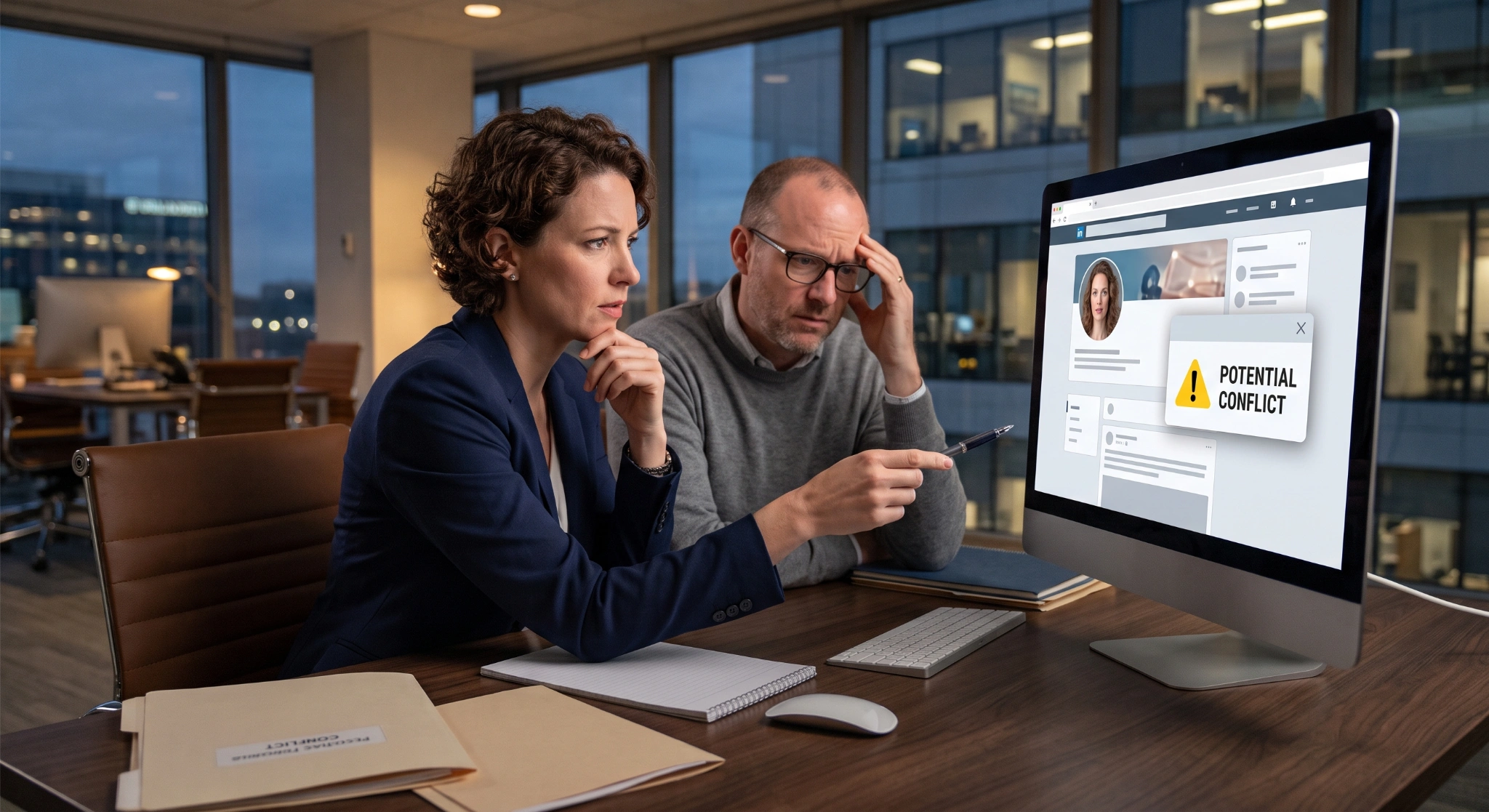
Admissions offices and HR teams do the same thing when they get nervous about an applicant. They Google them. Then they open Instagram. It feels harmless. It usually isn't.
Social media screening has become a normal part of vetting people, whether you're deciding who gets into a program or who gets a job offer. But looking someone up online and treating that as a background check are two very different things, and mixing them up is where the trouble starts.
Year | Say it's "fair game" | Actually check |
|---|---|---|
2018 | 57% | 25% |
2021 | 66% | 27% |
2023 | 67% | 28% |
That gap is the whole story right there. Kaplan's admissions survey has tracked this same split for years: most people say it's fine to look, but hardly anyone actually does it. That should tell you something: even the people doing the screening aren't fully comfortable with it.
What Counts as Screening (And What Doesn't)
Casually checking someone's public profile isn't the same as running a documented, consistent screening process. One is a habit. The other is a process with rules, and it needs to follow them.
If a student, for example, gets rejected and later finds out an admissions reader looked at their TikTok first, that's not a scandal by itself. But if that reader only did it for some applicants and not others, now you've got a real problem.
Bias Sneaks In Before You Even Notice
Here's the uncomfortable part. The second you look at someone's photo, you can usually guess their race, rough age, and sometimes their religion. You don't mean to notice. You just do.
The EEOC's guidance on bias flags exactly this: a profile photo alone is often enough to reveal someone's approximate age, apparent gender, or race, and there's no un-clicking that once you've seen it. That knowledge can quietly shape a decision even when nobody intends it to.
The fix a lot of offices use: keep the person who screens social media separate from the person who makes the final call. It's not perfect, but it puts a wall between what someone saw and what someone decided.
A Screenshot Never Tells the Whole Story
Old posts get dug up. Photos get taken out of context. Someone gets tagged in something they had nothing to do with. None of that is evidence of who a person actually is today.
If a job candidate, for example, posted a joke three years ago that reads badly now, that single post says almost nothing about how they'll perform on the job. But it's the kind of thing that sticks in a reviewer's head anyway, simply because it's the thing they happened to see.
This is the core problem with using social content as evidence. You're not getting a full picture. You're getting whatever surfaced first, stripped of the context that would actually explain it.
You're Watching Them. Someone's Watching You Too
More than two dozen states restrict employer access to candidates' social media passwords and login credentials. That's not a minor rule. It tells you lawmakers already decided this territory needed guardrails.
There's a trust cost here too. People change how they post, or stop posting altogether, once they know an admissions office or an employer might be looking. That's a real chilling effect, and it runs both ways: the more people self-censor, the less honest a picture you actually get.
There's No Way to Check If Any of It's Real
A real background check comes with a paper trail. Someone can dispute it. There's a process for correcting mistakes.
Social media has none of that. You can't confirm an account actually belongs to the applicant. You can't rule out an impersonation account, a hacked account, or a joke account run by a friend. If a student, for example, gets penalized for a post from a fake account using their name, they may never even know why they were turned down, let alone get a chance to fix it.
Gartner's research on fraud puts a number on where this is headed: by 2028, roughly one candidate profile in every four worldwide won't belong to a real, verified person, thanks to AI-generated photos, cloned voices, and fabricated work histories. A social profile is exactly the kind of unverified source that gets fooled by this stuff first.
That's not a small gap. It's the difference between a process you can defend and one you can't.
Where the Legal Trouble Actually Starts
For employers specifically, this is where things get expensive. The FTC's background check guidance, issued jointly with the EEOC, spells it out: if a third party runs any kind of background report on a candidate, including one built from social content, the candidate has to see that disclosure on its own piece of paper and sign off on it separately, before anything else happens. It can't ride along inside a general job application.
Do it yourself instead of through a vendor, and you skip that specific paperwork requirement. But you don't skip the discrimination exposure. If a rejected candidate later argues that what you saw on their profile influenced the decision, you're the one who has to prove it didn't.
The Fairness Test Most Screening Fails
Here's a simple question worth asking: do you screen everyone the same way, at the same stage, or only some people?
A lot of offices only look someone up after a red flag gets raised, a tip comes in, or a scholarship is on the line. That feels reasonable in the moment. But it means two applicants with identical files get treated differently based on who happened to catch someone's attention.
Consistency is the whole ballgame here. Screen everyone at the same point in the process, or don't screen anyone at all.
What Actually Works Instead
None of this means you have to fly blind. You've got better tools already:
Structured, third-party background checks that come with a disclosure, consent, and dispute process built in
Reference checks with a consistent set of questions asked the same way for every candidate
Skills assessments or work samples that measure the thing you're actually trying to predict
Credential evaluation reports for confirming degrees, transcripts, and international coursework instead of guessing from a bio
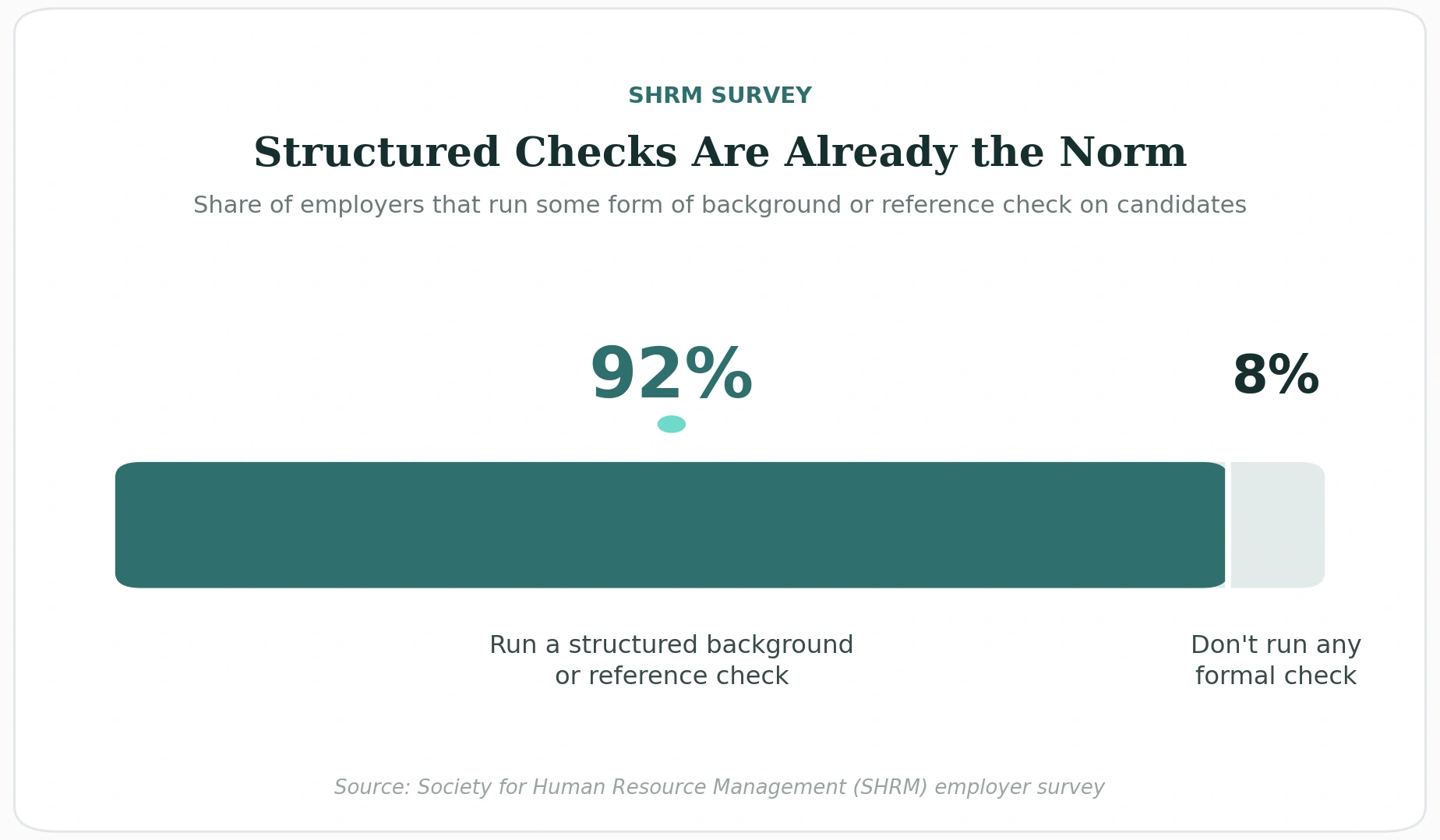
Each of these gives you something social media never can: a process you can explain and defend if anyone ever asks you to.
4 Moves to Make Before You Screen Anyone
Screen everyone the same way, or not at all. Pick a fixed stage in the process and apply it to every applicant, no exceptions.
Separate the screener from the decision maker. Whoever looks at social content shouldn't be the one deciding who gets in or gets hired.
Standardize your consent forms. Any third-party check needs a standalone written disclosure, not a line buried in an application.
Favor documented sources over social profiles. Background checks, references, and credential reports all come with a paper trail. Social media doesn't.
What This Comes Down To
Social media screening feels like extra information. Most of the time it's just extra risk dressed up as due diligence. Stick to tools that come with a paper trail, and you'll make better calls anyway.
 Why Higher Education Needs to Embrace Cognitive Science Now
 How Universities Use Zero-Waste Swap Programs to Cut Student Costs
 How Industry Partnerships Shape Modern Curricula
 How Post-COVID Aid Programs Help Universities Rebuild Admissions
 Beyond the Acceptance Rate and How Colleges Decide Who Gets In