You don't need a computer science degree to show AI fluency on your resume.

Employers want to see it anyway. In ZipRecruiter's latest AI employer report, about three in four employers said they either require AI skills for some positions or count them as a major plus. If you studied communications, psychology, or business, that can sound like a problem. The same research points the other way, though: employers still rank critical thinking and communication first when they hire new graduates.
Your Degree Already Covers Part of AI Literacy
In February 2026, the U.S. Department of Labor's Employment and Training Administration released an AI Literacy Framework. It frames AI literacy as knowing how to work with AI tools, mostly generative AI, and how to judge what they produce. It also treats a basic grasp of these skills as something every worker will need, whatever their field.
None of it involves coding.
The framework is voluntary guidance rather than a regulation. It still signals what employers and training programs are being pushed to build. The Strada Institute for the Future of Work adds another piece: in its entry-level hiring survey of nearly 1,500 executives and talent leaders, more than 40% said AI has shifted more analysis and decision-making onto junior staff.
If you majored in history, for example, you spent years checking sources, weighing evidence, and turning long readings into accurate summaries. The framework names checking facts and catching missing pieces among the skills needed to review AI output. You've been practicing that since your first research paper.
Five Areas That Define AI Literacy
The Labor Department splits AI literacy into five content areas, which makes it the closest thing to an official list of in-demand AI skills:
Knowing what AI can and can't do, including its tendency to get facts wrong
Recognizing where AI fits into everyday work, such as drafting, research, and design
Giving AI specific, well-framed requests and adjusting them until the results are useful
Reviewing what AI produces and deciding what's correct, what's missing, and what needs rewriting
Handling AI with care, which means keeping confidential material out of it and sticking to your employer's rules
Pick two or three. Back each one with something you actually did, and you'll say more than a row of tool names ever could.
Headline, Skills Section, and Experience Bullets
Headline. This is the line under your name. Lead with your field and add the AI skill second, as in "Communications Graduate | Research and AI-Assisted Content Drafting," so your background stays front and center.
Skills section. Here's where specific tools go. Sort them by purpose: writing and research assistants like ChatGPT or Gemini in one group, productivity tools like Copilot in Excel in another, design tools like Canva in a third. Stick to tools you've used for coursework, a job, or a project, because anything on the page can come up in an interview.
Experience bullets. These carry the most weight. Build each one from four parts: the task, the tool, how you checked the output, and the result.
"Used ChatGPT for research" gives a recruiter almost nothing to go on. Try this instead: "Drafted weekly report summaries in ChatGPT and verified each figure against the source data before sending them to my supervisor." Now the reader sees the tool, your review step, and the fact that someone relied on your work.
Let Your AI Work Show Your Soft Skills
Writing "strong communicator" on a resume takes five seconds. Proving it takes a better bullet.
Say you reworked an AI-generated email so it landed with donors rather than board members. That one line shows you understand audience. Caught citation errors in AI-assisted research before you submitted it? You've demonstrated attention to detail without ever typing the phrase. Both examples reflect the framework's focus on human review.
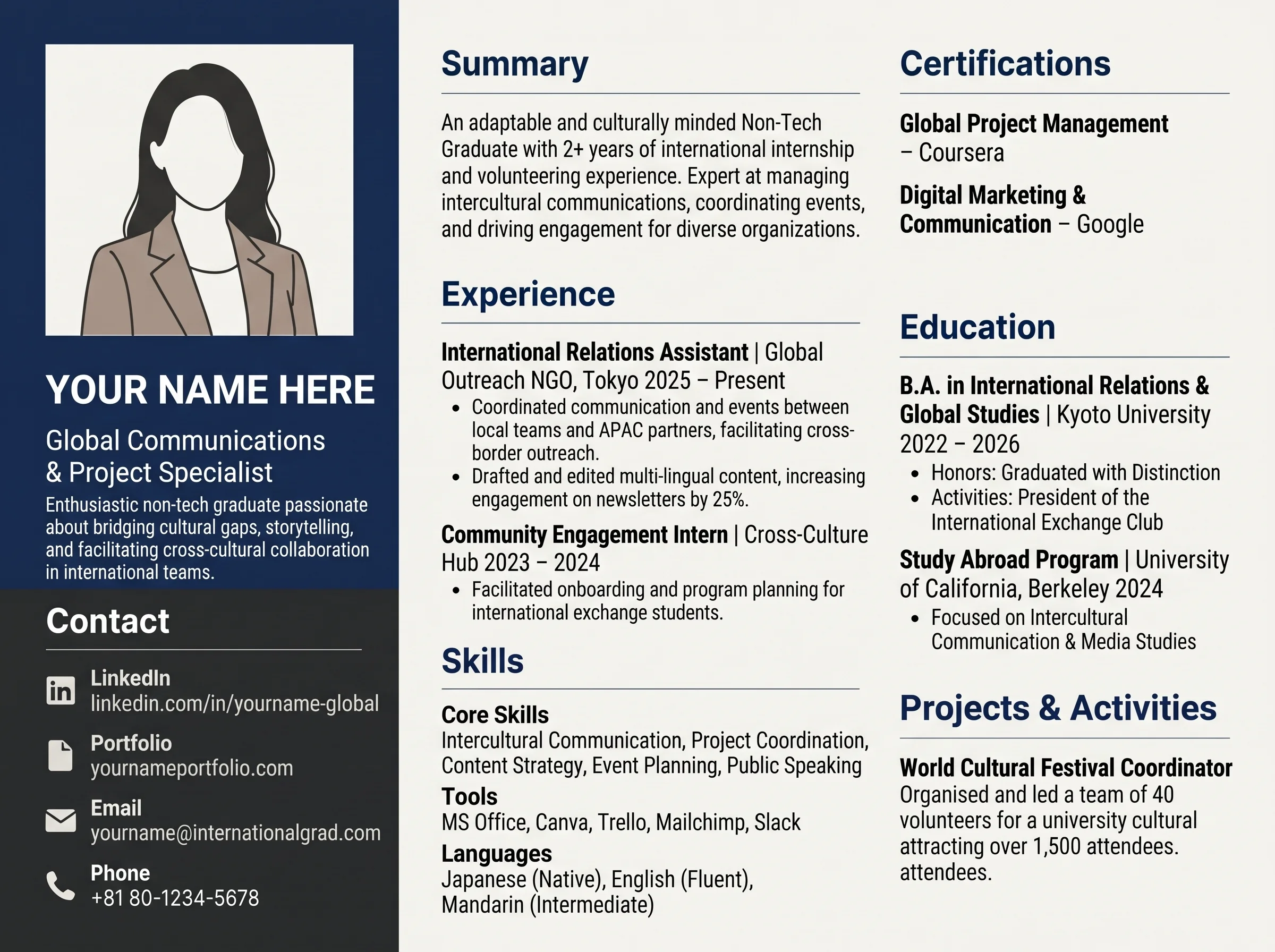
Your work history doesn't need to be long, either. A projects section can hold class assignments, club roles, volunteering, and freelance jobs.
If you ran social media for a campus club, for example, you could describe using AI to brainstorm post ideas and then editing every caption to fit the club's voice and the event details. One bullet covers tool use, editing, and ownership of the final post.
What Employers Weigh in 2026
AI skills are gaining weight in hiring, and routine entry-level tasks are first in line for automation.
Finding | Source and date |
|---|---|
74% treat AI skills as a requirement or a major plus for at least some positions | ZipRecruiter, survey conducted June 2026 |
13% expect AI skills in every position they hire for | ZipRecruiter, survey conducted June 2026 |
38% now use AI for routine data work that junior employees used to handle | ZipRecruiter, survey conducted June 2026 |
31% now ask for more experience in entry-level roles because of AI | ZipRecruiter, survey conducted June 2026 |
46% expect AI to have a positive effect on entry-level hiring in 2026; 17% expect a negative effect | Strada Institute, published May 2026 |
Critical thinking and communication rate highest for entry-level graduates, at 4.3 out of 5 each | Strada Institute, published May 2026 |
Selling yourself as someone who works faster with AI only goes so far when employers already hand their most repetitive tasks to software. Strada's respondents ranked critical thinking and communication well ahead of AI literacy when judging new graduates.
On Strada's five-point scale, critical thinking and communication each scored 4.3. AI literacy came last of the eight skills rated, at 3.6.
Oversight is the stronger pitch. Fact-checking AI output, editing drafts for a specific reader, keeping private information out of AI tools: each lines up with what employers report and with the Labor Department's framework.
Two Beginner AI Certificates
A short experience section leaves room for a certificate. Two Coursera options suit beginners with no technical background.
Broad introduction. You can take Google AI Essentials at your own pace across five short courses, and it requires no prior experience. It costs $49, with financial aid available. One course covers responsible use, including bias and privacy. Google puts the total time at under 10 hours, while other published estimates run shorter.
Deeper prompting practice. Vanderbilt University's Prompt Engineering for ChatGPT is listed at beginner level and runs about two weeks at 10 hours a week. It focuses on reusable ways to structure prompts for tools like ChatGPT and comes with a Coursera Plus subscription.
Either one fits under a Certifications heading below Education. Don't let it sit there alone. The Labor Department's framework stresses hands-on learning, so pair the certificate with a bullet showing what you did with it.
Explaining Your AI Use in an Interview
Be ready to walk through any AI project on your resume, step by step.
Start with what you asked the tool to do and what context you gave it. Then get specific about what came back wrong or incomplete, and how you fixed it. The framework treats directing AI and evaluating its output as separate skills, and a good answer shows both.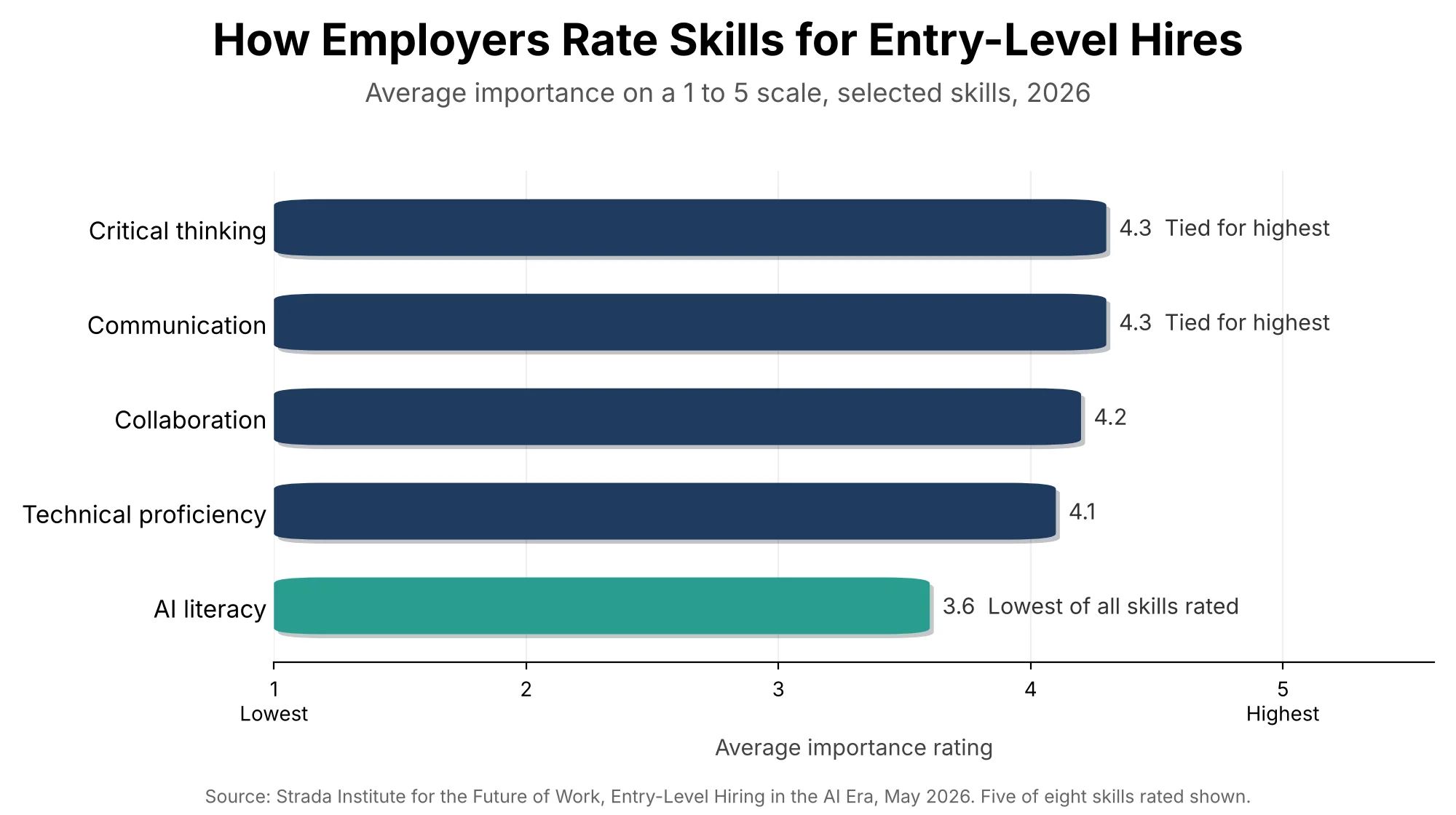
Know your limits as well. The framework counts safeguarding confidential material and respecting company rules as core AI skills, so have an answer ready for what you'd keep out of an AI tool and why.
Write Your First Bullet This Week
Choose one task from the past year where you used AI, write it up with your review step included, and add it to your resume. Then search entry-level openings on the Scholaro jobs board and adjust your headline to match the roles you want.
 How Caregiving Shapes Student Success and Career Readiness
 The Status of Higher Ed Accreditation Standards Under New Federal Guidance
 How Campus Surveillance Affects Students
 4 Strategies Universities Can Use to Elevate International Placement Rates
 How Skills-Based Hiring is Changing International Student Resumes