
Picking a major feels like a one-time decision. For international students, it can quietly shape your whole US career path. Some college majors foreign students regret choosing later, not because the subject was wrong for them, but because the visa rules and licensing steps behind that degree are brutal. If you're picking a major right now, or already deep into one, here's what you need to know before it costs you time or money.
Major Category | OPT Length | Licensing Involved | H-1B Odds |
|---|---|---|---|
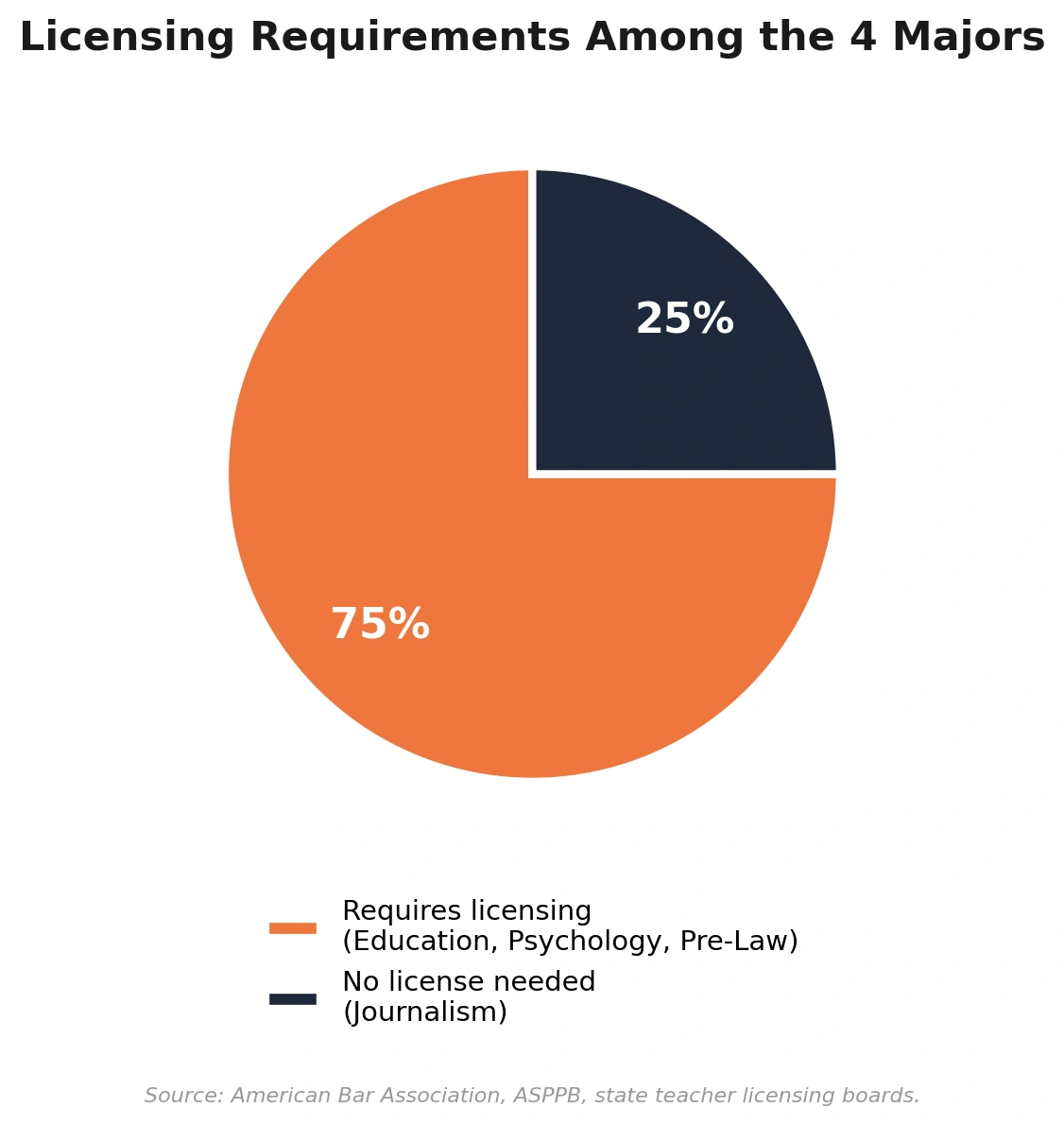
STEM fields | Up to 3 years | Rare | Higher |
Education | 1 year | Yes, state licensed | Lower |
Psychology | 1 year | Yes, doctoral + exam | Lower |
Pre-Law | 1 year | Yes, bar exam | Lower |
Journalism & Communications | 1 year (mostly) | No | Lower |
Why Some Majors Backfire After Graduation
A few factors decide whether your degree turns into a job or a headache. Here's what actually drives the regret.
Short work windows. Most non-STEM majors get 12 months of Optional Practical Training. STEM majors can stretch that to 3 years under the Department of Homeland Security's STEM OPT extension rules. That gap alone changes how much time you have to find sponsorship.
Heavy licensing needs. Fields like psychology and education don't let you just show up and work. You need state approval first, and state boards move on their own timeline.
Low visa odds. The H-1B lottery leans hard toward STEM roles. Liberal arts and social science grads compete for a much smaller slice of the pool.
Lower starting pay. Entry salaries in teaching, counseling, and media trail tech and engineering by a lot, and that gap makes visa and relocation costs harder to absorb.
If a student picks a major purely because they love the subject, without checking any of this first, they can end up with a great transcript and no clear way to stay employed after OPT runs out. That's the trap. The subject isn't the problem. The paperwork behind it is.
4 Majors That Cause the Most Regret
Education, psychology, pre-law, and journalism top the list.
1. Education Degrees Hit Licensing Walls
Teaching sounds simple until you realize every state runs its own licensing process. You can't just walk into a classroom with a diploma. Most districts want your work authorization and your teaching license sorted before they'll even interview you. The J-1 teacher visa is one route, but it's an exchange program, not a permanent hire, so it doesn't solve the long-term problem.
If a student trains as a teacher and assumes any school will sponsor them, they usually find out the hard way that most won't bother with the paperwork for an entry-level hire.
2. Psychology Takes Years to Pay Off
Psychology is a slow build even for US citizens. You need a doctorate, a supervised internship, a postdoc year, and a passing score on the national licensing exam before you can practice on your own, according to the psychology licensing exam board. For international students, it gets worse. Many federally funded postdoc positions require US citizenship or permanent residency, which cuts off a training path that domestic students rely on.
If a student wants to become a licensed psychologist, for example, they're often years into training before their visa situation even stabilizes.
3. Pre-Law Runs Into Timing Problems
Here's a myth worth killing: you don't need US citizenship to sit the bar exam anywhere in the country. That part is fine. The real issue is timing. A law degree isn't STEM, so you're stuck with 12 months of OPT. Bar exam results, followed by the H-1B lottery cycle, rarely line up inside that window. Most law firms also won't sponsor entry-level associates because the return on that investment takes years to show up.
If a student passes the bar right on schedule, for example, they can still miss the H-1B registration window entirely and have to wait a full extra year.
4. Journalism Struggles to Find Sponsors
Journalism and communications don't require a license, which sounds like a win. But most programs in this field still fall under the standard 12 month OPT window, and newsrooms run on thin budgets. Sponsoring a work visa is expensive, and most media employers have little history of doing it for entry-level roles.
If a student lands a reporting job right out of school, for example, they may still lose it the moment OPT expires, simply because the outlet never budgeted for sponsorship.
One thing that helps before you even start applying to US schools: get your foreign transcripts evaluated early. Scholaro's credential evaluations show you exactly how your prior coursework lines up with US degree requirements, which makes it easier to plan your major around realistic outcomes instead of guesswork.
Pick With Your Eyes Open
None of these majors are bad choices. They just come with rules that catch people off guard. Check the OPT length, the licensing steps, and the visa odds for your field before you commit. A little research now saves you a lot of stress after graduation.
 The Tightest Job Market in Years for College Grads
 How Universities Are Adapting Health Programs to a Moderating Job Market
 How Flexible Are PhDs in a Changing Job Market
 Understanding the Decline of International Enrollment in American Universities
 Why AI Writing Polish Can Flatten Student Expression