
Your resume matters. Your GPA matters. But here's something a lot of grads miss: your location can change your job odds just as much as either of those. Apply in a big city and you're up against a different set of odds than if you apply in a small college town, even with the exact same resume.

If you're job hunting right now, it helps to know how much geography is working for or against you. Here's what actually changes depending on where you look.
City Size Changes Your Odds
Before you pick where to focus your search, it helps to see the tradeoffs side by side.
City size | Job openings | Competition | Cost of living | Best for |
|---|---|---|---|---|
Large metro | High | High | High | Big-name employers, specialized roles |
Mid-size metro | Moderate | Moderate | Moderate | A mix of opportunity and affordability |
Small city or college town | Lower | Lower | Low | Local employers, tighter networks |
Run This 3-Step Check Before You Apply
Before you decide where to focus your search, run through these three checks for any city you're considering:
Check your real cost of living. Look up rent, groceries, and transportation for the specific city, not just the salary number in the job posting.
Check your alumni density. Search your school's alumni on LinkedIn filtered by that city. A handful of contacts is worth more than a hundred cold applications.
Check the local industry focus. Look up what that city's economy actually runs on. Your degree lands differently in a finance hub than it does in a manufacturing town.
Local Employers Hire Local People First
A lot of entry-level hiring comes down to convenience. If you already live in the area, you're easier to interview, easier to onboard, and easier to trust won't back out for relocation reasons. That bias toward local candidates is real, and it adds up.
20 percentage points. That's how much employment rates can differ between regions in the same country, according to the OECD's 2026 report on regional job gaps. Same country, same degree, wildly different odds depending on where you land.
Say you apply only in your college town. You might be competing against ten people instead of a thousand. Smaller pond, better odds, even if the pond has fewer fish in it overall.
Your Alumni Network Opens Doors AI Can't Close
A lot of hiring now runs through AI resume screening before a human ever sees your application. Alumni referrals skip that step entirely, because someone on the inside is putting their name behind you.
Career coaching firm InsideTrack ranks alumni connections among the top sources of job referrals for both new grads and mid-career professionals in its recent referral research. Messages sent to fellow alumni also tend to get a noticeably higher response rate than cold outreach to strangers.
Move to a city where your school has a strong alumni chapter and you get a built-in warm list of people willing to take a call. That's often the difference between an application that sits in a pile and one that gets forwarded to a hiring manager.
Big Cities Bring More Jobs and More Competition
Big metros have volume on their side. More employers, more industries, more open roles at any given time. But that volume cuts both ways. Everyone else knows it too, so you're one of many applicants chasing the same listings.
5.6 percent. That's roughly where the unemployment rate for recent grads sat through the second quarter of 2026, with underemployment running even higher, based on tracking from the Federal Reserve Bank of New York. A tight market like that hits hardest in cities where thousands of grads are chasing the same handful of desirable roles.
Cost matters too. Location tops the list of what graduating seniors weigh when picking where to apply, according to career platform Handshake's Class of 2025 survey. A bigger salary in an expensive city doesn't always stretch further than a smaller one somewhere cheaper.
Smaller Cities Deserve a Second Look
Mid-size and small cities don't get the same hype, but a lot of them are quietly outperforming the big names on affordability and hiring strength.
Recent city rankings built on Census and Bureau of Economic Analysis data show smaller metros landing near the top for new grad employment, a trend confirmed by background screening research published this year. Payroll data covering more than 400,000 workers backs this up too, with some smaller metros posting strong year-over-year wage growth alongside lower living costs according to recent payroll analysis.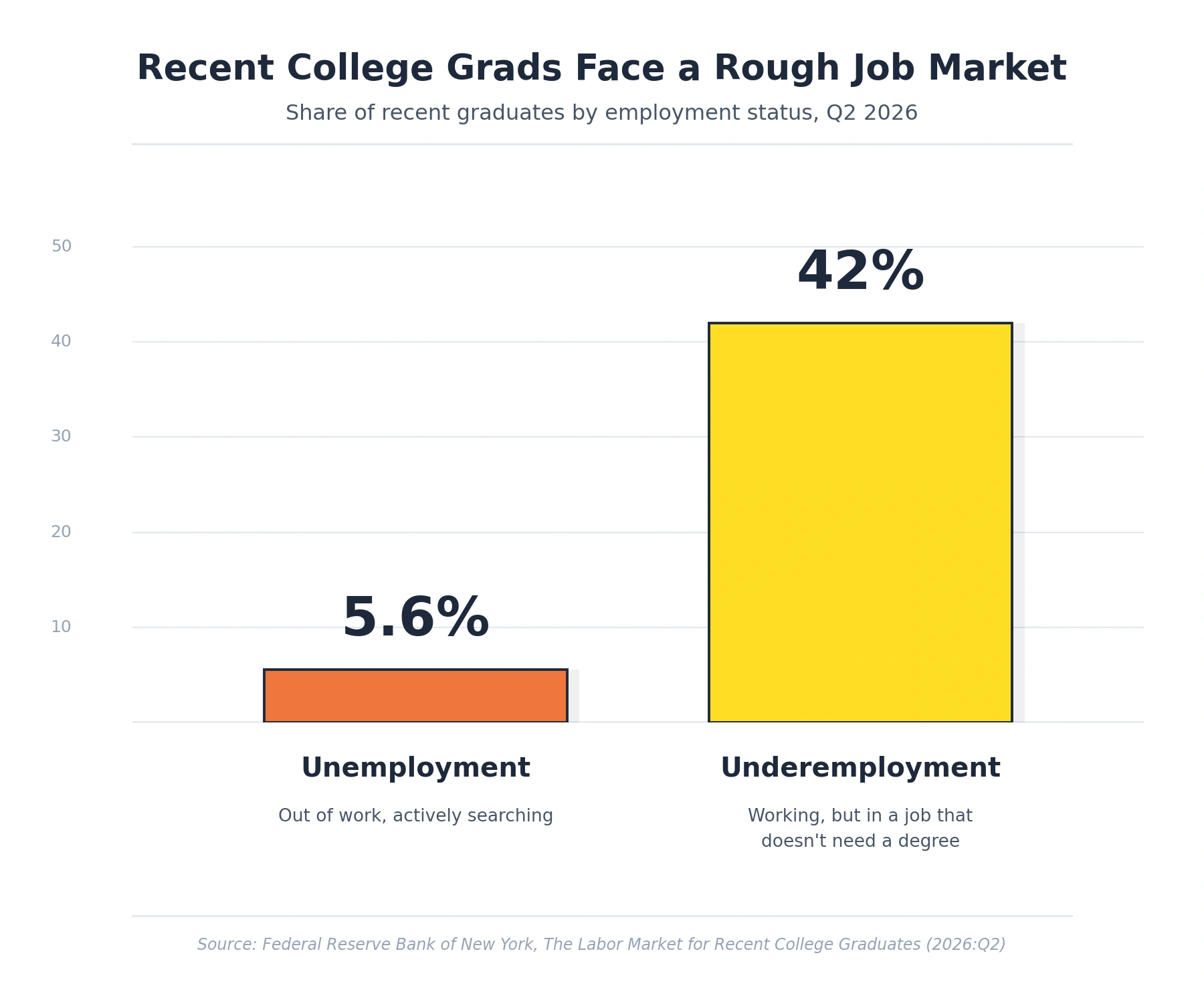
Assume you have to move to a major hub to get a good offer, and you might skip right past a mid-size city where you'd face less competition and keep more of every paycheck.
Staying Close to Home Has Its Own Payoff
There's no universal formula for balancing career growth against your quality of life. Career platform Handshake surveyed thousands of Class of 2025 seniors and found that 69 percent call finding a job near family a moderate to high priority, with 47 percent saying the same about staying near friends, based on its 2025 graduate survey. Picking a location really does come down to personal trade-offs, matching lower living costs and existing support against long-term industry access.
Family, existing friendships, and a support system you already trust can matter more than a slightly higher salary somewhere unfamiliar. Staying local also means you already know the rent prices, the job market, and probably a few people who can vouch for you.
Wherever you decide to look, check what's actually open near you before you commit to a city. Scholaro's job search engine lets you browse real listings by location so you're deciding with actual data instead of a guess.
Location Is Part of Your Strategy
Where you apply changes who sees your resume, how far your paycheck goes, and how much competition you're up against. Weigh your location with the same care you put into your resume. It's working for or against you either way.
 How Universities Use Zero-Waste Swap Programs to Cut Student Costs
 How Industry Partnerships Shape Modern Curricula
 How Post-COVID Aid Programs Help Universities Rebuild Admissions
 Beyond the Acceptance Rate and How Colleges Decide Who Gets In
 How Leveraging Job Placement Strategies Can Reenroll Returning Students