Building a U.S. credit score from scratch is one of the most useful things you can do in your first few months as an international student. It affects whether you can rent an apartment on your own, get a phone plan without a big deposit, finance a car, and in some cases, pass a background check for a job. This guide walks through exactly how to start, step by step, along with what a credit score is and where it actually matters.
How to Start Building Credit as an International Student
You don't need a complicated strategy here. You need a consistent one, started as early as possible.
Phase 1: Getting Set Up
Open a U.S. bank account first. A few months of banking history makes card approval easier down the line, since issuers like to see some activity before extending credit.
Apply for a secured credit card. These typically need a refundable deposit, often between $200 and $500, which becomes your credit limit. This is usually the fastest entry point if you have no credit history at all.
Ask a trusted relative to add you as an authorized user on their card, if you have one nearby with a solid payment history. Their positive history can start showing up on your file even before you have a card of your own.
Look into a credit builder loan if a secured card isn't approved yet. These work in reverse of a normal loan: you make payments first, and the funds get released once the loan is paid off, with the payments themselves building your history.
Phase 2: Maintaining Good Habits
Pick one card and pay it off in full every month. Avoid applying to five issuers in one week just to see what sticks. Every rejection leaves a hard inquiry on your file, and a cluster of them in a short window signals risk to the next lender, which makes your next approval harder to get, not easier.
Keep your utilization low. Using less than 30 percent of your credit limit each month helps your score climb faster than paying it off in full but running it close to the limit first.
Give it time. Most students start seeing a usable score within three to six months of consistent activity, though a strong history takes longer to build.
Getting your U.S. bank account and credit setup handled early fits into the same window as sorting out other administrative pieces of arriving, including your credential evaluation. Neither process moves fast, and delaying one just means more waiting later.
What a Credit Score Actually Is
A credit score is a three digit number, usually between 300 and 850, that tells lenders how likely you are to repay money you borrow. Here's the range breakdown most lenders use.
Score Range | Rating |
|---|---|
800 to 850 | Exceptional |
740 to 799 | Very Good |
670 to 739 | Good |
580 to 669 | Fair |
300 to 579 | Poor |
That number comes from five main factors:
Payment history: whether you pay bills on time
Credit utilization: how much debt you're carrying compared to your limit
Length of credit history: how long you've had credit accounts open
New credit: how many new accounts you've opened recently
Credit mix: the variety of credit types you use
The Consumer Financial Protection Bureau breaks down how each factor gets weighted if you want the full technical picture.
Do You Need a Social Security Number to Get a Credit Score?
No, but having a Social Security Number, or SSN, makes the process faster.
You can start a credit file using an Individual Taxpayer Identification Number, or ITIN, issued by the IRS. Some card issuers today will approve an application with just a passport and your I-20, without an ITIN or SSN at the application stage.
If you plan to work on campus and will need an SSN eventually, Study in the States outlines the exact steps and required documents.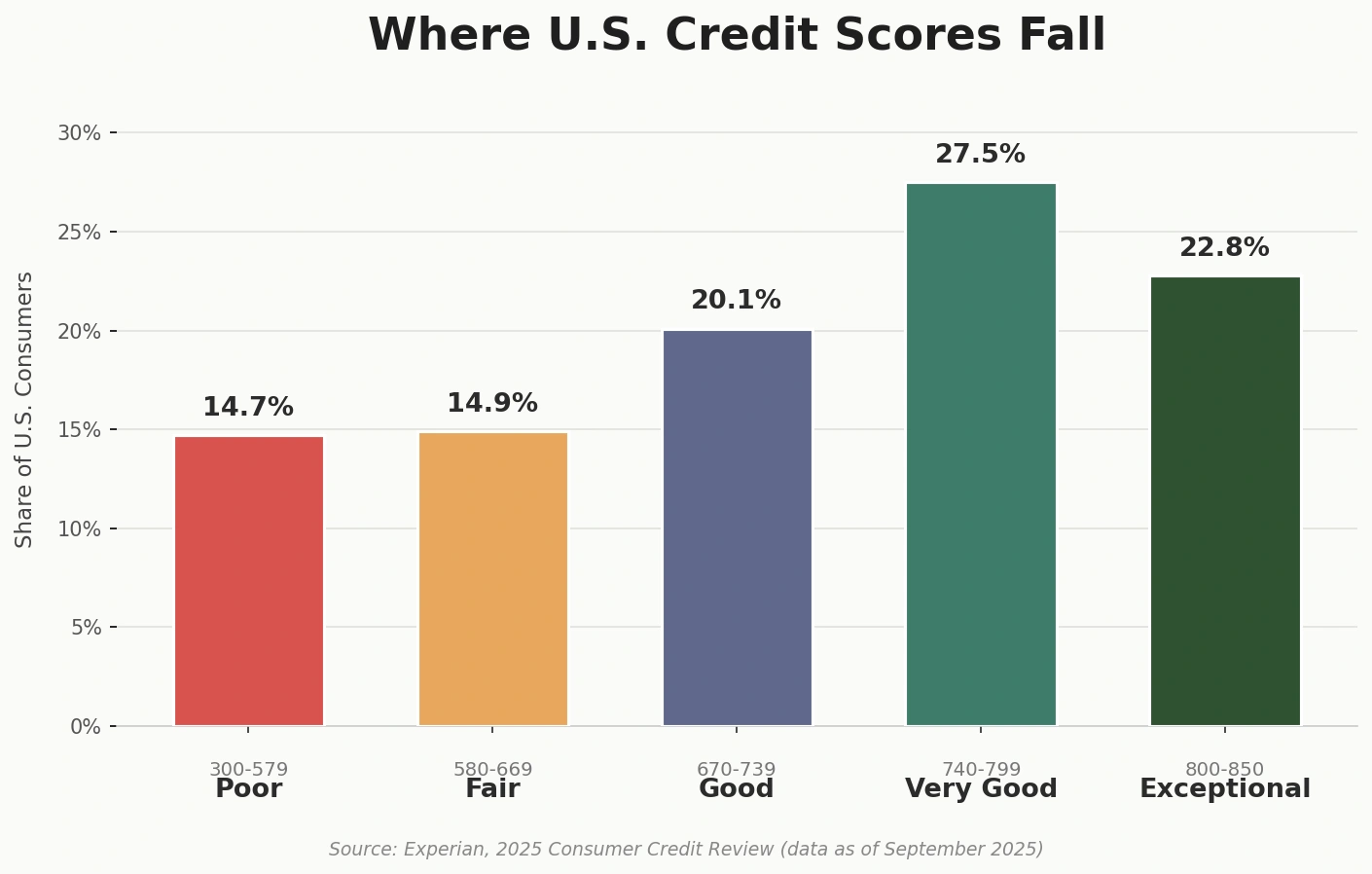 One detail worth knowing ahead of time: credit history built under an ITIN doesn't always carry over cleanly once you get an SSN later. Some students report their file resetting close to zero after the switch. It doesn't happen to everyone, but it's common enough that you should plan for the possibility.
Do Employers Actually Check Your Credit Score?
Employers can't see your actual credit score. What they can request, in specific cases, is a modified version of your credit report, and only for certain job types. Here's what actually applies:
Credit checks show up mostly for roles that involve handling money, like banking, accounting, or cash heavy retail jobs
An employer has to get your written consent first, under the Fair Credit Reporting Act
The check counts as a soft inquiry, so it doesn't affect your score
Several states now ban employment credit checks outright, including New York, where the rule took effect in April 2026
If you're applying for a general office job, a lab position, or anything outside finance, your credit typically never comes up in the hiring process at all.
If a student, for example, applies for an on campus job in a bursar's office, they might get asked to consent to a credit check as part of the process. If they haven't built any credit yet, since they've only been in the country a few months, that's normal. It doesn't affect the outcome, but it's the kind of request worth expecting ahead of time rather than being surprised by it mid interview.
Where Your Credit Actually Gets Tested
The bigger impact of your credit score as an international student shows up around your job, not inside the hiring process itself.
Signing a lease near your campus or new job
Getting approved for a car loan if your commute requires one
Getting a phone plan without a large upfront deposit
Opening a credit card that doesn't charge extra fees for having no U.S. credit history
Landlords and utility companies check credit far more often, and far more routinely, than employers do. Even if a job never asks about your credit, settling in near that job usually will.
Start Early
Your credit score won't make or break most job offers. But it shapes how smooth your first year in the U.S. feels, from your lease to your phone bill to your car. Start building it the same month you arrive, not the month you need it.
 How Universities Use Zero-Waste Swap Programs to Cut Student Costs
 How Industry Partnerships Shape Modern Curricula
 How Post-COVID Aid Programs Help Universities Rebuild Admissions
 Beyond the Acceptance Rate and How Colleges Decide Who Gets In
 How Leveraging Job Placement Strategies Can Reenroll Returning Students