
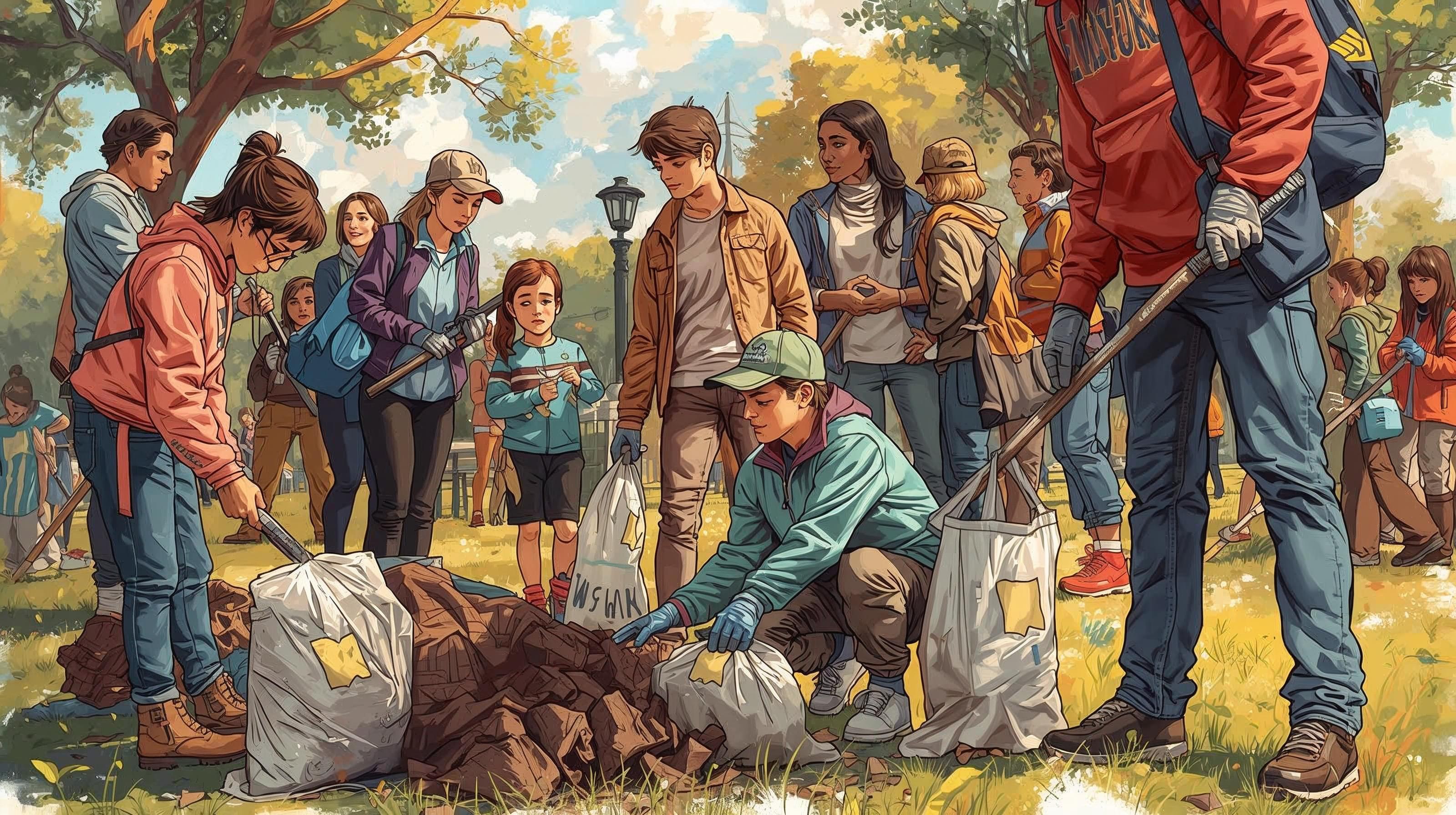
Classroom learning teaches you concepts. Community service as practical training teaches you how to use them. The gap between knowing something and doing something is where most students struggle when they enter the workforce or apply to competitive programs. Volunteering closes that gap by putting you in real situations with real stakes, minus the pressure of a paycheck or a grade.
This article breaks down what you actually learn from service work, how it functions as hands-on training, the benefits for you and your community, and how to leverage it for college and job applications.
Skills You Build Through Community Service
Volunteer work develops three categories of skills: technical abilities, interpersonal competencies, and personal qualities.
Technical Skills
The specific skills depend on where you serve. Writing press releases for a nonprofit teaches you to communicate with targeted audiences. Organizing a food drive requires project management and logistics. Volunteering at a hospital exposes you to medical terminology and patient interaction protocols. These are transferable skills you can list on a resume and discuss in interviews.
Students interested in particular careers can choose service that aligns with their goals. Future teachers can tutor. Aspiring veterinarians can work at animal shelters. Pre-med students can volunteer at clinics. The experience gives you concrete examples to reference when someone asks what qualifies you for a position.
Interpersonal Skills
Most volunteer roles require working with people you wouldn't normally encounter. You collaborate with other volunteers of different ages and backgrounds. You serve populations facing challenges unlike your own. You report to supervisors and coordinate with community partners.
This builds communication skills that textbooks cannot teach. You learn to explain things clearly to different audiences. You practice active listening. You figure out how to work productively with people whose perspectives differ from yours.
Leadership opportunities often emerge quickly in volunteer settings. Organizations need people willing to take initiative. After gaining experience, you might train newer volunteers or lead a project team. These leadership experiences carry weight on applications because they involve genuine responsibility.
Personal Development
Service work changes how you see yourself and others. Students consistently report increased empathy after volunteering with populations they previously knew little about. Working at a homeless shelter, tutoring immigrants learning English, or visiting elderly residents in care facilities expands your understanding of diverse life circumstances.
You also discover your own strengths and weaknesses in ways that classroom work doesn't reveal. Maybe you handle crisis situations calmly. Maybe you struggle with unstructured tasks. These insights help you make better decisions about your education and career path.
Time management improves by necessity. Balancing volunteer commitments with academics, work, and personal life forces you to prioritize and schedule effectively. This skill becomes critical in college and beyond.
How Practice Functions in a Community of Practice
The term "community of practice" comes from learning theory developed by cognitive anthropologist Jean Lave and educational theorist Etienne Wenger. It describes a group of people who share a concern or passion for something and learn through interaction. The concept originated from studying apprenticeships, where researchers found that learning happens not just between master and student, but across the practicing community.
Three elements define a community of practice:
Domain: The shared interest that brings members together
Community: The relationships and social connections among members
Practice: The shared activities, tools, and knowledge members develop together
Practice is the engine that drives learning. You become competent by doing something yourself, making mistakes, getting feedback, and improving. Communities of practice provide the environment where this cycle happens naturally.
When you volunteer, you enter an existing community of practice. The food bank has established procedures. The tutoring program has methods that work. The hospital has protocols. You start at the edges, handling simple tasks while observing how experienced members operate. Lave and Wenger call this legitimate peripheral participation.
As you gain experience, you move toward more central roles. You take on harder tasks. You start helping newer volunteers. You contribute ideas based on what you've learned. This progression mirrors how professionals develop expertise in any field.
The knowledge you gain through practice differs from classroom knowledge. It's contextual, meaning you understand not just what to do but when and why. It's embodied, meaning your responses become automatic rather than requiring conscious thought. It's social, meaning you've absorbed the values and norms of the community along with its techniques.
Hospital volunteers, for example, learn patient care norms by working alongside nurses and staff. They pick up on unwritten rules about communication, boundaries, and priorities. This tacit knowledge transfers through shared practice rather than lectures.
Community service places you inside active communities of practice where real skills develop through participation. That's what makes it practical training rather than just charitable activity.
10 Benefits of Volunteering for Students and Communities
The benefits of community service flow in two directions. You gain advantages that help your personal and professional development. The communities you serve gain resources and support they need.
Benefits for Students
Improved wellbeing: Volunteering correlates with better mental and physical health. The sense of purpose and accomplishment provides a break from academic stress. Social connections formed through service reduce isolation.
Stronger applications: Admissions officers and employers notice sustained volunteer work. It demonstrates initiative, values, and skills that grades alone don't show. Many scholarships specifically require documented volunteer hours.
Career exploration: Service lets you test career interests without long-term commitment. Spending a summer volunteering at a legal aid clinic tells you more about law than any brochure. You might confirm your direction or discover it's not for you, both valuable outcomes.
Professional networks: Nonprofits connect with businesses, government agencies, and other organizations. Supervisors and fellow volunteers become references and contacts. These relationships can lead to internships and job offers.
Academic reinforcement: Applying classroom concepts in real situations deepens understanding. Environmental science students doing conservation work see ecological principles in action. Psychology students volunteering at crisis centers observe therapeutic techniques firsthand.
Benefits for Communities
Expanded capacity: Most nonprofits operate with limited staff and budgets. Volunteers provide labor that organizations couldn't otherwise afford, extending their reach and impact.
Fresh perspectives: Young volunteers bring new ideas and energy. They often identify improvements that longtime staff have overlooked. Their enthusiasm can reinvigorate programs.
Intergenerational connection: Service creates opportunities for different age groups to work together toward shared goals. These interactions build mutual understanding and strengthen community bonds.
Civic engagement: Volunteering increases awareness of local issues and needs. Students who serve become more likely to vote, attend community meetings, and stay involved as adults.
Sustainable service culture: Youth who volunteer early tend to become lifelong contributors. Communities that engage young people in service create a self-reinforcing cycle of civic participation.
Types and Examples of Community Service
Understanding the landscape of volunteer opportunities helps you find the right fit for your interests and goals.
The Most Common Type
Environmental cleanup ranks as the most frequently reported community service activity in the United States. This includes park maintenance, litter removal, trail building, tree planting, and neighborhood beautification. These projects are accessible because they require minimal training and accommodate large groups.
Three Categories of Service
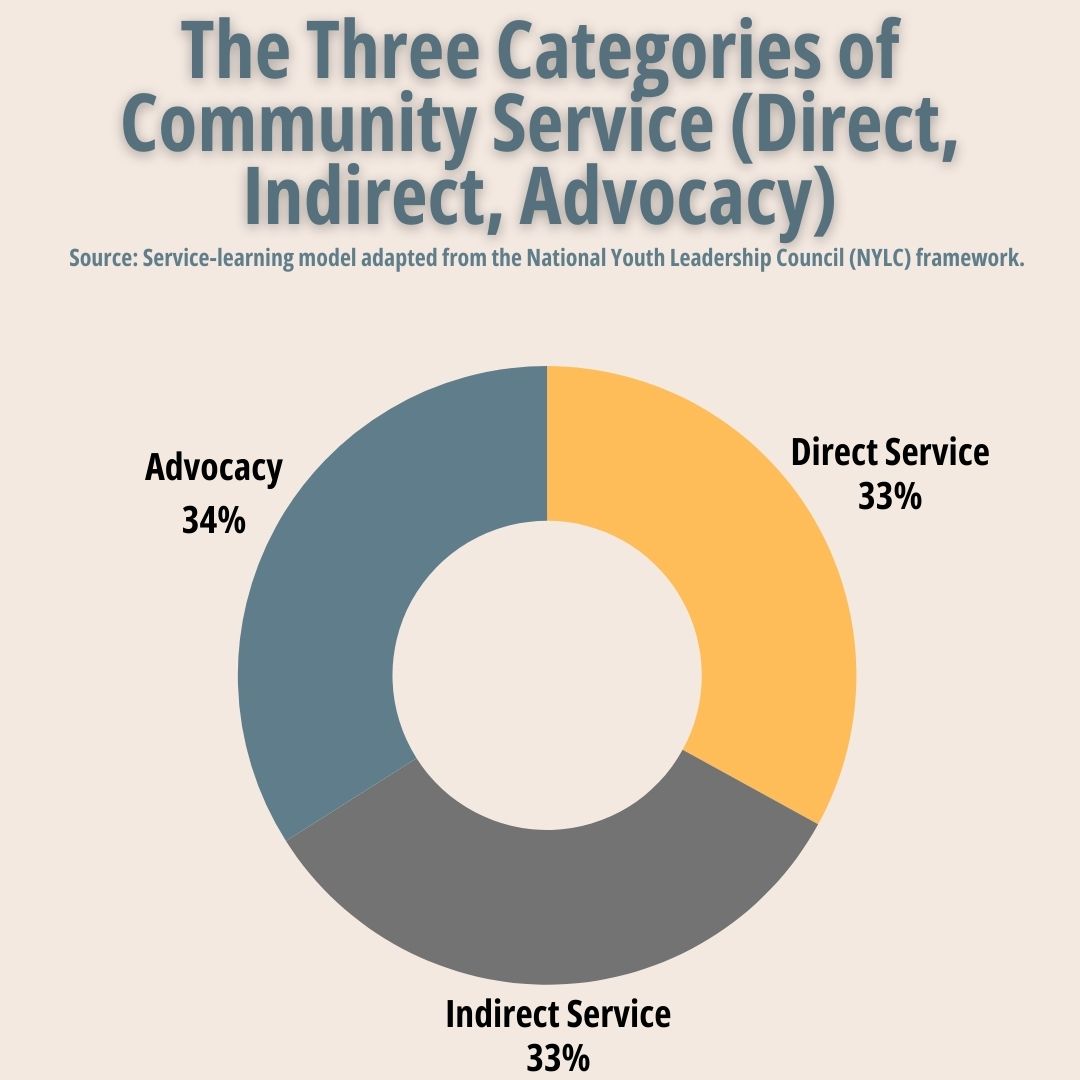
All community service falls into one of three categories:
Direct service involves face-to-face interaction with the people you're helping. Tutoring a student, serving meals at a soup kitchen, or visiting nursing home residents are direct service. You see the immediate impact of your work.
Indirect service supports causes without direct contact with beneficiaries. Organizing a food drive, raising funds for a charity, or sorting donations at a warehouse are indirect service. Your contribution matters, but the connection is less personal.
Advocacy focuses on raising awareness and influencing policy around social issues. Registering voters, campaigning for environmental protections, or lobbying for education funding are advocacy activities. This category requires understanding of issues and comfort with public communication.
10 Strong Examples of Community Service
Tutoring students at schools or libraries
Serving meals at food banks or soup kitchens
Building homes with Habitat for Humanity
Assisting patients and families at hospitals
Caring for animals at shelters
Cleaning and maintaining parks and natural areas
Coaching youth sports teams
Answering calls at crisis hotlines (after training)
Registering voters in your community
Organizing donation drives for shelters
7 Examples of Community Outreach Programs
Outreach programs take services directly to populations that might not otherwise access them:
Mobile health clinics providing screenings in underserved neighborhoods
After-school tutoring and mentorship at community centers
Food distribution and meal delivery for homebound residents
Housing construction and repair for low-income families
AmeriCorps projects addressing local community needs
Adult and child literacy programs at libraries
Community gardens promoting nutrition education
10 Types of Communities You Can Serve
The word "community" applies to many different groups:
Urban neighborhoods in cities
Suburban residential areas
Rural and farming communities
School and university campuses
Religious congregations and faith groups
Ethnic and cultural organizations
Senior citizen populations
Disability advocacy groups
Veteran support networks
Virtual communities with shared interests
Each community type has distinct needs and service opportunities. Consider which populations you want to work with when choosing where to volunteer.
Turning Community Service Into Application Strength
Service experience only helps your applications if you present it effectively. Here's how to maximize its impact for college admissions and job searches.
For College Applications
Document everything. Keep a log of hours, responsibilities, and accomplishments. Note specific projects you led or contributed to. Record names and contact information for supervisors who might write recommendations.
Connect your service to your academic interests. If you're applying as a biology major, explain how your conservation work deepened your understanding of ecosystems. If you're interested in social work, describe what you learned from volunteering at a homeless shelter.
Use your essays to show personal growth. Admissions officers read thousands of applications listing volunteer activities. What they remember are stories about how service changed someone's perspective or revealed something important about their character.
Request letters of recommendation from volunteer supervisors. These letters carry weight because they describe your character and work ethic in settings where you had nothing to gain except the experience itself.
Research scholarship opportunities tied to service. Many foundations and organizations offer funding for students with strong volunteer records. Some require specific hour minimums or service in particular areas.
For Job Applications
The employment benefits of volunteering are measurable. The Corporation for National and Community Service found that volunteers have higher odds of finding employment than non-volunteers. This held true across demographic groups, with stronger effects for those without college degrees.
Include relevant volunteer experience in your resume's experience section, not in a separate "activities" category. Treat significant volunteer roles like jobs, with descriptions of responsibilities and accomplishments.
Prepare to discuss your service in interviews. Think about specific situations where you solved problems, led teams, or handled difficult circumstances. These stories demonstrate soft skills that are hard to prove through credentials alone.
Leverage your nonprofit contacts. Supervisors and colleagues from volunteer work can serve as professional references. They can also connect you with opportunities in their networks.
Getting Started
If you haven't begun volunteering, start with these steps:
Talk to your school counselor about service-learning programs that combine academics with community work. These structured programs make finding opportunities easier.
Contact local organizations directly. Hospitals, food banks, animal shelters, libraries, and religious organizations regularly need volunteers. Most have coordinators who can match you with appropriate roles.
Online platforms like VolunteerMatch and DoSomething.org help you search for opportunities by location and interest area.
Start with one-time events before committing to ongoing roles. A single day at a park cleanup or food packaging event lets you test whether you enjoy the work.
Choose causes that match your interests and career goals. You'll stay motivated longer and gain more relevant experience.
Community service as practical training works because it puts you in situations where you must perform, adapt, and grow. The skills you develop and the connections you make have lasting value for your education, career, and life. Start somewhere. Start now. The experience compounds over time.
 Choosing Between Online and Classroom Learning? Here’s What Affects Your Future
 Rethinking Online Learning Strategy: What Today’s Students Demand
 Career Shock vs Culture Shock: What Shapes the First Job Abroad
 Best Platforms for Video-Based Learning on Mobile in 2026
 How Student Expectations Are Forcing U.S. Universities to Rethink Tech Strategy in 2026