
Here's an uncomfortable truth: your top students don't end up at the same twenty employers by accident.
They end up there because you built the path. One recruiting fair at a time. One advising chat at a time. One tenure vote at a time.
Nobody forced them onto it. You just never built anything else that felt just as real.
Why Corporate Wins by Default
It's not a plan. It's just what happens when everyone plays it safe.
If a student's mentor backs a founder path and that startup folds a year later, for example, that reads badly on paper. Way worse than if the student had taken a job everyone's heard of.
So professors play it safe. Career offices play it safe. Even the people funding your buildings expect a steady flow of hires walking straight into their companies.
Nobody says this out loud, but it's sitting in every planning meeting: what happens to that funding if you start pushing students toward startups instead of internships?
Add in ranking metrics that reward a big, recognizable placement rate, and you've got three forces quietly pointing the same direction. It doesn't stop with faculty and funding, either. Students who never see their own interests reflected on campus start checking out entirely, something student belonging research backs up again and again.
Here's what that looks like once it's baked into policy:
What's being evaluated | Typically rewarded today | Where the gap shows up |
|---|---|---|
Faculty publications and grants | Yes, consistently | Standard tenure criteria |
Patents and startup activity | Rarely, often penalized | Promotion and tenure votes |
Social impact projects | Treated as extracurricular | Capstones and thesis work |
Non-corporate career advising | Under-resourced | Career services staffing |
Now let's fix it, one piece at a time.
Show Them Other Paths, Early
Students lock in their plans fast. Often before junior year even starts.
If the only path they ever see modeled is the recruiter path, guess which one they'll pick.
A few things change that:
Multidisciplinary labs that mix majors on one real problem
Small campus incubators with mentorship and a demo day
Career events that feature founders and policy folks alongside recruiters
The data backs this up. Biomedical engineering labs are almost three times as likely as particle physics labs to actively push entrepreneurship. Students in those labs? Far more likely to actually want a founder career.
It's not really about the field. It's about what looks normal.
If a student's lab partner starts a health-tech company sophomore year, for example, "founder" stops sounding like some far-off idea. It becomes just another option on the table, right next to the corporate one. It also heads off some of the major regret patterns that show up years later.
Fix What Career Services Actually Does
Most career offices do one job really well: get students in front of corporate recruiters.
That's not their fault. That's just how they're staffed and measured.
Here's what changes it:
Advisors whose whole job is nonprofit, government, and founder paths
Career fairs where fellowships get the same floor space as corporate booths
Research and policy fellowships promoted as hard as recruiting season
A well-staffed office should also flag postings on Scholaro's jobs board that never show up at a typical career fair.
None of this competes with your skills-based hiring coverage. It's just building an equally solid system for the students who'd thrive somewhere else.
Here's the catch, though. An advisor pointing a student toward a nonprofit fellowship doesn't mean much if that student can't afford rent without the paycheck.
Back It Up With Real Money
Students without a cushion take the paid offer. Every time. Doesn't matter how good the fit is elsewhere.
Good advising can't out-argue a rent bill.
Three moves fix that:
Stipends for unpaid internships in research, nonprofit, or startup roles, typically $1,800 to $5,000 a summer
Loan forgiveness on local institutional loans, not federal ones, for grads who take low-paying public service or founder roles
Small seed funds for student ventures, separate from your flagship incubator
Worth reading this next to recent loan policy shifts, which already changed how students weigh a low-paying first job against their repayment timeline.
If a student turns down an unpaid dream internship because they simply can't afford the summer, for example, that's not a fit problem. That's a funding problem you can actually solve.
These moves are cheap next to what you already spend on corporate recruiting. Money still won't fix the culture, though. That's the next piece.
Reward the Right Things
Students read the room. If your best professors only get credit for publishing, that's the message that sticks, no matter what the career office says.
Here's proof it's a real problem: one study looked at 761 STEM faculty promotion files. Holding a patent was tied to a 68% drop in favorable tenure votes. A group of academics from 67 universities is actively fighting to change that.
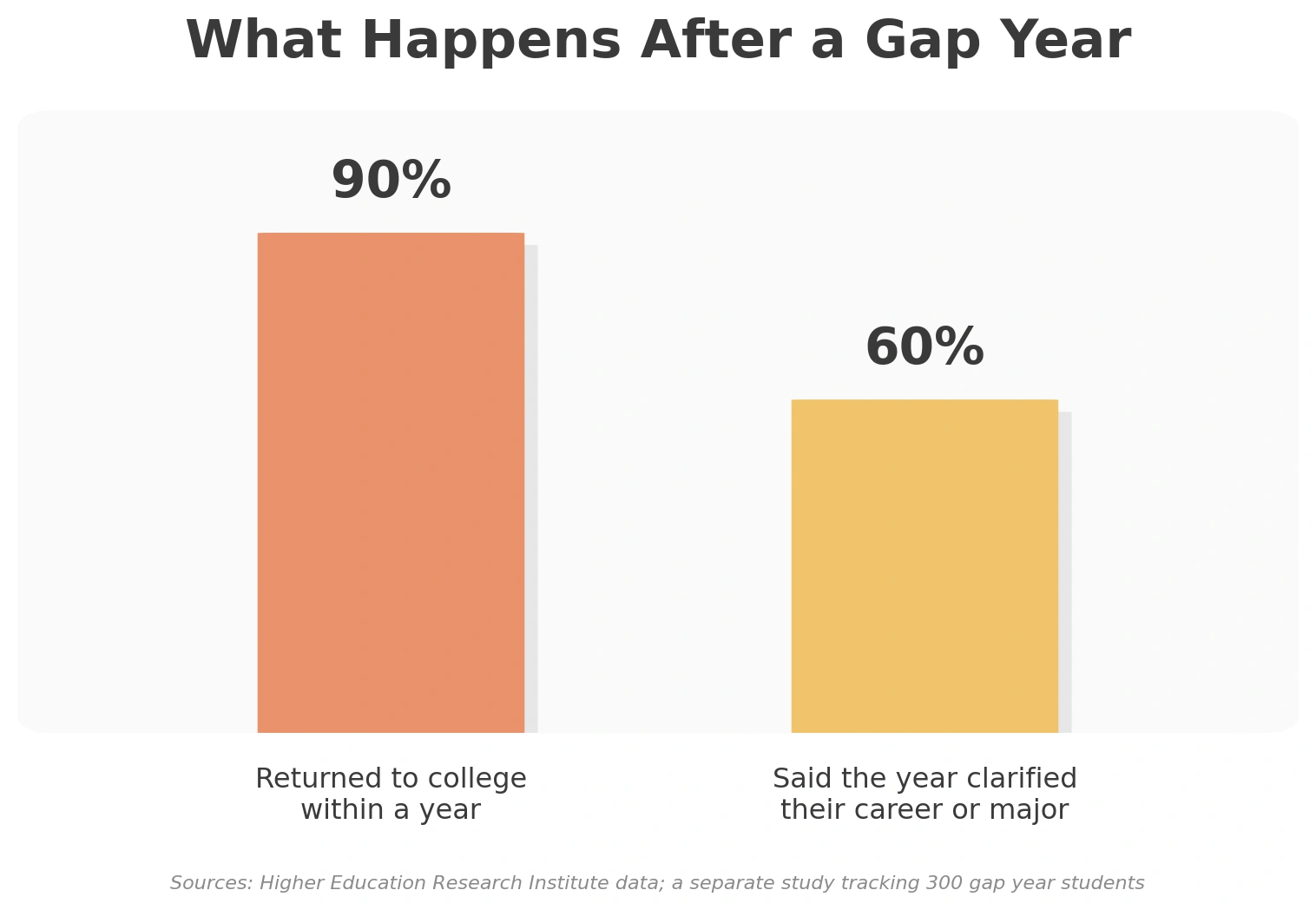
Gap years get the same bad rap, and the data says otherwise. 90% of students who take one come back within a year. 60% say it helped them figure out their career or major.
Treating a gap year like a red flag punishes exactly the kind of self-direction you're trying to build everywhere else.
If a student takes a gap year to work at a local nonprofit, for example, and comes back more focused than ever, that's not a wasted year. That's the system working the way it should.
It Only Works Together
Exposure without money just shows students a door they can't afford. Money without advising goes to students who never hear about it. And none of it sticks if your own faculty get punished for trying.
Students already know what you really back. Make sure it's the right thing.
 How Global Education Hubs Are Redefining University Expansion Strategy
 Why Colleges Need Brand New AI Majors
 The Financial Crisis Shrinking Small Colleges
 The Real Risks Behind Social Media Screening
 Why Expanding Higher Ed Access in SIDS and LDCs Matters for Global Progress