
Universities used to have one playbook for going global: recruit hard, fill seats, repeat. That playbook is breaking down. Visa rules are tightening in the countries that used to dominate international enrollment, and students have more options than ever. This is what's driving the rise of global education hubs, and why your expansion strategy probably needs a rethink.

If a student is deciding where to study right now, the U.S. isn't the automatic first choice anymore. Maybe the visa process feels too risky. Maybe a school closer to home offers the same degree for less money and less hassle. That decision, repeated across thousands of students, is what's quietly redrawing the map.
Model | Control | Capital Exposure | Speed to Launch |
|---|---|---|---|
Branch campus | High | High | Slow |
Joint venture | Medium | Shared | Medium |
Articulation partnership | Low | Low | Fast |
Online or hybrid delivery | Medium | Low | Fast |
Every model on that list trades off control against risk. That trade-off is exactly what's pushing more institutions toward shared arrangements instead of going it alone, which we'll get into below.
The Visa Squeeze Is Redirecting Student Traffic
The numbers tell the story pretty clearly. International applications through Common App fell 10% heading into the 2026-27 cycle, the biggest year-over-year drop the platform has ever logged. New federal rules taking effect in September 2026 cap F-1 and J-1 student stays at four years, with a shorter grace period than before.
It's not just the U.S. The OECD's 2026 comparison of student mobility found Australia, Canada, and the UK all pulled back on visa access starting in 2024.
Here's the part that matters for you: students aren't giving up on studying abroad. They're just going somewhere else. Places like Singapore, Malaysia, and Hong Kong are picking up students who used to default to Western countries, because they're closer, cheaper, and less politically messy right now.
If your institution's international strategy still assumes the U.S., UK, Canada, and Australia are the only game in town, you're planning around a map that's already out of date.
Why Top Students Are Choosing to Go Home
For decades, the pattern was simple: top students leave home, get educated abroad, and often stay abroad. That pattern is reversing in some big ways.
China has poured money into programs that bring PhD holders and researchers back home, and it's working. Even in the U.S. and Canada, something similar is happening. Stanford's 2026 AI Index Report found the number of new AI PhDs in the U.S. and Canada climbed 22% between 2022 and 2024, with academia soaking up the entire increase instead of industry.
Why does this matter to you? Because recruitment can't just be about pulling people out of their home country anymore. Universities that build a real presence where the talent already lives, instead of just marketing to it from a distance, are the ones keeping their pipeline full.
If a student studies through a local partner campus in their own country, for example, they still get the same degree without needing to leave home at all. That's the shift. It's not about giving up on internationalization. It's about meeting students where they are.
Branch Campuses Are Losing Their Monopoly
Setting up a full branch campus overseas used to be the go-to move. It still happens. Tracking data from research group C-BERT counts nearly 400 branch campuses running today, scattered across roughly 85 countries. But over 70 have also shut down over the years, because the model is expensive and slow, and it doesn't always survive a change in local politics or funding.
That's why more institutions are mixing things up. Instead of going all in on one campus, they're building a portfolio:
Branch campuses for a long-term, high-control presence
Joint ventures where a local partner shares the cost and the risk
Articulation partnerships that let students start locally and finish elsewhere
Hybrid and online delivery for speed and lower cost
India is a good example of how fast this can move. Policy reform opened the door for foreign universities to set up shop there, and several have already launched degree-granting campuses in just the past couple of years.
The takeaway for your team: expansion isn't a single bet anymore. It's a mix of models, chosen based on how much risk and control you actually want in each market.
Split the Risk, Keep the Partnership Alive
Going it alone overseas is expensive and risky. That's pushed a lot of institutions toward partnerships where the financial exposure gets split.
Research from the British Council and Universities UK International breaks partnership risk into six areas: money, reputation, academic freedom, security, staffing, and data. Their advice is simple: nail down what you actually want out of the partnership and which countries you're targeting, then go find a partner, not the other way around.
A few things separate the partnerships that last from the ones that fall apart within a few years:
Someone internally owns and oversees the partnership, instead of it being everyone's job and no one's job
Both sides agree on what success looks like before enrollment targets are missed
The partnership adapts to local goals instead of just exporting a curriculum unchanged
If a university expands into a new country without mapping out local rules first, for example, it can end up stuck mid-contract with a partner whose priorities have shifted. That's not a hypothetical. It shows up again and again in partnership research.
One Treaty Is Quietly Fixing Credit Transfer Headaches
One quiet piece of this shift is a legal framework almost nobody outside higher ed policy is talking about yet. UNESCO's Global Convention on the Recognition of Qualifications went into force back in 2023, and 42 countries have now ratified it as of mid-2026. It sets shared rules for how a degree earned in one country gets recognized in another, including partial studies and prior learning, not just full degrees.
For students, this matters more than it sounds. If a student, for example, finishes two years of a degree at a partner campus and transfers to finish it elsewhere, that recognition framework is what keeps their credits from getting stuck in limbo.
For your institution, it means the paperwork and diplomatic headache of proving a degree's foreign equivalency in a new country is getting a little easier, at least in the countries that have signed on.
AI and Hybrid Delivery Are Rewriting the Deal
Two things are happening at the same time, and they're feeding each other. Regional hubs are getting stronger on their own, building real research capacity instead of just hosting foreign campuses. And AI is changing what a degree is even worth, which puts more pressure on institutions to prove their programs still deliver something students can't get elsewhere.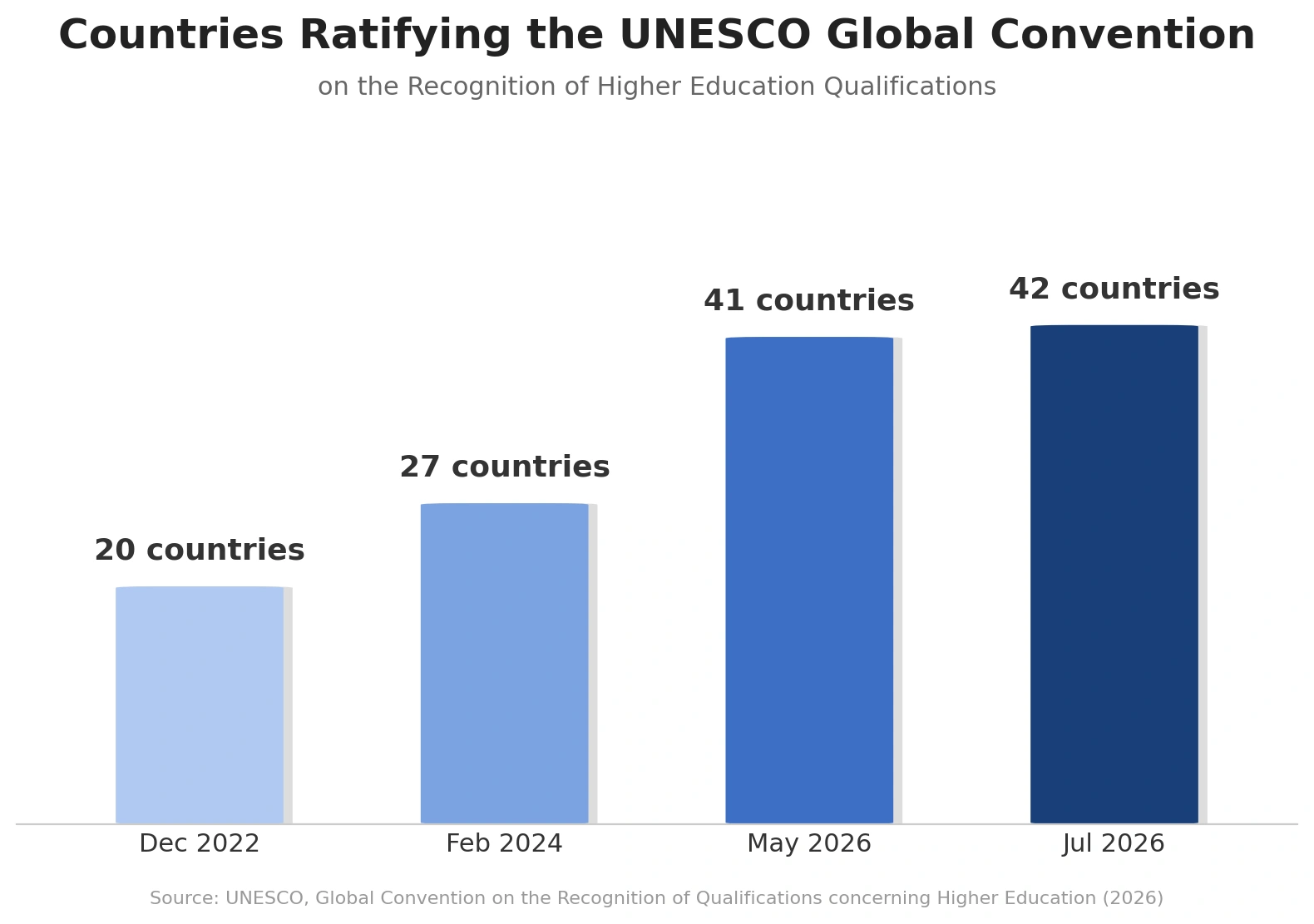
Staffing is the part nobody's fully solved. Opening a campus or partnership overseas is the easy part these days. Finding faculty who can teach consistently across locations, and keeping academic standards the same in every spot, is the harder problem.
Hybrid and dual-degree models are filling some of that gap. They let a student split time between a home campus and a partner institution without needing a full standalone campus in either place. It's cheaper to run and easier to adjust if a market shifts.
Your Next Move Should Be a Portfolio, Not a Bet
None of this points to one right answer. It points to a mix. The institutions handling this well aren't betting everything on one country or one model. They're building a portfolio of options and putting real governance behind each one.
If you're planning your next move, start with the risk category you're least prepared for, whether that's financial exposure, staffing, or local governance, and build from there.
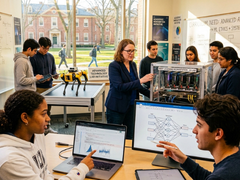 Why Colleges Need Brand New AI Majors
 The Financial Crisis Shrinking Small Colleges
 The Real Risks Behind Social Media Screening
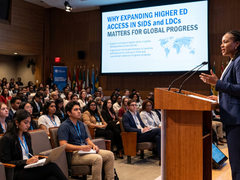 Why Expanding Higher Ed Access in SIDS and LDCs Matters for Global Progress
 What the Education Department’s New Rules Mean for Your Career