

Getting into a great program feels like the hard part. It is not. The hard part is figuring out your job prospects before you sign up, not after you have already spent two years and a chunk of savings on a degree. That means checking your visa options, seeing if your field is actually in demand, and running the numbers on what it costs to live where the jobs are. Do all three before you apply, and you save yourself a lot of stress later.
Country | Post study work visa | Typical visa cost | Living cost level |
|---|---|---|---|
United States | Up to 36 months with a STEM degree | Low for OPT, high if you need an H-1B | High in major tech hubs |
United Kingdom | 24 months (Graduate Route), dropping to 18 for applications from 2027 | Moderate | High in London, moderate elsewhere |
Canada | 8 months to 3 years, depending on program length | Moderate | Moderate to high in big cities |
Numbers here are general ranges meant for quick comparison. Rules change often, so double check the specifics for your country and program before you plan around them. The UK figure is a good example: the 24 month Graduate Route only applies to applications submitted through the end of 2026. Apply after that and it drops to 18 months for bachelor's and master's graduates, though PhD holders keep the full 3 years either way.
What Your Visa Actually Lets You Do
This is the part people skip, and it bites them later. In the US, F-1 graduates get 12 months of work authorization through OPT, no employer sponsorship needed. Graduate in a STEM field and you can add another 24 months on top of that, for a total of 36. That is a real head start on building work experience.
If a student wants to stick around long term, for example, the next step is usually the H-1B lottery. And 2026 changed the game here. Starting with the cycle that covers jobs beginning in October 2026, USCIS swapped its random H-1B lottery for a wage-weighted one. Higher-paying job offers now get more entries in the pool, so a role at a higher wage level has better odds than an entry-level one.
There is also a new $100,000 fee that applies to H-1B petitions filed for workers who are outside the US at the time of filing. It does not apply if you are already in the US changing status, which matters if you are timing your move from OPT into H-1B.
OPT gives you 12 months of work authorization right after graduation, no sponsor required.
STEM OPT adds 24 more months, but your employer has to be enrolled in E-Verify.
The H-1B lottery now favors higher wage offers, so a low starting salary can hurt your odds.
Registration for the H-1B lottery happens early in the year, months before the job actually starts.
Cap-exempt employers, like universities and nonprofit research centers, sponsor H-1B workers all year round without going through the lottery at all. Worth keeping on your radar if you want a steadier path.
Which Skills and Degrees Actually Get Hired
A shiny program name does not mean much if nobody is hiring for that skill set. According to the World Economic Forum, the skills employers want most right now are AI literacy, analytical thinking, and cybersecurity know how. That is not just for computer science majors either. Employers across industries want people who can work with data and adapt fast.
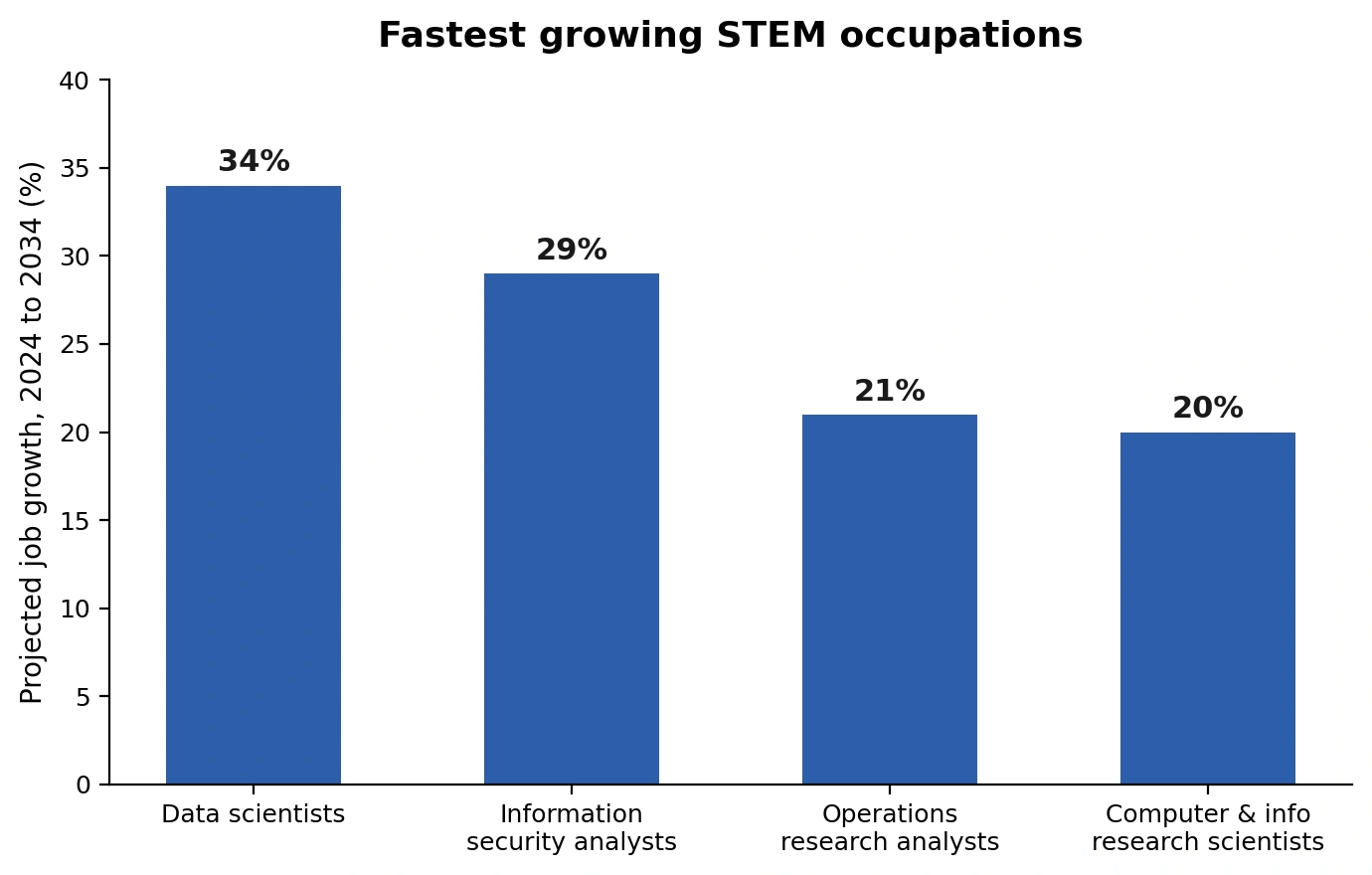
On the hard numbers side, the Bureau of Labor Statistics projects some STEM roles growing much faster than the average job between 2024 and 2034. Data scientist roles top the list at around 34 percent growth, with information security analysts close behind at around 29 percent. Operations research analysts and computer and information research scientists are projected to grow around 20 to 21 percent, still well above the average for all occupations.
Data science and information security are pulling ahead of almost everything else. If a student is choosing between two similar programs, for example, and one leans into data or security work while the other does not, that gap in projected demand is worth thinking about before enrollment, not after.
AI literacy and data skills show up on almost every in-demand list right now.
Cybersecurity roles are growing fast because breaches keep getting more expensive for companies.
A degree in a growing field gives you a real head start, but soft skills like communication still matter.
What It Actually Costs to Live Where You Work
A bigger salary does not always mean more money in your pocket. A job in an expensive city can leave you with less to spend than a smaller salary somewhere cheaper. If a student compares two offers side by side, for example, without checking rent and everyday costs in each city, they might pick the one that looks better on paper and feels worse in practice.
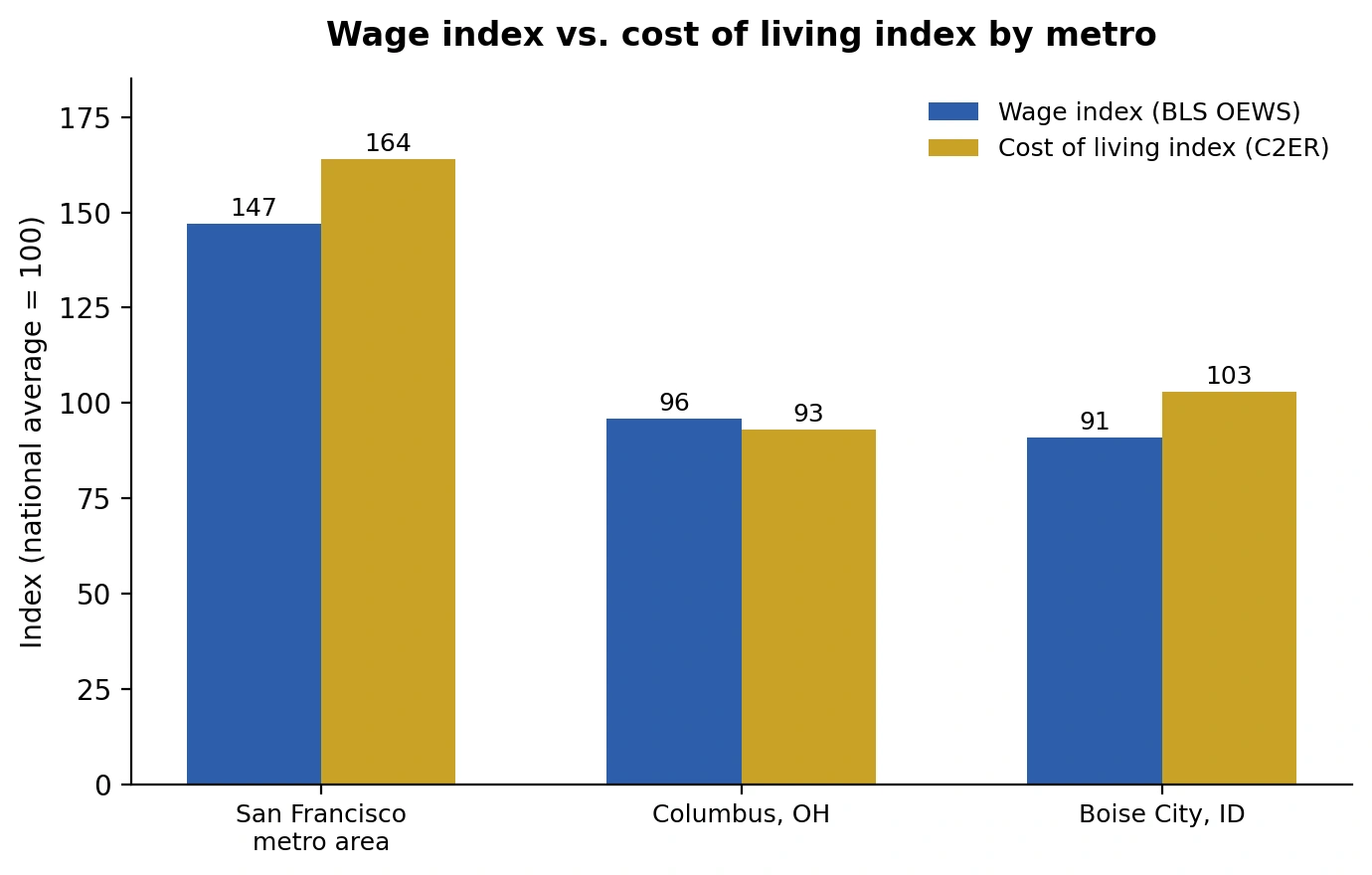
Think of it in rough index terms. A job in a large tech hub might pay well above the national average, but rent and everyday costs there can run even higher than the pay bump. A mid-size city usually lands close to the national average on both counts, and a smaller metro can leave you with noticeably more spending power even on a lower salary.
Compare take-home pay, not just salary, against local rent and everyday costs before you decide.
Wage levels tied to visa sponsorship also affect your lottery odds, so check both angles at once.
A lower salary in a cheaper city can leave you with more money at the end of the month.
Building Your Financial and Support Cushion
Work authorization does not process overnight. Standard OPT approvals often take a couple of months, and STEM OPT extensions can take even longer. Budget a few months of living expenses before your first paycheck lands, just in case.
You are also not doing this alone. Your school's international student office and your designated school official handle the paperwork side of things, and they have seen every version of this process before. If a student is unsure whether an employer actually sponsors visas, for example, that office is usually the first place to ask.
One more thing worth checking early: how your foreign degree gets evaluated once you are job hunting. Our credential evaluation tool is a quick way to see how your qualifications translate before an employer even asks.
The Short Version
Visa rules, job demand, and cost of living all shift together, and none of them stay fixed once you commit to a program. Check all three before you apply, and your job prospects will thank you later.
 How Universities Use Zero-Waste Swap Programs to Cut Student Costs
 How Industry Partnerships Shape Modern Curricula
 How Post-COVID Aid Programs Help Universities Rebuild Admissions
 Beyond the Acceptance Rate and How Colleges Decide Who Gets In
 How Leveraging Job Placement Strategies Can Reenroll Returning Students