Disclaimer: This article is for general informational purposes only and does not constitute legal, financial, medical, or professional advice. Policies, requirements, and costs may change. Always verify current information with the relevant institutions or official sources before making decisions.

If you're an international student figuring out how to apply to US colleges, you're not alone. Over 1 million foreign students enrolled in US institutions in 2025-2026, and the process involves more steps than domestic applicants face. This guide walks you through everything, with 2026 policy changes included.
⚠️ 2026 Policy Alert DHS has proposed replacing "Duration of Status" (D/S) for F-1 visas with a fixed admission period. Under the proposal, students would be admitted for the length of their program on their I-20, capped at 4 years maximum. Programs longer than 4 years, like a PhD, would require an extension application. The post-completion grace period would also drop from 60 days to 30 days. This is still a proposed rule, not finalized law. Monitor DHS updates and talk to your school's international student office.
Your 2026 Quick Checklist
Before You Apply: Make Sure You Have These Ready
✓ Passport valid for 6+ months beyond program end date
✓ Transcripts ordered with certified English translations
✓ SAT/ACT and English proficiency scores registered
✓ Credential evaluation ordered (allow 2-3 weeks)
✓ Social media profiles set to public and reviewed for consistency
✓ Proof of funds covering one full year of tuition and living costs
Why Study in the US?
A friend of mine, Priya, moved from Chennai to study computer science at UC San Diego. She almost didn't apply because the process felt overwhelming. Her first attempt at the Common App took three restarts. But she pushed through, got in, and landed a software engineering role at a Bay Area company before she even graduated, thanks to STEM OPT work authorization. She still says it was the best decision she ever made.
That's the real draw of a US degree. It's not just the education. It's what comes after.
Research funding and facilities unmatched in most countries
Need-blind financial aid at select universities (Harvard, MIT, Yale, Amherst)
A campus culture built around internships and industry connections
Cultural diversity genuinely built into the curriculum
The cost is real: tuition ranges from $15,000 to $60,000+ per year. Plan for $50,000-$80,000 in total annual costs at most institutions.
Application Timeline
★ ★ ★ Phase | ★ ★ ★ ★ ★ What You Do | ★ ★ ★ Typical Timing |
|---|---|---|
Research | Shortlist colleges, check requirements, confirm SEVP certification | 18–24 months before start |
Testing | Register for and sit SAT/ACT and TOEFL/IELTS/Duolingo | 12–18 months before |
Documents | Request transcripts, order credential evaluation (allow 2–3 weeks) | 12 months before |
Apply | Submit applications, essays, financial docs, and pay fees | November–January |
Acceptance | Review offers and financial aid packages, pay enrollment deposit | March–May (May 1 deadline) |
Visa | Receive I-20, pay SEVIS fee, complete DS-160, attend interview | After receiving I-20 |
Travel | Book flights, arrange housing, open bank account, attend orientation | Up to 30 days before classes |
Early Action and Early Decision deadlines typically fall between November 1 and 15. Regular Decision deadlines run from January through March. International students should always aim for Early Action where possible. Document processing, transcript translation, and visa timelines all add weeks you can't afford to lose.
Research and Choose Your Schools
Don't just chase rankings. A school ranked #80 with a strong program in your field and solid scholarship funding for international students will serve you better than a top-20 school where you graduate $100,000 in debt.
SEVP certification (required for F-1 visa eligibility)
Financial aid availability for international students
Internship and co-op placement rates
International student population and support services
The US has no single centralized application system; most students apply directly through each university's website. California State University campuses use Cal State Apply. University of California schools use the UC Application.
Standardized Tests
SAT: stronger emphasis on math and analytical reasoning
ACT: leans more verbal, and some students find the pacing easier
Test-optional policies have expanded but are not universal. Always confirm the policy on each school's admissions page before assuming you can skip it. Graduate students may also need GRE (most programs), GMAT (MBA), MCAT (medical school), or LSAT (law school).
English Proficiency
TOEFL iBT
IELTS Academic
Duolingo English Test
PTE Academic
Minimum scores vary significantly. UCLA requires a TOEFL iBT score above 100, an IELTS score of 7.5 or higher, or a Duolingo English Test score of 135 or higher. Some schools waive this if you attended an English-medium secondary school for several years.
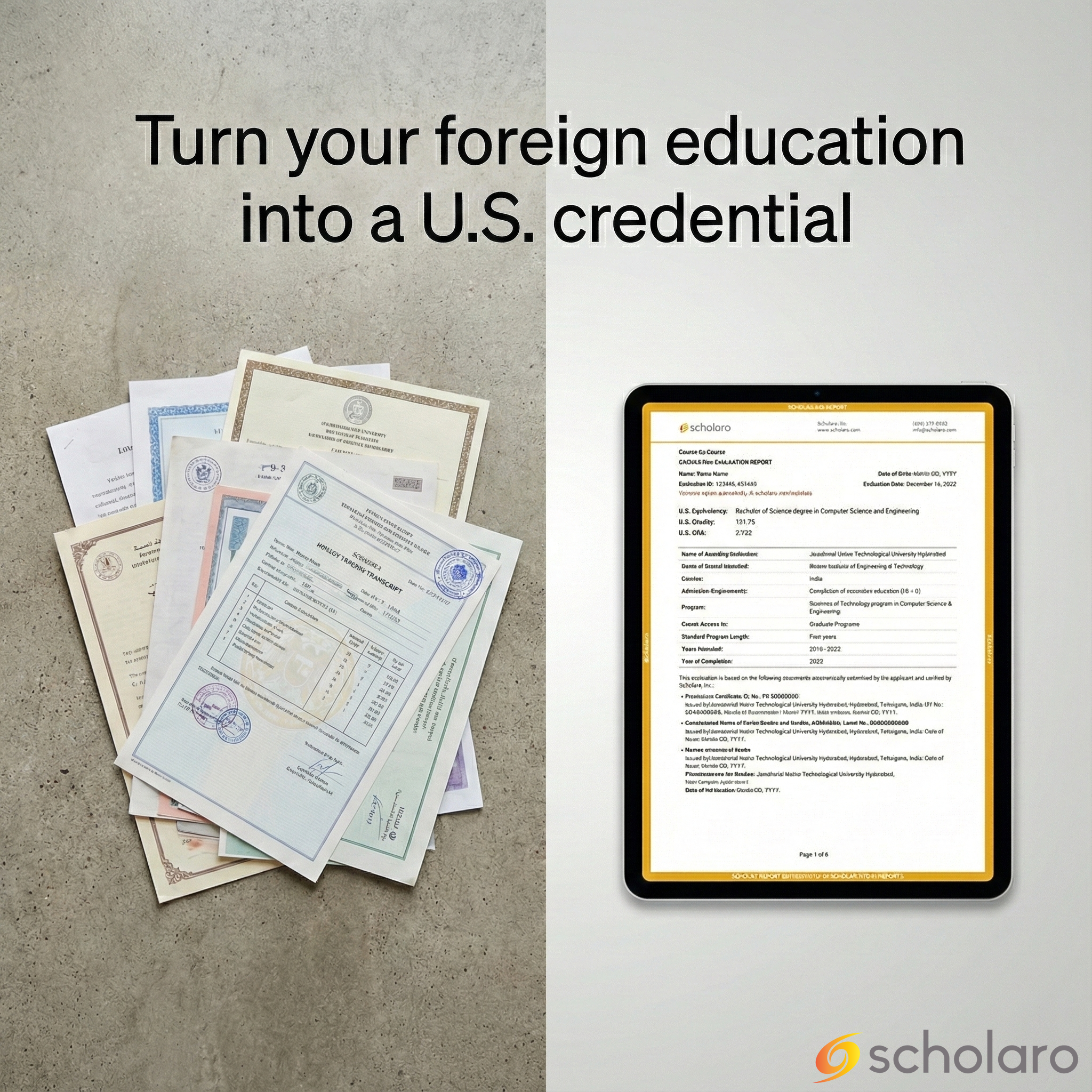
Transcript Evaluation: Don't Skip This Step
A 16/20 in France or a 7.5/10 in Vietnam doesn't automatically read as a 4.0 GPA to a US admissions system. Don't just translate your transcripts; get them evaluated. A professional credential evaluation converts your grades into a US-equivalent GPA so admissions committees can assess your academic record fairly.
With more schools going test-optional, your GPA conversion has become the single most important academic metric in your application. All documents not issued in English must include a certified English translation. Allow 2-3 weeks for evaluation. Don't leave this to the last minute.
Types of US College Admissions
★ ★ ★ Type | ★ ★ ★ Binding? | ★ ★ ★ Typical Deadline | ★ ★ ★ Decision By |
|---|---|---|---|
Early Decision | Yes | Nov 1–15 | Mid-December |
Early Action | No | Nov 1–15 | December–January |
Regular Decision | No | Jan 1–15 | March–April |
Rolling Admissions | No | Varies | Ongoing |
Early Decision requires you to attend if accepted and withdraw all other applications. Regular Decision gives you more time to compare multiple offers before committing.
The F-1 Student Visa
You can't apply for your visa until you receive an I-20 from a SEVP-certified school. After that, the steps are:
Pay the SEVIS I-901 fee ($350)
Complete the DS-160 online application
Pay the MRV visa application fee ($185)
Attend an in-person interview at a US embassy or consulate
Total cost: approximately $535. Processing times range from a few days to several weeks. Students from high-demand countries like India and Vietnam should expect interview wait times of 90 days or more. Check the latest Presidential Proclamations before applying; as of 2026, students from certain countries face pauses or restrictions in visa processing.
Social media in 2026: You must disclose all social media accounts used in the past five years on Form DS-160, including inactive ones. Consular officers now review applicants' full online presence and look for any indication of hostile attitudes toward US citizens, government, culture, or institutions. Never lie on your DS-160. Misrepresentation carries far heavier consequences than an unflattering old post.
Scholarships: The Micro-Scholarship Method
Don't only chase one big award. Stack smaller ones, $500-$2,000 each, that cover specific costs like application fees, credential evaluations, and housing deposits. Use platforms like Scholarships360 and International Student to find awards most applicants overlook.
Freeman Asian Scholars Program (Wesleyan University): deadline is typically in January
Johnson & Wales Global Full Tuition Scholarship: check when the 2027 cycle opens
University merit awards: many schools consider you automatically through the admissions process itself
After You're Accepted
Your Post-Acceptance To-Do List
✓ Compare all financial aid packages, not just acceptance letters
✓ Pay the enrollment deposit to hold your place
✓ Decline other offers once you commit
✓ Watch for your I-20; some schools send it with the offer letter, others wait for your deposit
F-1 students may enter the US no more than 30 days before the official program start date on their I-20. Use that window to open a bank account, set up a local phone plan, find housing, and attend orientation.
Start Now
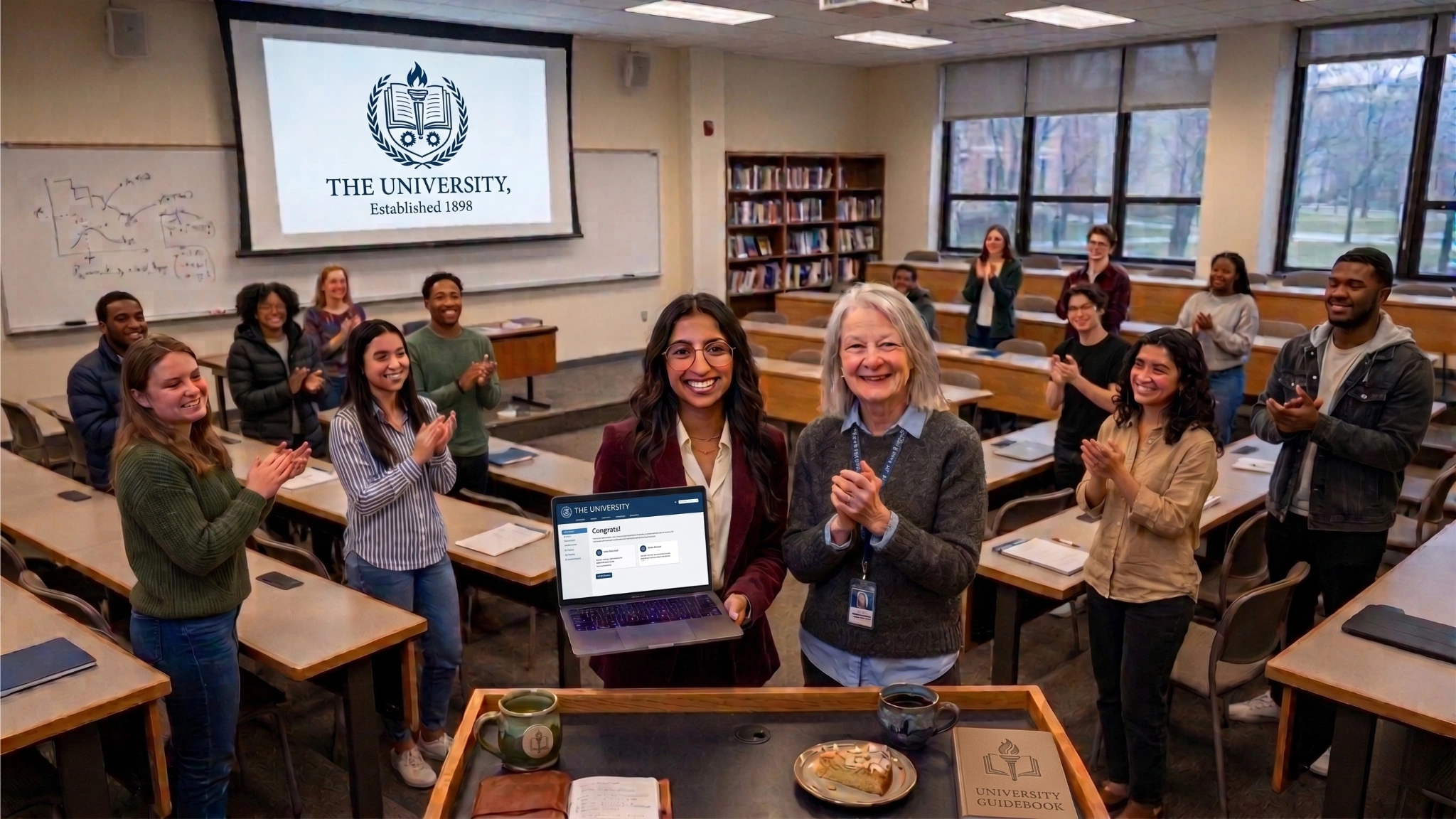
Like Priya found out, the paperwork is just the entry fee. The students who struggle most treat visa timelines and document processing as afterthoughts. Build those into your schedule from day one.
 5 ways colleges can make career prep 'unavoidable' for students
 The Real Economics Behind Entry-Level Gigs
 Can 3-Year Degrees Solve the Teacher Shortage?
 Does College Public Speaking Really Matter in Today’s Job Market?
 Strategies for Communicating Tuition and Outcomes to Prospective Students