How Employers Verify Foreign Degrees
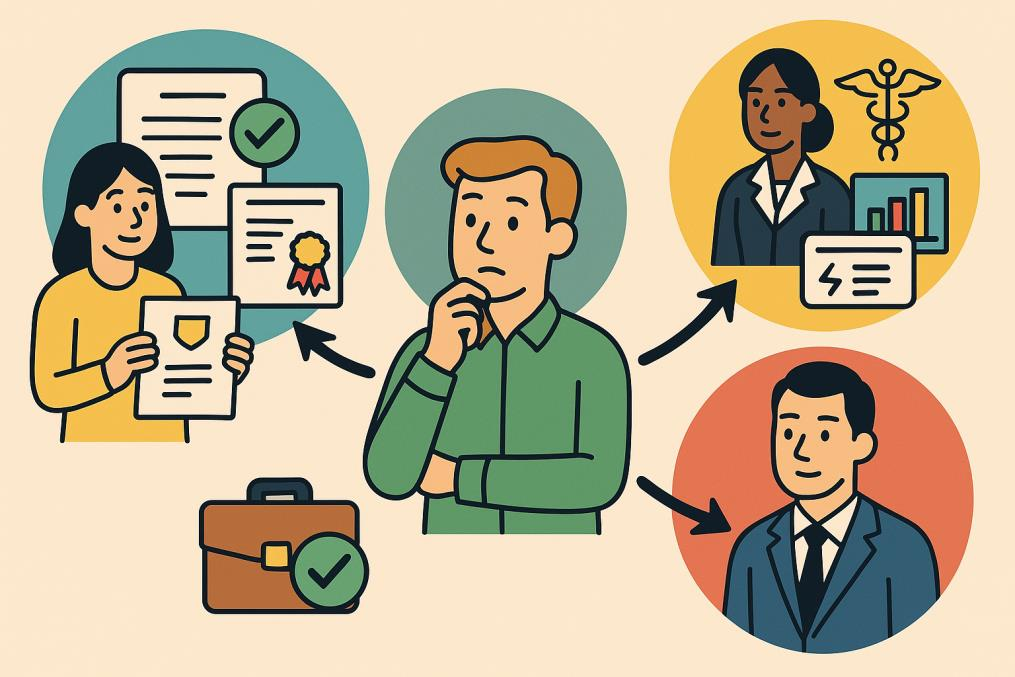
Ever wondered how a US boss looks at a degree from another country? Spoiler alert: there is no magic government button that automatically approves international diplomas. The US Education Department does not handle this at all. It is completely up to the employer or your future school to check your background, which means you have to be ready to show your receipts.
Imagine you spent four grueling years earning a top-tier degree back home, only to find out a US recruiter has no idea how to grade it. That is a total buzzkill. A student from a top tech program overseas found this out the hard way when their dream job offer got paused because the HR team could not understand their university transcripts. Let us make sure that does not happen to you.
Why the Extra Homework?
US companies check degrees to make sure your resume matches reality. But with international degrees, it gets a bit trickier. Every country has its own way of grading, scheduling, and naming programs.
For instance, a three-year bachelor's degree from one country might not automatically equal a four-year US bachelor's degree. If you are going into fields like nursing, engineering, or teaching, the rules are even stricter because state licensing boards have the final say.
Who is Doing the Snooping?
Hiring managers are way too busy to call overseas universities themselves. Instead, they hand the job over to the pros. Usually, your documents will go to one of these three groups:
Background Check Companies: Global screening specialists who call schools and education ministries directly.
Credential Evaluation Services: Independent agencies (like Scholaro) that translate your foreign schooling into US terms using the AICE member network.
In-House HR Teams: Internal recruiters, mostly at smaller companies, who might do some basic checking on their own.
Take a student who applied for a finance role. The company used a third-party screening service, and because the student's college used an unusual grading scale, they needed a formal evaluation report to prove they actually graduated with honors.
How It Works in Real Life
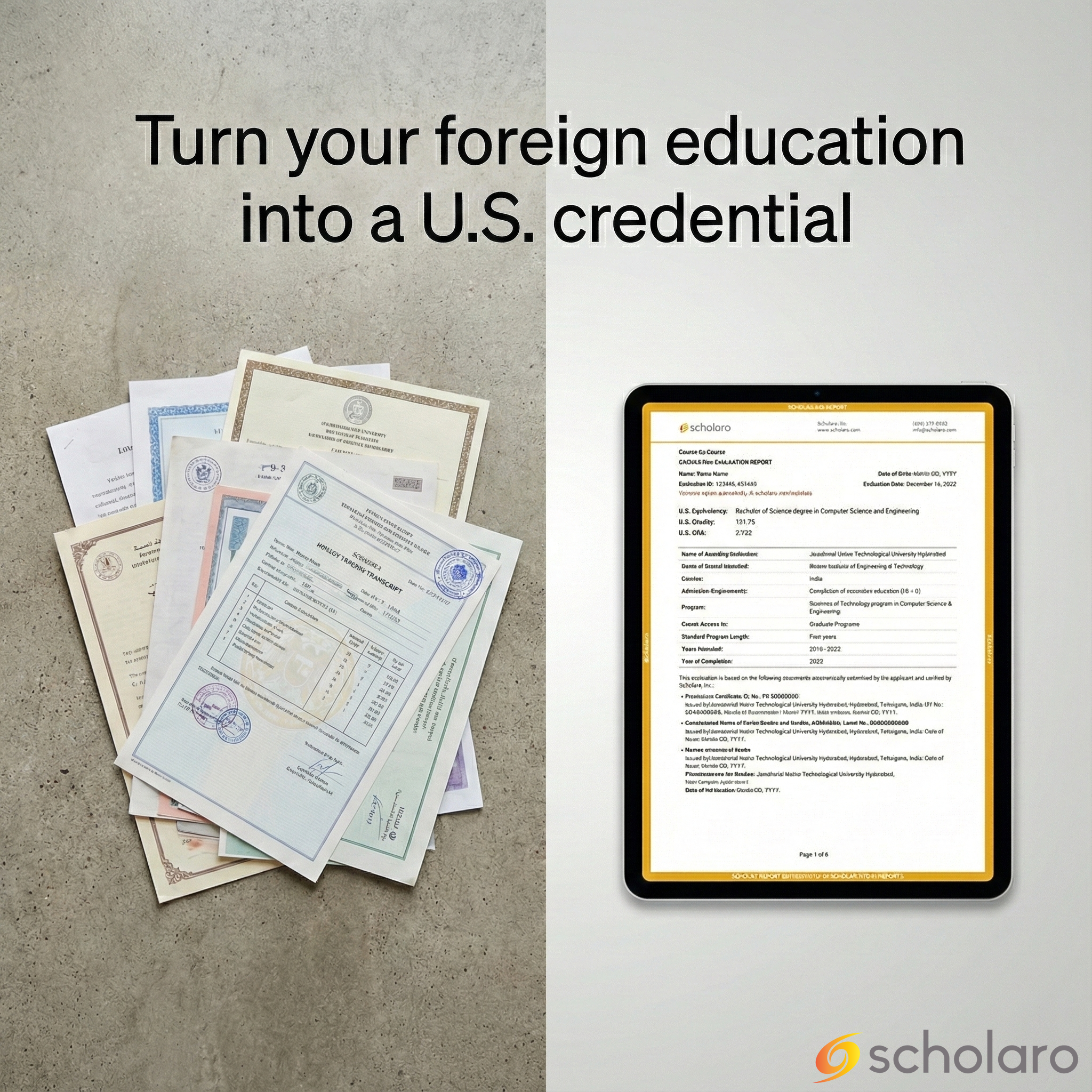
The process is pretty straightforward. Once you get a job offer, the employer kicks off a background check. If your university is hard to reach, they will ask you to get a credential evaluation report. This report is like a golden ticket because it translates your GPA into the standard US 4.0 scale and confirms your school is legit.
Verification Method | Who Uses It | What It Checks |
|---|---|---|
Direct School Contact | Screening companies | Dates you attended and your actual degree |
Evaluation Report | Employers and licensing boards | US equivalency, GPA conversion, and accreditation |
Document Authentication | Regulated industries (like healthcare) | Embassy stamps and ministry approvals |
Internal HR Review | Smaller companies | Basic check to ensure everything looks right |
Most employers love credential evaluation reports because they do all the heavy lifting, turning an unfamiliar document into an easy-to-read summary.
Will US Companies Accept Your Degree?
The short answer is yes, but it is not automatic. It mostly depends on whether your school is accredited back home, what you studied, and if your job requires a special state license.
Think about a student who moved to Texas with an awesome teaching degree. Even though companies loved their resume, they still had to go through the state board to get their credentials approved before stepping into a classroom.
Your Must-Have Checklist
Do not wait until the last minute to gather your paperwork. You will want to have these items locked down and ready to go:
Your original diploma
Certified English translations if your docs are not in English
Official transcripts
Course descriptions (super helpful for detailed evaluations)
A copy of your passport
Watch out for name mismatches. A student almost missed out on a job because their diploma used their maiden name, but their passport used their married name. Keep your paperwork consistent to avoid a massive headache.
Major Red Flags to Avoid
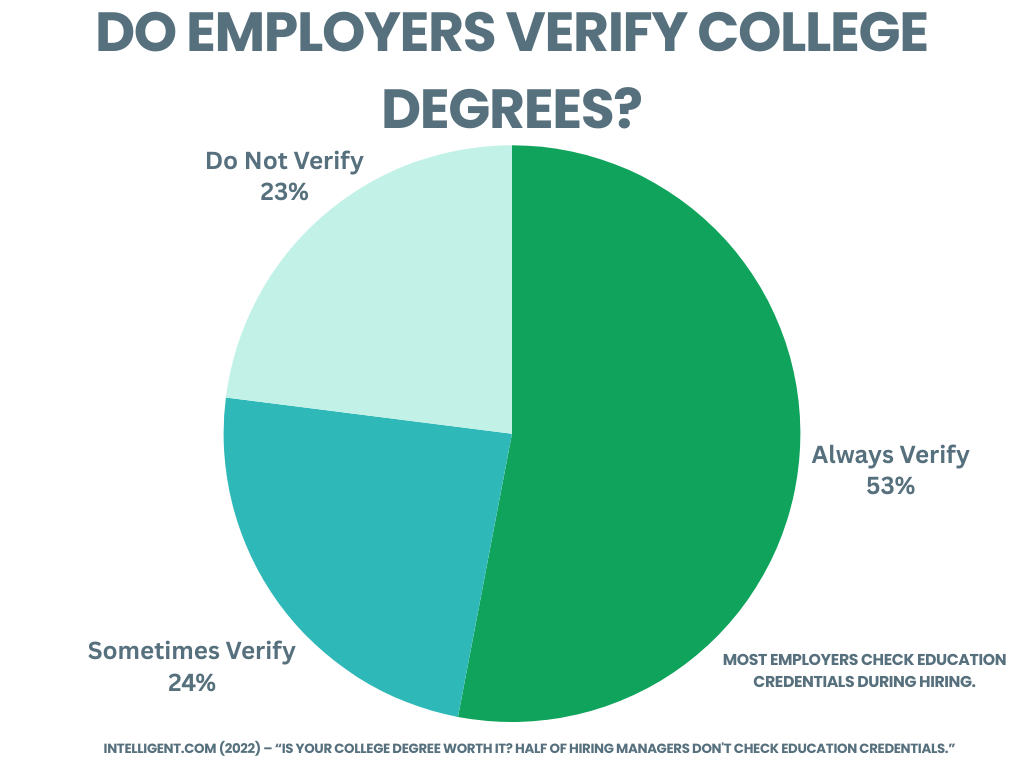
Background checks are designed to find the truth, and certain things will stop your application right in its tracks. Here is what scares employers away:
Faked Credentials: Lying about having a degree or inflating your major.
Diploma Mills: Buying a fake degree from a sketchy online website that requires no real schoolwork.
Unmatched Dates: Saying you graduated in 2022 when the school records say 2024.
Saying No to the Check: Declining a background check is your legal right under the FCRA guidelines, but employers can also legally ghost you for it.
If you have an honest mistake on your application, talk to HR before the check starts. Being proactive builds massive trust.
How to Get Ready Right Now
The smartest move you can make is ordering a credential evaluation before you even start sending out resumes. It shows employers you mean business and clears up any confusion upfront.
Double-check that your school is fully recognized by your home government, make sure your name matches on every single document, and look up the specific rules for your industry before you apply.
The 90-Day Probation Period
Congrats, you cleared the background check and got the job. Now what? Most US companies use a standard 90-day trial period to see how you actually perform on the job.
Remember that most US jobs are at-will, meaning either side can walk away if it is not a good fit. Many managers use a 30-60-90 day plan to track your milestones, though the Affordable Care Act ensures your healthcare benefits choice won't be delayed beyond a 90-day limit.
What Bosses are Actually Looking For
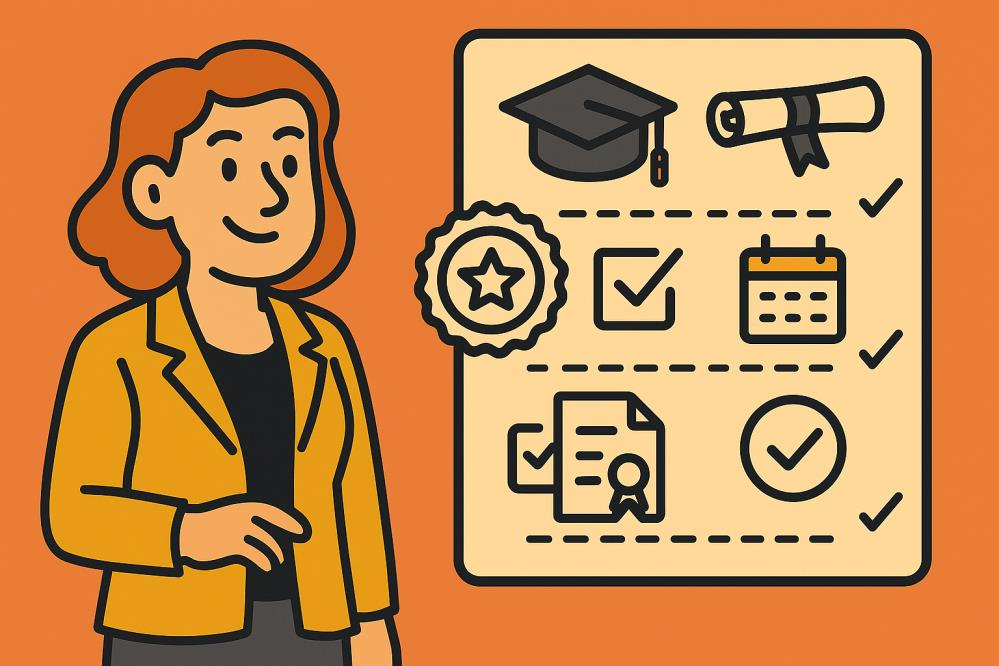
During your first few months, your boss is grading you on three main things: your skills, your honesty, and how well you vibe with the rest of the team.
Your verified degree proves you have the skills. Your honesty during the background check proves your character. Your daily attitude during probation proves your chemistry with the team. You need all three to secure the win.
Rookie Mistakes to Avoid Early On
If you are new to the US workforce, keep an eye out for these classic slip-ups:
Assuming everyone knows how prestigious your foreign university is
Having different info on your resume versus your official evaluation
Exaggerating what you can do during the interview
Staying silent and refusing to ask for help when you are confused
A student once struggled in their first month because they were too shy to ask for clarification on a project. In the US, asking questions shows you care, so speak up.
Short Summary
Your international degree is a huge strength. Just get your paperwork sorted, grab a credential evaluation early, and be totally transparent. You have got this.
 5 ways colleges can make career prep 'unavoidable' for students
 The Real Economics Behind Entry-Level Gigs
 Can 3-Year Degrees Solve the Teacher Shortage?
 Does College Public Speaking Really Matter in Today’s Job Market?
 Strategies for Communicating Tuition and Outcomes to Prospective Students