

If you work in admissions or you're trying to hit enrollment numbers, you already know this problem. Somewhere between 41.9 million and 43 million Americans have some college credit and no degree to show for it. They're called stopped-out learners, and most of them didn't fail out. Life just got in the way. A job, a kid, a bill they couldn't pay. Here's the good news: this group is easier to win back than you think, and more schools are proving it every year.
Program | What it offers | What students need to do |
|---|---|---|
Hocking College | Up to $3,000 in debt forgiven | Re-enroll under the Fresh Start plan |
City Colleges of Chicago | Half the debt waived at enrollment, the rest at graduation | Stay enrolled and keep grades in good standing |
Alamo Colleges | Up to $600 scholarship toward old balances | Pay current tuition, resolve the rest over time |
Who Stopped-Out Learners Actually Are
Here's the first mistake schools make. They picture a stopped-out learner as a twenty-something who partied too hard freshman year. That's not who's leaving. According to National Student Clearinghouse research, growth in this population is happening fastest among people aged 45 to 64, not recent grads.
A student, for example, might have left a program fifteen years ago to take care of a sick parent, then never found the right moment to go back. That's the real profile you're working with. Older, busier, and often carrying some guilt about not finishing the first time.
Recent stop-outs and near-completers aren't the same group either. National data on stop-outs shows about 2.3 million recent stop-outs compared with 2.9 million potential completers, meaning people who are close enough to a degree that finishing should be an easy sell. Treat these two groups the same in your outreach and you'll lose both.
1. Stop Treating Every Stopped-Out Learner the Same
Segment your list before you send a single email. Split people into groups like:
Near-completers who are 12 credits or fewer from finishing
Recent stop-outs who left in the last year or two
Long-term stop-outs who left five, ten, or more years ago
Each group needs a different pitch. A near-completer wants to know exactly what's left to finish. A long-term stop-out needs reassurance that their old credits still count and that the program has changed since they left.
2. Clear Out the Financial and Paperwork Barriers
Money and red tape are the two biggest reasons people don't come back, even when they want to. The table above shows three schools tackling this head on with debt relief. But it's not just about forgiving balances. It's about removing every small obstacle in the path.
Practical moves that work:
Waive re-application fees for anyone who's already attended before
Offer partial or full debt forgiveness tied to re-enrollment, not a lump sum payment upfront
Cut the paperwork down to one form instead of five
Even the federal government has caught on to this. Guidance on the Fresh Start program pushes colleges to stop withholding transcripts and diplomas over unpaid debt, since that one policy alone keeps thousands of people from ever finishing what they started.
3. Reach Out Like You Actually Know Them
Generic "we miss you" emails don't work. What works is messaging that matches where someone is in their story. Mention their specific program. Reference how many credits they have left. Make it clear you looked at their file before you hit send.
Assigning a dedicated success coach or navigator to each returning student makes a real difference too. Someone might ignore three emails but pick up the phone the moment a real person calls and says "hey, you're closer than you think." One state program built its entire comeback strategy around this navigator model and posted record re-enrollment numbers as a result.
4. Let Data Find Your Best Leads First
You don't have unlimited staff time, so spend it where it counts. Predictive models can flag which stopped-out learners are closest to finishing before your team ever picks up the phone. Institutions using this approach are seeing what the Clearinghouse Research Center calls an upward trend in stop-out re-enrollment, driven directly by intentional, targeted outreach.
Start with the easiest wins. Reach out to near-completers first, then work outward to people who have more ground to cover. A grant tied to being within 12 credits of a credential is a good example of this kind of targeting done right.
5. Build Pathways That Fit an Adult's Real Life
Remember, the biggest growth in this population is happening among people in their 40s and 50s, and it keeps climbing through their 60s. These are people juggling jobs, kids, and sometimes aging parents. A rigid nine-to-five class schedule just isn't going to work for them. If your programs don't offer evening classes, online options, or hybrid schedules, you're asking your fastest-growing audience to fit into a mold built for teenagers.
Offer evening and weekend sections for high-demand courses
Build fully online tracks for programs where it makes sense
Let students mix online and in-person classes instead of forcing one or the other
It's Working, and It's Working Now
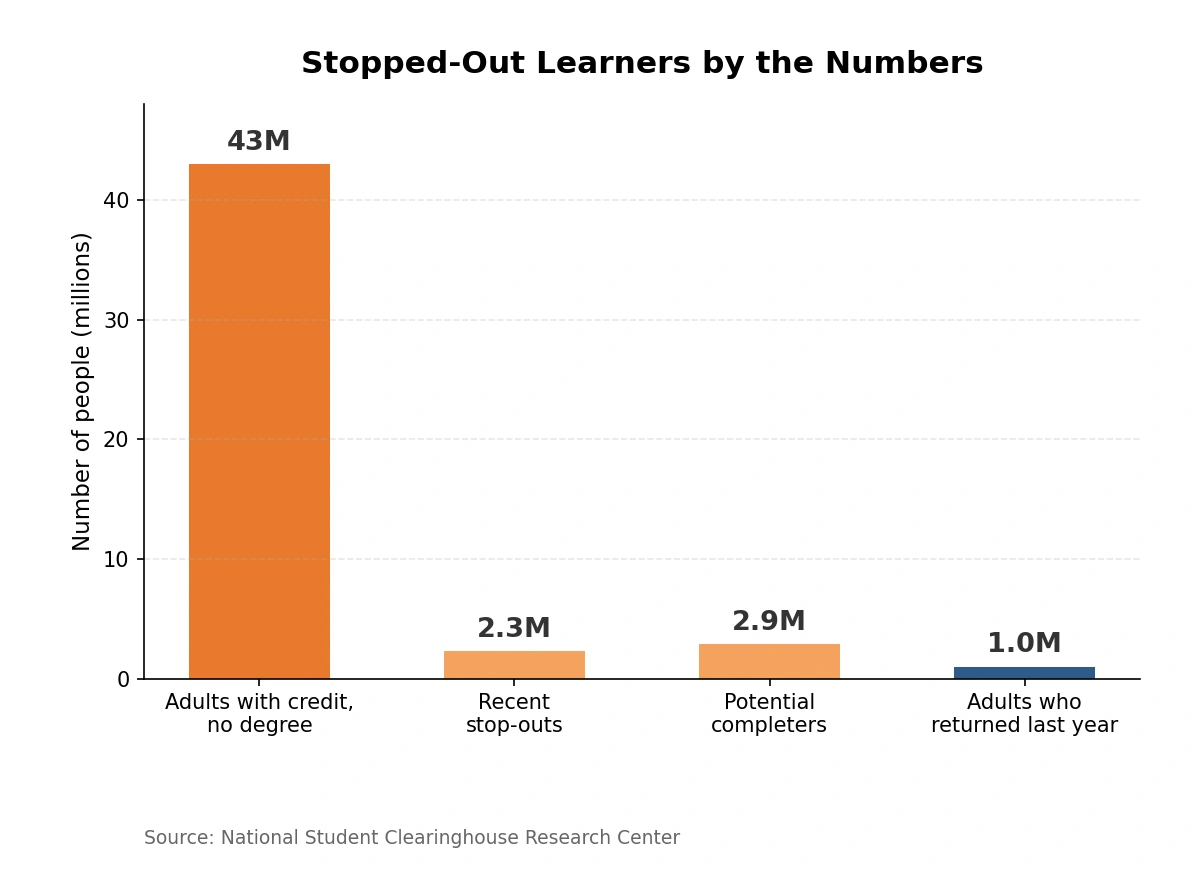
More than one million adults went back to school last year alone, the highest number ever recorded. That's not luck. It's schools doing the five things above: segmenting their outreach, clearing financial roadblocks, personalizing contact, using data to prioritize, and building schedules that fit real lives. Start with one of these five and you'll already be ahead of most schools still sending the same generic email to everyone on their list.
Stopped-out learners are usually adults over 35 who left for life reasons, not academic failure.
Segmenting your outreach by how close someone is to finishing changes what kind of message actually works.
Pairing debt relief with a real person checking in removes both the financial and emotional reasons people stay away.
Flexible scheduling only helps if the paperwork and re-application process are simple too.
 How Universities Use Zero-Waste Swap Programs to Cut Student Costs
 How Industry Partnerships Shape Modern Curricula
 How Post-COVID Aid Programs Help Universities Rebuild Admissions
 Beyond the Acceptance Rate and How Colleges Decide Who Gets In
 How Leveraging Job Placement Strategies Can Reenroll Returning Students