Disclaimer: This article is for general informational purposes only and does not constitute legal, financial, medical, or professional advice. Policies, requirements, and costs may change. Always verify current information with the relevant institutions or official sources before making decisions.
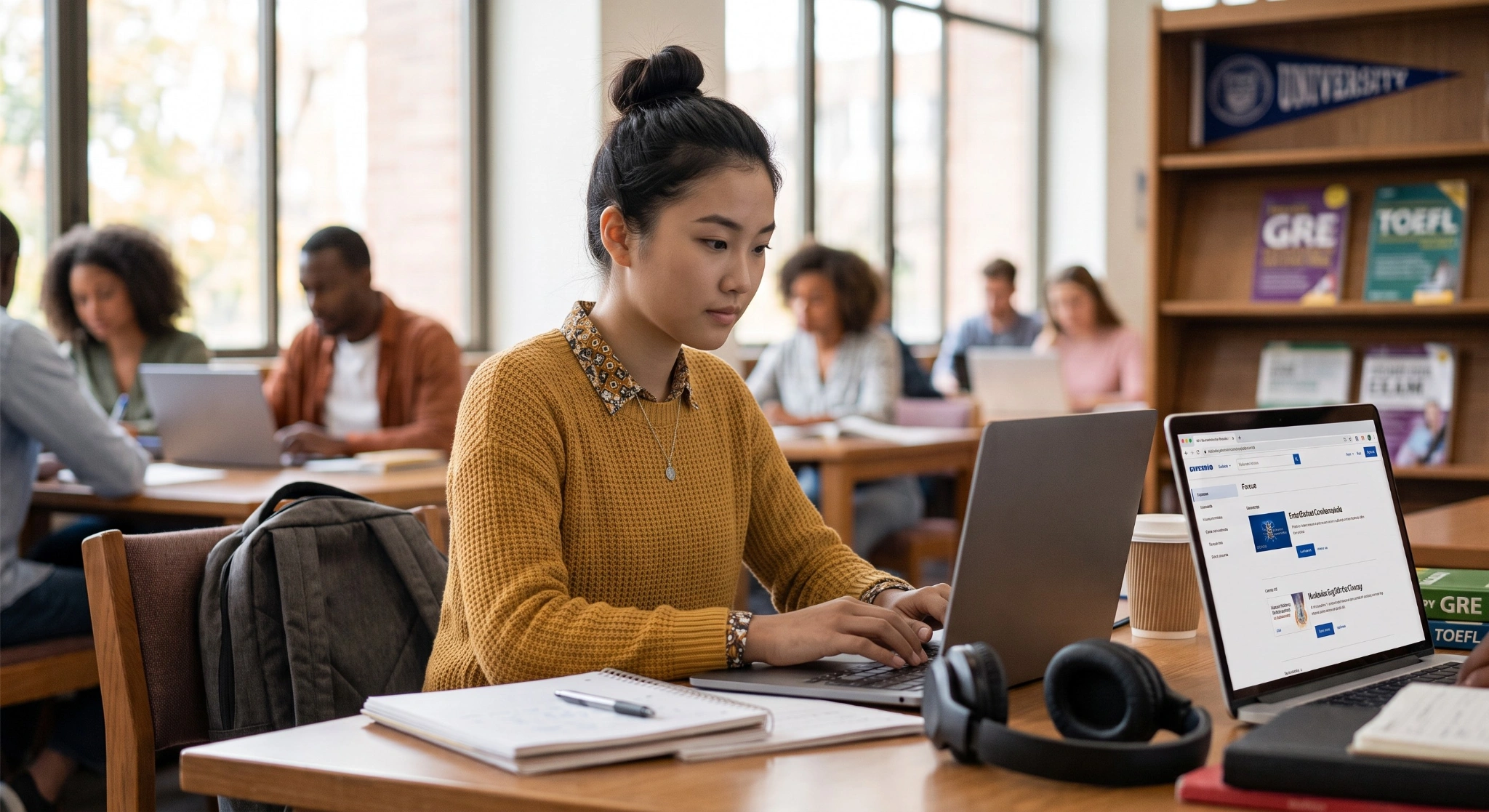
MOOCs (free or cheap online courses from places like Coursera and edX) can genuinely help you as an international student. They can also waste your time if you pick the wrong one for the wrong reason. Here's what these courses can and can't do for your studies and your job hunt in the US.
Platform | Known For | Certificate Type | Credit Transfer? |
|---|---|---|---|
Coursera | University and tech partners | Verified certificates, degrees | Yes, in some programs |
edX | Research university content | MicroMasters, degrees | Yes, in some programs |
Udemy | Independent instructors | Completion certificate | Rarely |
Udacity | Tech company partners | Nanodegrees | Rarely |
FutureLearn | UK and global schools | Microcredentials | Limited |
What a MOOC Actually Is
A MOOC is an online course anyone can join with an internet connection. Most let you audit for free and charge a fee if you want graded work and a certificate.
You'll see everything from one-off courses to full online master's degrees. One thing matters most for you: MOOCs are not accredited degrees and they don't sponsor visas. Finishing one doesn't get you an F-1 visa, CPT, or OPT.
Prepping for the US Before You Even Land
This is where MOOCs earn their keep. Courses from top US institutions on edX and Coursera let you get a feel for American classroom style, terminology, and pacing before you show up.
If a student is heading into a STEM or business program, for example, a few pre-arrival courses can close the gap between how their home country teaches a subject and how the US teaches it.
The US Department of State also runs a MOOC Camp program at embassies in over 60 countries. You get group discussions on STEM, English, and entrepreneurship, run by Fulbright alumni and embassy staff. It's a low-pressure way to test the waters and meet an EducationUSA advisor before you apply.
The Rules Tighten Once You're Enrolled
Once you're on an F-1 visa, things get strict. Per ICE guidance, you can count just one distance course, or three credit hours, toward your full course load each term, and only if it has no in-person component. If you're on an M-1 visa or in an English language program, online courses don't count toward your requirements at all.
Outside your official credit load, you're free to take as many MOOCs as you want. Nobody's stopping you from learning Python on the side.
One more thing worth saying plainly: a fully online program does not qualify you for an F-1 visa, CPT, or OPT. Neither does a MOOC. If your plan is to study and then work in the US, you need a SEVP-certified school, full stop.
How MOOCs Help You Land a Job
US employers, especially in tech, care a lot about proof of skill. MOOCs in data science, cloud computing, cybersecurity, and AI line up directly with what companies are hiring for right now.
Paid, verified certificates carry more weight than a free audit badge. Coursera's professional certificates, built with major tech companies, get treated as job-ready credentials by a growing hiring network. According to Coursera's 2025 Learner Outcomes Report, 37% of unemployed learners found a job after finishing a program, and 46% reported a pay bump. Self-reported numbers deserve a grain of salt, but the trend checks out in tech-adjacent roles.
During OPT and STEM OPT
Your OPT window is short. If a student picks up a relevant certificate during that stretch, for example, it signals they keep learning without being told to. That won't replace real work experience, but it adds weight to an application.
Keep an eye on policy here. Per ICEF Monitor reporting, a government proposal could restrict or end OPT for F-1 students. Check USCIS directly and don't build your plans around OPT staying exactly as it is.
Is the Certificate Actually Worth Paying For?
Honest answer: depends on your field and who issued it.
Where it carries weight:
Tech roles in data, AI, cloud, and cybersecurity
Entry-level or career-switch roles where skill beats pedigree
Certificates from known partners like major tech firms on Coursera, or top research schools on edX
Where it doesn't:
Licensed fields like medicine, law, or licensed engineering
Senior roles where a name-brand degree still wins
Free audits with no graded work or ID check
The gap is real. Per DigitalDefynd's hiring survey, only about a third of hiring managers fully trust a MOOC certificate on its own. A certificate rarely gets you hired by itself. It works best sitting next to a degree, a portfolio, or real work history.
On cost: verified certificates on Coursera and edX usually run around $49 a course. Professional certificate programs run $39 to $79 a month until you finish. A multi-course credential lands around $400 to $600 if you stay on schedule, more if you drag it out.
Why Most People Never Finish
Let's be blunt: MOOC completion rates are rough.
Research in Open Praxis puts standard open-access MOOC completion at 10 to 20 percent. Certification tracks hit 30 to 45 percent. Coached, cohort-based programs reach 42 to 90 percent depending on how they're run. People quit mostly because of time, difficulty, or nobody holding them accountable.
International students follow the same pattern as everyone else. Plenty sign up, few finish. If you're going to pay for a certificate, pick a cohort program with deadlines and classmates. You'll actually finish it.
If a student signs up for a certificate just to pad a resume with no real job goal attached, for example, the odds they finish are low.
MOOC Type | Typical Completion |
|---|---|
Free, open audit | 3 to 15% |
Standard with certificate | 10 to 20% |
Professional or certification track | 30 to 45% |
Coached or cohort based | 42 to 90% |
MOOCs Won't Replace Your Degree
Not even close, and especially not if you need visa sponsorship.
F-1 and M-1 visa rules only apply to SEVP-certified schools. MOOCs have zero visa function. No CPT, no OPT, no faculty relationships, no campus, none of the credential weight a US degree carries.
Per TopUniversities' analysis, MOOCs still have a long way to go before they replace a traditional degree, mostly because they can't offer the same level of support or assessment at scale. No lab access, no one-on-one feedback from faculty, no built-in professional network.
What's actually happening is a mix. Schools are folding MOOC content into their own programs, and some accredited online master's degrees now run on MOOC-style delivery. That's the real trend: MOOCs supporting a degree, not standing in for one.
What You Actually Gain From MOOCs
Cost: free or cheap access to courses from top US schools and tech companies
Flexibility: self-paced study fits around visa limits, work rules, and your class schedule
A head start: pick up US academic vocabulary and subject basics before you enroll
Something to show: hands-on projects and certificates give employers a real thing to look at
English practice: plenty of courses build your academic and professional English
No gatekeeping: accessible from home before you apply or get a visa
How to Pick a MOOC That's Actually Worth Your Time
Match the course to one specific gap, like a job requirement or a weak spot in your degree
Go for paid, verified certificates from university or major-company partners if you plan to use it professionally
Check if the certificate links to a recognized employer program
Don't stack MOOCs as a stand-in for a real degree application, use them to back it up
Pick cohort-based programs over self-paced ones if you know you struggle to finish things
A quick tip from Scholaro's side: when you list a MOOC certificate on your resume or grad school application, name the issuing partner clearly. "Certificate, Machine Learning, issued via Coursera in partnership with [tech company]" reads a lot better than just "Coursera certificate."
Make MOOCs Work for You
MOOCs won't get you a visa or replace your degree. They will help you prep early, build real skills, and give employers something concrete to check. Pick one with a clear goal attached, and you'll actually finish it.
 How Universities Use Zero-Waste Swap Programs to Cut Student Costs
 How Industry Partnerships Shape Modern Curricula
 How Post-COVID Aid Programs Help Universities Rebuild Admissions
 Beyond the Acceptance Rate and How Colleges Decide Who Gets In
 How Leveraging Job Placement Strategies Can Reenroll Returning Students