
H-1B visa fees sound scary if you're an international student staring down a job offer. Here's the first thing to know: they don't come out of your paycheck. Federal rules block that. But H-1B visa fees still shape your job search in a big way. They change who gets sponsored, how much that role pays, and how nervous employers are about the whole process right now.
A student, for example, might get two offers with almost identical pay, but one company sponsors H-1B every year like clockwork and the other has never done it before. That gap matters more than the numbers on the offer letter.
Here's a quick snapshot of the actual costs involved.
Cost item | Amount | Current status |
|---|---|---|
H-1B registration fee | $215 per registration | In effect |
Standard petition, government, and legal costs | Roughly $5,500 to $9,500 | In effect, employer-paid |
Supplemental $100,000 fee | $100,000 per covered petition | Blocked pending appeal (as of August 2026) |
Your Salary Is Safe. Here's Why.
The Department of Labor makes every H-1B employer file something called a Labor Condition Application before they can sponsor you. That paperwork locks in a promise: you get paid at least the prevailing wage for your role and location, or the same as similar workers at the company, whichever is higher.
Sponsorship costs can't touch that number. Employers can't quietly shave a bit off your salary to cover their own fees. And they can't pay you less than a U.S. employee doing the same job just because you're on a visa. Both of those are flat out illegal under the same Department of Labor wage rules.
So the fee talk isn't really about your paycheck. It's about your odds of getting sponsored at all.
The Lottery Now Plays Favorites
Back in December 2025, the Department of Homeland Security rewrote how the H-1B lottery works. As of February 27, 2026, it's no longer a flat random draw. USCIS now hands out entries based on wage level, using the Department of Labor's four-tier wage system.
Here's the breakdown:
Level IV wage (highest tier): four entries in the pool
Level III wage: three entries
Level II wage: two entries
Level I wage (entry tier): one entry
Everyone's still eligible. But a Level IV registration has four times the shot of a Level I one. That's a real edge, not a small one.
A student, for example, aiming for an entry-level analyst role is now competing against a system that quietly favors the person applying for a senior engineering job down the hall. Same company, same cap season, very different odds.
Researchers at the Penn Wharton Budget Model looked at this and found the new system does push selection toward higher paid, higher educated foreign born workers, just not as sharply as some of the other proposals on the table. They also found no real projected hit to wages for U.S. born workers.
What that means for you: entry-level roles have longer odds than before. Roles with strong pay already have a built-in advantage. If two candidates look similar on paper, the one whose role sits at a higher wage level now has a leg up in the actual lottery math.
The $100,000 Fee: What It Hits and What It Doesn't
In September 2025, a presidential proclamation slapped a one-time $100,000 fee on new H-1B petitions, but only for people outside the U.S. who don't already hold a valid H-1B visa. USCIS confirmed this fee skips change-of-status petitions filed from inside the country, which is exactly the path most F-1 students take when moving from OPT into H-1B status.
Translation: if you're doing the typical F-1 to H-1B switch, this specific fee mostly isn't your problem. It matters more for someone your employer might hire straight from abroad, or if you leave the country and need to consular process later on.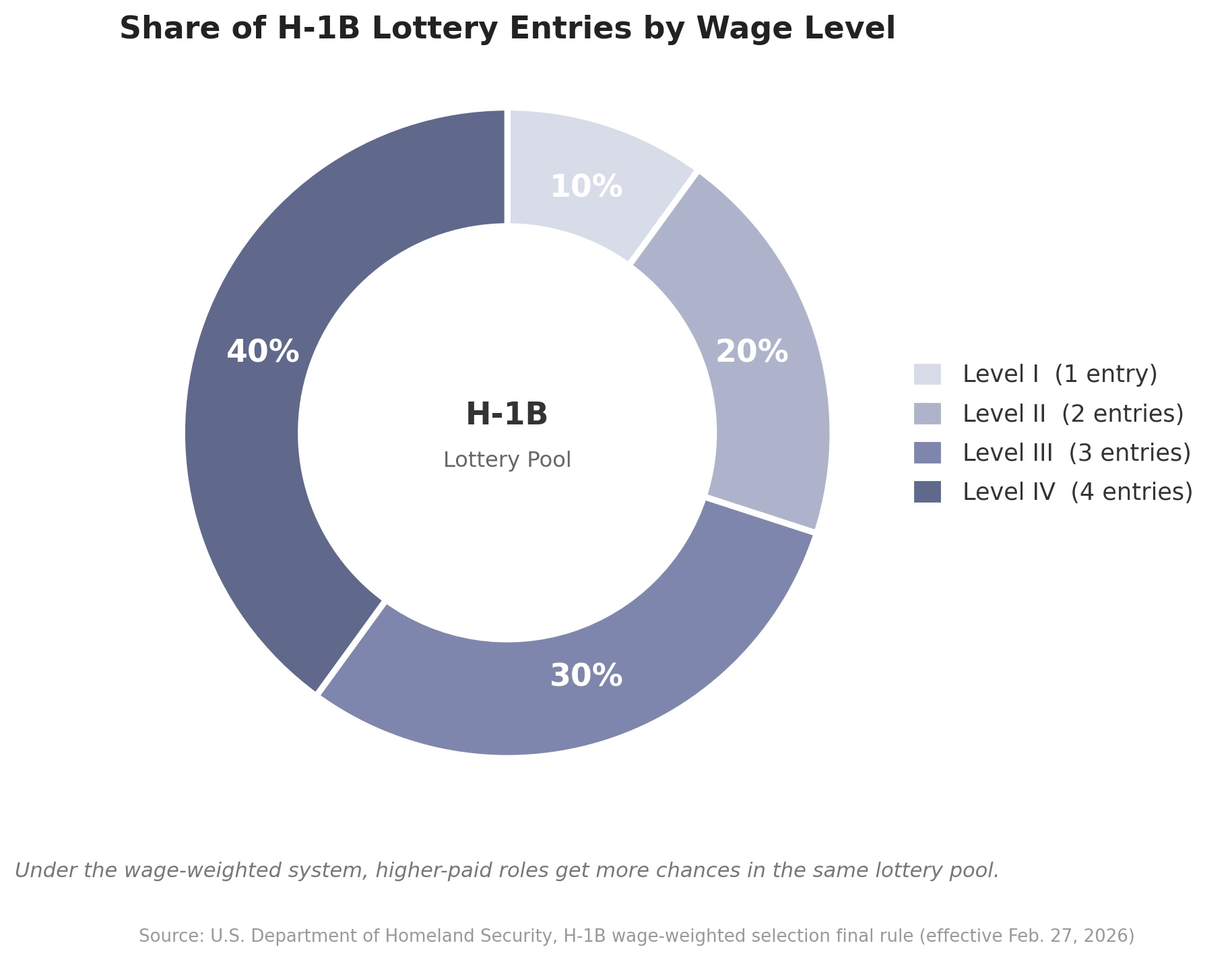
That said, the fee still rattled hiring budgets everywhere. A student, for example, applying to a company that also hires internationally from overseas offices might notice that company got more cautious across the board, not just for the roles the fee technically applies to. Once a company gets spooked, that caution tends to spread.
And the legal drama isn't over. A Massachusetts court struck the fee down on June 8, 2026, calling it an illegal tax. Days later the same court paused its own ruling while the government appealed. Then on July 24, 2026, the First Circuit refused to bring the fee back during the appeal. Right now, the fee isn't enforceable, but the case is still alive and could end up at the Supreme Court. Nothing here is fully settled.
What You Can Actually Do
You can't change federal wage law and you can't control a court case. But you can play smarter with what's in front of you.
Ask what wage level your role is registered at. It directly affects your lottery odds.
Ask if the employer has actually sponsored H-1B workers before, not just this cycle.
Get your degree evaluated early. A finished foreign credential evaluation clears one bottleneck before cap season gets tight, so your employer isn't stuck waiting on paperwork when timing matters most.
Don't read a lower starting offer as a reflection of your worth. It might just be where that role sits on the wage scale.
The rules protect your paycheck. They don't protect certainty. Keep that gap in mind as you plan your job search.
This article is for general information only and isn't legal or immigration advice. H-1B rules, fees, and court rulings can change quickly. Talk to a licensed immigration attorney or check official sources like USCIS and the Department of Labor before making decisions based on your specific situation.
 How Universities Use Zero-Waste Swap Programs to Cut Student Costs
 How Industry Partnerships Shape Modern Curricula
 How Post-COVID Aid Programs Help Universities Rebuild Admissions
 Beyond the Acceptance Rate and How Colleges Decide Who Gets In
 How Leveraging Job Placement Strategies Can Reenroll Returning Students