Plenty of students see college public speaking as a requirement to get through, not a skill worth building. The 2026 hiring data points the other way. Employers still put communication near the top of the list of what they want, and they still say new graduates come up short on it.
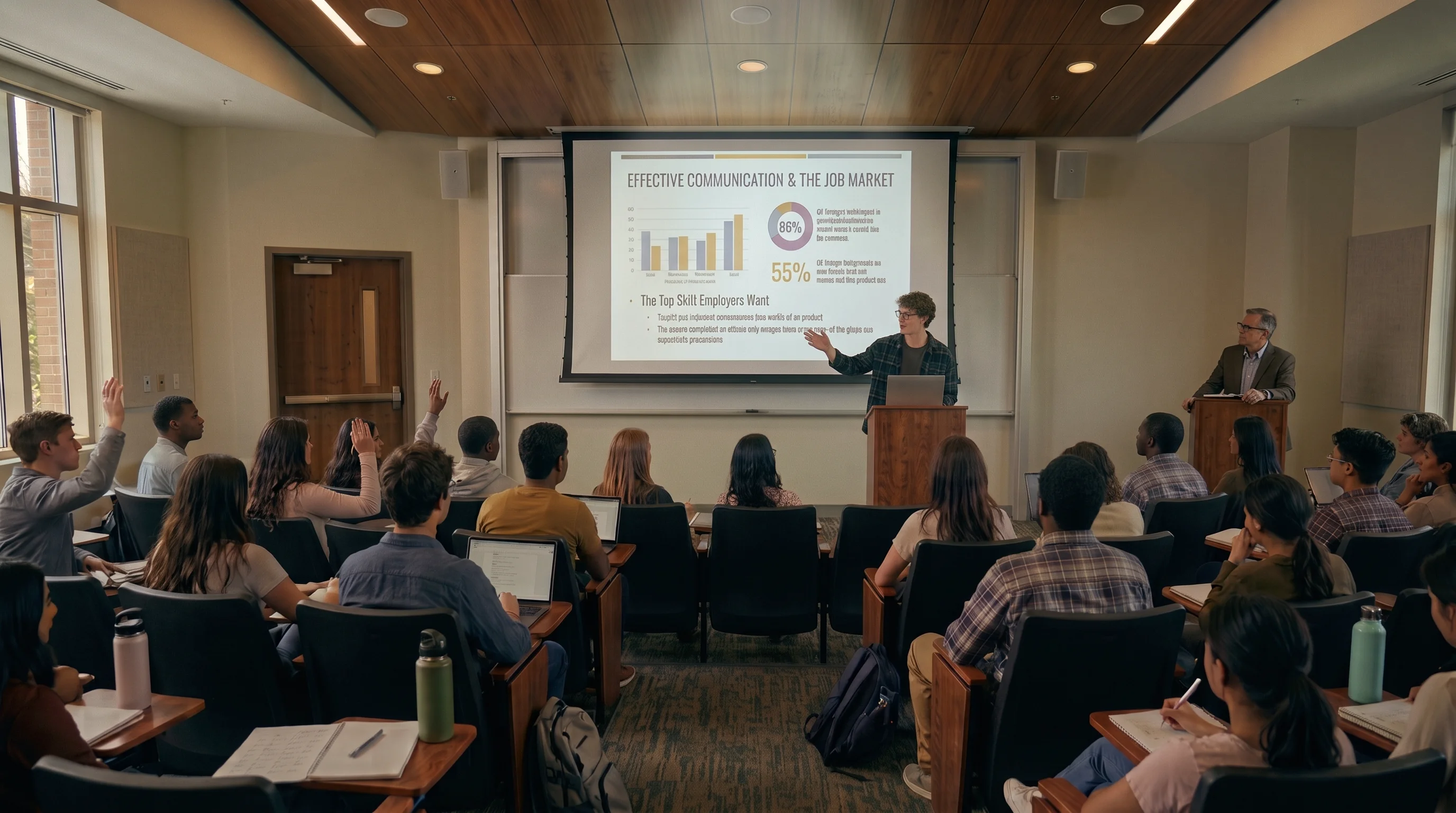
Final-round interviews show this better than anything. Two candidates might have the same degree and close technical scores. The offer tends to go to the one who can explain a project to a panel and connect it to a real business problem.
A single speech class won't fix that, and speaking well doesn't beat technical skill. What employers do is use how you speak to size up everything else you can do.
Source | What it found |
|---|---|
Graduate Management Admission Council, 2026 | Communication ranks among the top skills employers want in business school graduates |
LinkedIn Skills on the Rise, 2026 | Public speaking shows up among the fastest-growing skills |
Poll of 1,005 U.S. hiring managers, late 2025 | 86% rate soft skills as equal to or more important than hard skills |
American Association of Colleges and Universities, 2023 | 64% of employers rate oral communication as very important, yet only 34% say recent grads are very well prepared |
Employer Demand for Speaking Skills in 2026
The Skills Recruiters Put First
The Graduate Management Admission Council ran its corporate recruiters survey from January to May 2026. Employers named communication, problem-solving, and adaptability as the skills they care about most when hiring business school graduates.
AI plays a part in that ranking. As AI tools pick up routine tasks, employers who see communication gaps on their teams now put more weight on presentation and verbal skills.
A late-2025 hiring manager poll of 1,005 U.S. hiring managers found the same pattern. 62% said hard and soft skills matter equally, and 24% said soft skills matter more. Communication came out on top of their soft skills list.
The Interview as a Speaking Test
Many hiring processes include several rounds of talking before anyone makes an offer: a phone screen, a video interview, a panel, and in some fields a case presentation. Each round shows how you organize your thoughts under pressure. A resume can't show that.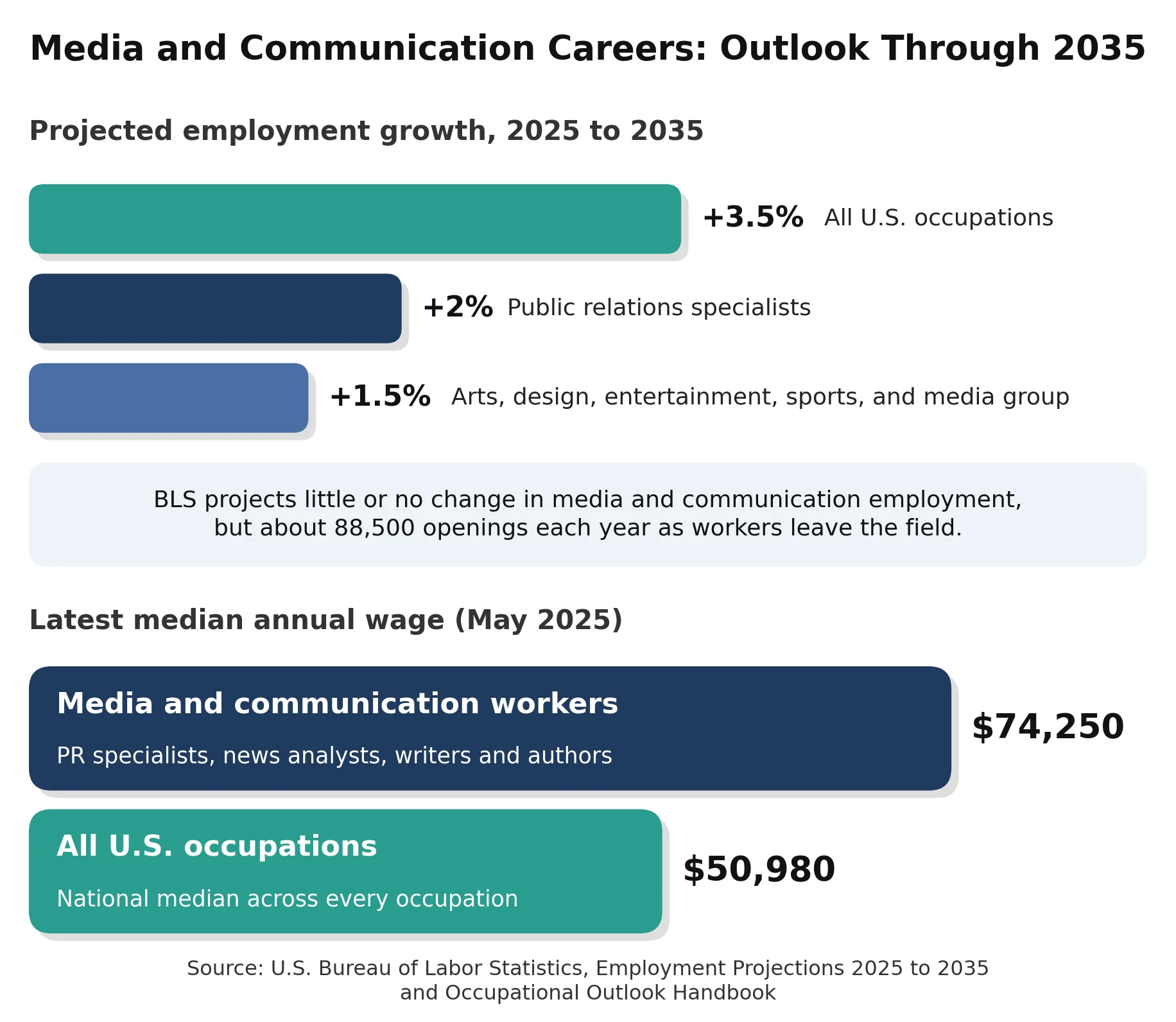
Anyone can type "strong communication skills" on a resume. A 45-minute panel interview puts that line to the test. Interviewers watch how you structure answers, how you handle being cut off, and how you bounce back from a question you didn't see coming. Some employers also use automated video screening tools, which can sort applicants before a hiring manager reviews the recordings.
The Leadership Pay Gap
Speaking skills pay off most when you move from doing the work to running it. The U.S. Bureau of Labor Statistics puts median PR specialist pay at $69,780 in May 2024. Public relations managers plan an organization's communication and, in large organizations, often supervise PR staff. Their median manager salary was $138,520 that year, close to double.
Experience accounts for a lot of that gap, but speaking ability affects who gets the chance to step up. Managers brief executives and speak for their team in budget meetings. Companies tend to promote the people who already handle those moments with ease.
Technical jobs work the same way. A data analyst who catches a pricing error still has to convince a room of sales directors to change their numbers. The analysis gets their attention. The presentation decides if they act on it.
Influence Without a Title
LinkedIn bases its fastest-growing skills list on two things: the skills people add to their profiles and the skills of people who got hired in the past year. The 2026 list calls out leadership skills like team management and mentorship. It also names public speaking as a way to communicate clearly when things feel uncertain.
Project updates, pitches to your manager, and client calls all mean persuading people who don't have to agree with you. Handle them well, and that credibility follows you into promotion talks.
Where the Case for Public Speaking Gets Overstated
Technical Skills Still Get You Considered
Communication doesn't beat technical skill across the board. In that same poll, 14% of hiring managers said hard skills matter more. Employers still want real depth in areas like software, data analysis, and cybersecurity. The Graduate Management Admission Council also found that employers expect AI tool skills and strategic thinking to become the most valued skills within five years.
A confident speaker will still get turned down if their financial model doesn't balance. Speaking works as a multiplier. Your technical skills get you into the running. Clear communication decides if leadership trusts you with clients or a team.
Research published through the National Bureau of Economic Research backs this up. This social skills research found that jobs needing a lot of social interaction grew by nearly 12 percentage points as a share of the U.S. workforce between 1980 and 2012. Pay and job growth were strongest in jobs that called for both math and social skills.
Why Speech 101 Fails to Close the Gap
The American Association of Colleges and Universities asked 1,010 executives and hiring managers about new hires for its employer views report. 64% said oral communication is very important. Only 34% said recent graduates are very well prepared in it.
Part of that 30-point gap comes down to how a typical required course works. Many intro speech classes revolve around a few rehearsed talks in front of classmates. Speaking at work is messier. Questions come out of nowhere, deadlines cut your prep time, and the people in the room often outrank you. One semester rarely gives you enough unscripted practice for speaking to feel normal.
To close the gap, you need regular practice in settings that feel like work:
Present your group projects instead of passing the job to the most confident person
Join a debate team, speech club, or student government
Take on a TA, tutoring, or orientation leader role
Book mock interviews with your campus career center
Record your practice runs and listen for pacing and filler words
Beyond the Podium: What Communication Studies Actually Covers
According to its communication discipline overview, the National Communication Association treats the field as the study of every form, channel, and effect of communication. Public speaking is one piece of it. Schools call the full program communication studies, speech communication, or communication arts.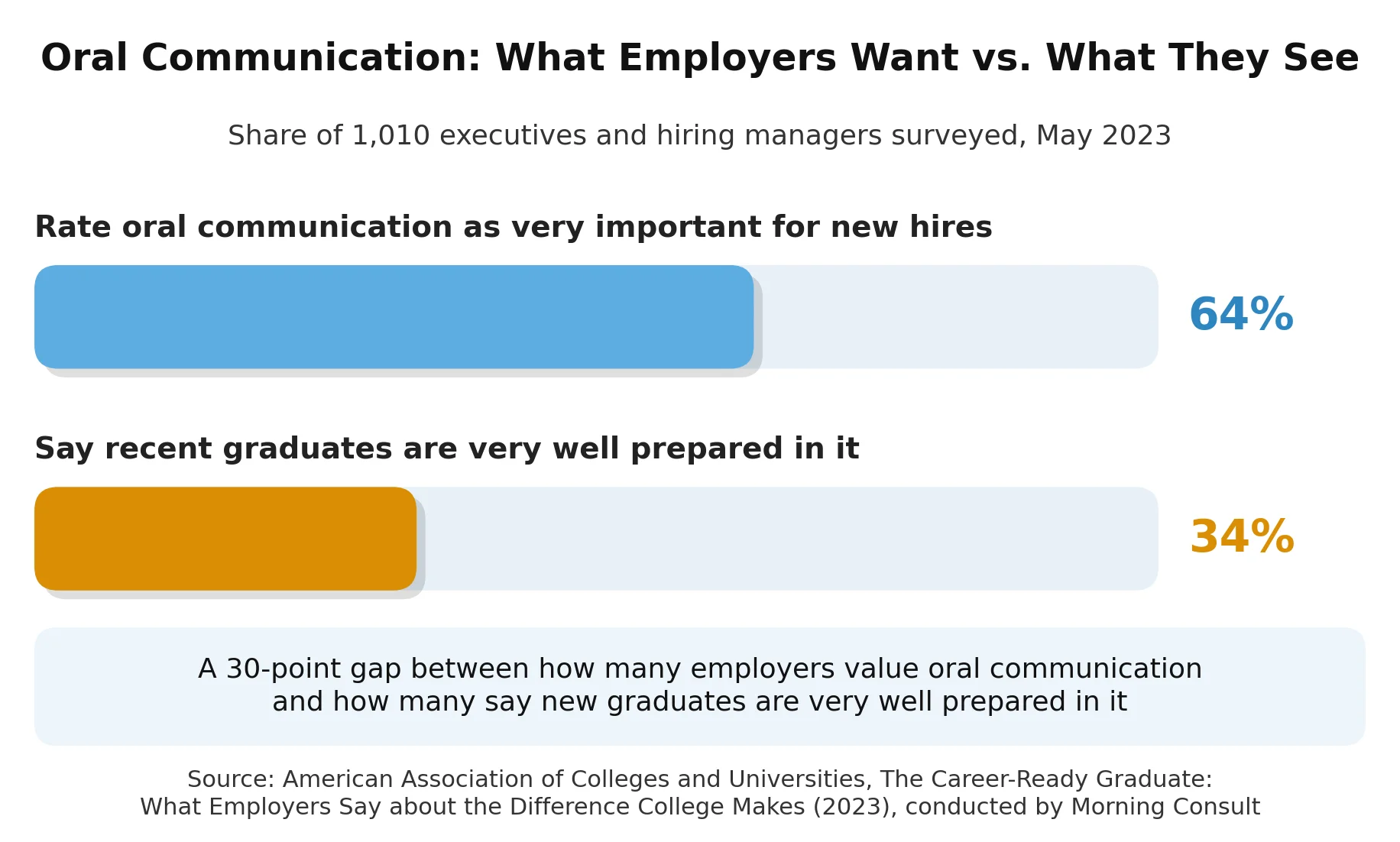
Classes usually cover interpersonal and intercultural communication, public address and persuasion, and applied areas like political and health communication. That range is why the degree leads to jobs well beyond media.
When a Communication Degree Makes Sense
Public speaking usually lives inside a broader communication major instead of standing alone as a degree. That major makes the most sense in fields where communication is the main part of the job:
Public relations and corporate communication
Sales and client relations
Human resources and corporate training
Advocacy and nonprofit work
If you're headed into engineering, data science, or nursing, a minor or a few electives gives you most of the practice for less time and money. A software engineer who can explain system tradeoffs to nontechnical managers has a real edge in design reviews and promotion conversations.
Career Reach of Communication Graduates
The Bureau of Labor Statistics' media occupation outlook lists a median wage of $70,300 for media and communication workers in May 2024. The median for all occupations was $49,500. BLS expects these jobs to grow slower than average through 2034. Even so, about 104,800 openings should come up each year, mostly as people leave or retire. Communication grads also find work in sales, customer service, management, and human resources.
Professional Presence in Hybrid Workplaces
Presence is how you come across on video calls, in meetings, and when you network. It comes from habits you can repeat, not from your personality. Start with your main point so people know where you're going. Pause on purpose instead of filling silence with "um," since a pause sounds calm and filler sounds unsure.
Career fairs make this easy to see. A recruiter talks to dozens of candidates in one afternoon. The ones they remember gave a tight 30-second intro and moved straight into a real conversation about the job.
Speaking Practice as a Career Investment
College public speaking matters because employers use how you speak to judge your other skills. One class rarely builds that on its own. Steady practice, paired with solid technical skills, does.
 Strategies for Communicating Tuition and Outcomes to Prospective Students
 How Politics Is Shaping College Enrollment
 How Top Performers Land US Job Offers
 The College Majors Foreign Students Regret Choosing
 The Tightest Job Market in Years for College Grads