
If you run a college or university right now, financial stress is not a once-in-a-while problem. It is the background noise of the job. Enrollment dips, state funding shifts, federal policy changes overnight. You are expected to keep the lights on and keep everyone calm while you do it.
Here is the good news. Financial stress does not have to mean chaos. It usually comes down to who decides what, how fast you move, and whether people trust the process. Let's get into it.
Pressure point | What it hits | Who usually owns the response |
|---|---|---|
Enrollment decline | Tuition revenue, class sizes | President, provost |
State funding cuts | Operating budget, staffing | Board, president |
Federal policy shifts | Research funding, compliance costs | President, general counsel |
Credit rating pressure | Borrowing costs, capital projects | Board finance committee |
Mapping decision rights across leadership
When money gets tight, everyone wants to know who is in charge. The honest answer is that it depends on the decision.
Board of trustees: holds fiduciary duty. Approves the budget, signs off on borrowing, has final say on major cuts.
President: turns board direction into an actual plan. Carries the public message when things get rocky.
Provost: owns the academic side. Program cuts, faculty lines, curriculum changes all run through this office.
Deans and chairs: feel it first at the department level. They make the calls on what gets trimmed without wrecking morale.
If a student for example is trying to register for a course that just got cut, that decision traveled through all four of these layers before it ever touched their schedule. The gap between board policy and classroom reality is usually where the frustration lives.
Shared governance: decisions without disruption
Shared governance sounds like a buzzword until you actually need it. In plain terms, faculty weigh in on academic matters, administration handles operations, and the board gives final approval. When that balance breaks, things get ugly fast.
One state university found this out the hard way. Leadership proposed program cuts to close a multi-million dollar deficit, moved fast, and skipped enough of the faculty conversation. The result was a public backlash and a vote of no confidence in leadership. The fiscal problem did not go away. It just got a second problem stacked on top.
Consensus building is not about getting everyone to agree. It is about giving people a real seat at the table before the decision is final. A few things that actually help:
Set up a budget task force with faculty, staff, and student voices, not just administrators.
Run open forums before you announce anything, not after.
Roll out big changes in phases instead of one shock announcement.
When students learn about tuition hikes from a news article before hearing it from campus leadership, you do not just have a financial issue. You have a trust deficit, and that one is harder to fix than the budget.
Strategic resource allocation and liquidity
Resource allocation is where good intentions meet spreadsheets. You cannot fund everything, so you need a method for deciding what gets protected and what gets paused.
A growing number of finance teams are using activity based costing to see which programs generate margin and which ones quietly drain it, even if they matter to the mission. Pair that with a real look at liquidity. Cash on hand is not just a cushion for emergencies. It is what lets you act on an opportunity without scrambling for a loan.
Practical moves that hold up under pressure:
Rank programs by both financial return and mission value, not just one or the other.
Set a target range for reserves instead of a single number that panics people when it dips.
Review "institutional support" costs regularly. BDO's 2026 higher ed financial outlook flags 15 percent of total budget as the benchmark to watch. Cross that line and it is worth a hard look.
Navigating political vs fiduciary board pressures
The financial stress is the same. The governance setup is not.
Public university boards often have members appointed by a governor or state legislature, which means turnover can follow election cycles rather than institutional need. Private boards tend to fill seats through election by current trustees or alumni, and the structure tends to stay steadier for longer stretches of time.
That difference matters more than it sounds. A public board might face political pressure to make a fast, visible cut. A private board answers more to donors and alumni, so the pressure looks different, but it is still there.
What's making this harder right now
A few things are piling on top of the usual budget squeeze. Here is the pressure and the move that actually helps with each one:
Demographic cliff: the pool of traditional college age students is shrinking. Build enrollment scenarios around this reality now instead of budgeting on old projections.
Federal compliance reviews: these have paused research dollars at several major research universities. Track compliance as an ongoing strategic risk, not a once-a-year checkbox, so a review does not blindside your funding.
AI adoption: it is moving faster than most governance processes can keep up with. Form a task force now so policy keeps pace, instead of reacting after an academic integrity or data privacy problem forces your hand.
Cybersecurity: this now sits next to enrollment and financial aid as a board level risk, not an IT afterthought. Put it on the board agenda on a regular cycle, not just after an incident.
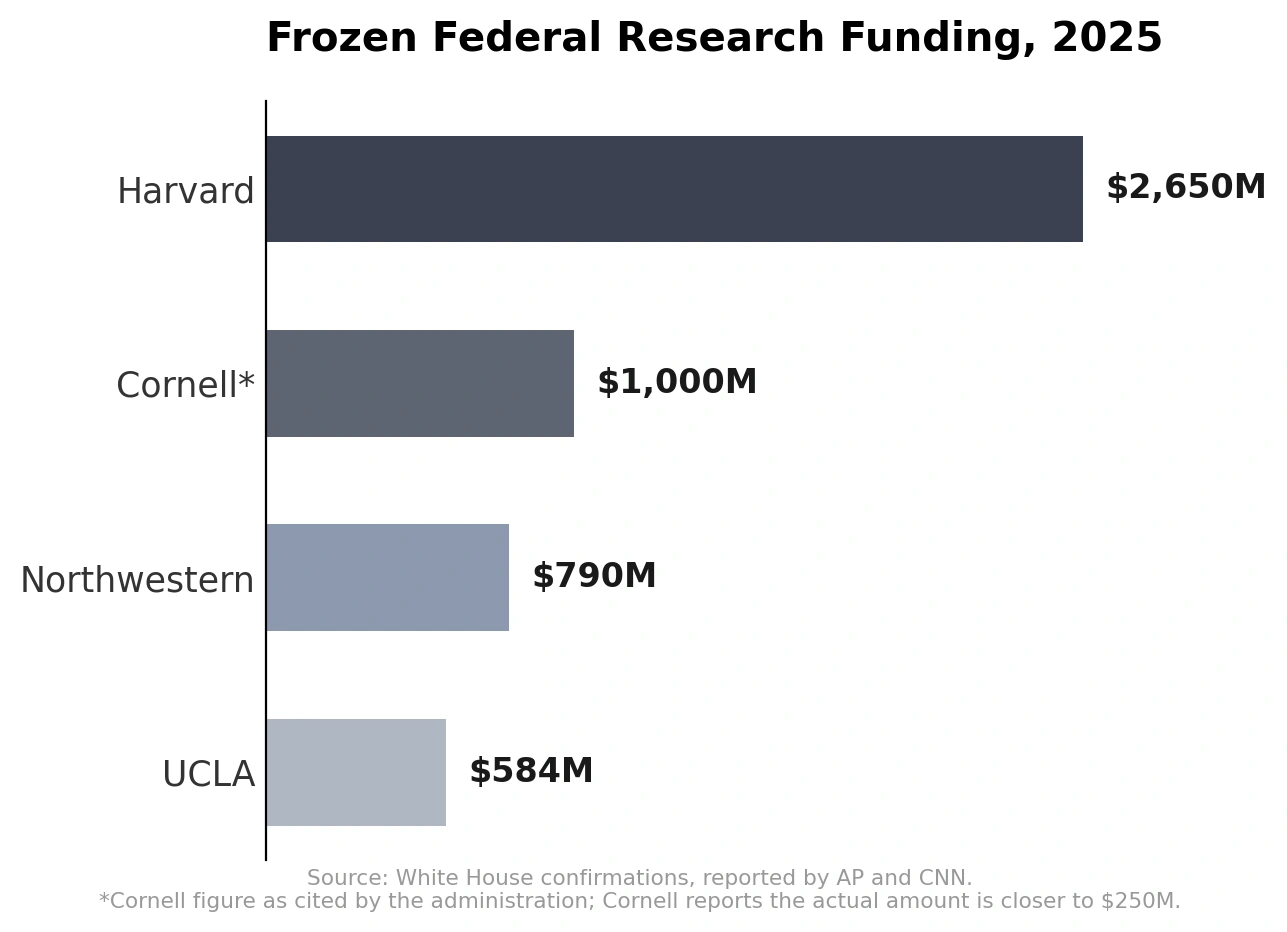
None of these are going away soon. The institutions handling it best are the ones treating governance as a living process, not a set of rules from a decade ago.
Where leaders actually learn this stuff
Nobody is born knowing how to navigate a fiscal crisis while keeping faculty, students, and a board all reasonably happy. A few well known programs exist for exactly this reason.
The ACE Fellows Program has run since 1965 and has prepared more than 2,500 faculty and staff for senior roles through a mentorship based model.
The Harvard Institutes for Higher Education run leadership programs built specifically around the pressures administrators face today.
Governing board organizations like AGB run training focused directly on financial oversight and fiduciary duty.
None of these fix a budget overnight. What they do is build the judgment to make hard calls without blowing up trust in the process.
What good leadership looks like here
Financial stress in higher ed is not going anywhere soon. The leaders who handle it well are not the ones with the biggest reserves. They are the ones who make decisions in the open, loop people in early, and treat governance as something you actively manage, not something you just inherited.
 How Universities Use Zero-Waste Swap Programs to Cut Student Costs
 How Industry Partnerships Shape Modern Curricula
 How Post-COVID Aid Programs Help Universities Rebuild Admissions
 Beyond the Acceptance Rate and How Colleges Decide Who Gets In
 How Leveraging Job Placement Strategies Can Reenroll Returning Students