
More than 1.1 million international students currently study in the United States, according to the Institute of International Education. For many, the degree is only part of the goal. The real prize is professional experience that translates into a U.S. career. Global learning programs offer a structured path to that outcome, combining academic credentials with work authorization, employer connections, and hands-on training that American companies value.
This article explains what global learning programs involve, which institutions offer the strongest career infrastructure, and how work authorization pathways function under federal regulations.
What Global Learning Programs Offer
A global learning program integrates classroom instruction with practical work experience. Unlike a standard degree, these programs build employment directly into the curriculum through internships, cooperative education (co-op), research placements, and professional training.
The U.S. Department of Homeland Security recognizes two primary forms of practical training for F-1 students: Curricular Practical Training (CPT) and Optional Practical Training (OPT). Both allow international students to gain work experience related to their field of study while maintaining legal status.
CPT is employer-specific and must be part of an established curriculum. According to U.S. Immigration and Customs Enforcement, students must complete one full academic year before becoming eligible, and the work must directly relate to their major. Graduate students in programs requiring early training may qualify sooner.
OPT provides up to 12 months of work authorization at each education level. The U.S. Citizenship and Immigration Services explains that students in STEM fields can apply for a 24-month STEM OPT extension, bringing total work authorization to 36 months. This STEM OPT extension requires employment with an E-Verify registered employer and a formal training plan.
These pathways matter because they represent legal mechanisms for building a U.S. career before transitioning to employer-sponsored visas like the H-1B.
How Welcoming Is the U.S. for International Students?
The answer depends on your timeline and field of study.
The United States hosts the largest share of international students globally at 16 percent of the worldwide total. STEM graduates benefit from extended work authorization that other countries rarely match. The 36-month OPT window for qualifying fields provides time to demonstrate value to employers and pursue long-term sponsorship.
However, recent policy shifts have introduced uncertainty. A 2025 ApplyBoard survey found that only 50 percent of respondents viewed the U.S. as an open, safe, and welcoming destination for international students. This marked a significant drop from previous years. Visa processing delays and increased scrutiny have affected perceptions.
Other factors remain favorable. U.S. universities maintain extensive employer networks. Major technology, finance, and healthcare companies actively recruit international talent through campus career services. Cities like San Francisco, New York, Boston, and Seattle offer concentrated job markets where international graduates compete effectively.
The practical takeaway: the U.S. remains highly attractive for students in high-demand fields who plan strategically around work authorization timelines and employer relationships.
Universities with Strong Global Internship Infrastructure
Choosing a university with robust career services and established co-op programs significantly improves your employment outcomes. U.S. News & World Report publishes annual rankings of top schools for internship programs, and the following institutions consistently appear among the best for connecting international students to U.S. employers.
Northeastern University
Northeastern operates one of the country's most extensive co-op programs, with over 3,000 employer partners across all seven continents. Students typically complete two or three six-month co-ops during their degree, graduating with 18 months of professional experience. The university reports that 93 percent of graduates find employment within nine months of completing their studies. For F-1 students, co-op participation falls under CPT authorization.
Drexel University
Drexel pioneered cooperative education in 1919 and maintains one of the largest co-op programs in the nation. Students alternate between classroom terms and full-time paid work, gaining up to 18 months of experience before graduation. The Steinbright Career Development Center provides support from the first year, including international co-op placements for students seeking global exposure alongside U.S. experience.
University of Cincinnati
As the birthplace of co-op education in 1906, Cincinnati embeds experiential learning into every degree. The university facilitated over 8,300 co-op placements last year across Fortune 500 companies, startups, nonprofits, and research labs. Students earn an average of $11,220 per semester during co-op terms, and 98 percent report employment or continued education at graduation.
Georgia Institute of Technology
Georgia Tech hosts the largest voluntary co-op program in the country, particularly strong in STEM fields. Students complete three to five alternating semesters of work before graduation. The program connects students to employers across 22 countries, though most placements serve domestic U.S. career goals.
Massachusetts Institute of Technology
MIT runs the International Science and Technology Initiatives program, connecting over 900 students annually with paid internships, teaching positions, and research opportunities worldwide. For students targeting U.S. careers, MIT's location in the Boston-Cambridge innovation corridor provides direct access to technology and biotech employers.
Cornell University
Cornell offers more than 75 global learning programs through its Office of Global Learning. The Global Internship program places students at hubs across multiple continents, with all participants receiving awards of at least $3,000. Engineering students access coordinated co-op opportunities through the College of Engineering.
Rochester Institute of Technology
RIT requires co-op participation for most programs, with students completing 50 weeks of paid work experience before graduation. The university reports strong outcomes in computing fields, where 93 percent of students complete hands-on experience. Employers in New York and the broader Northeast region actively recruit from RIT's talent pipeline.
Understanding Work Authorization Pathways
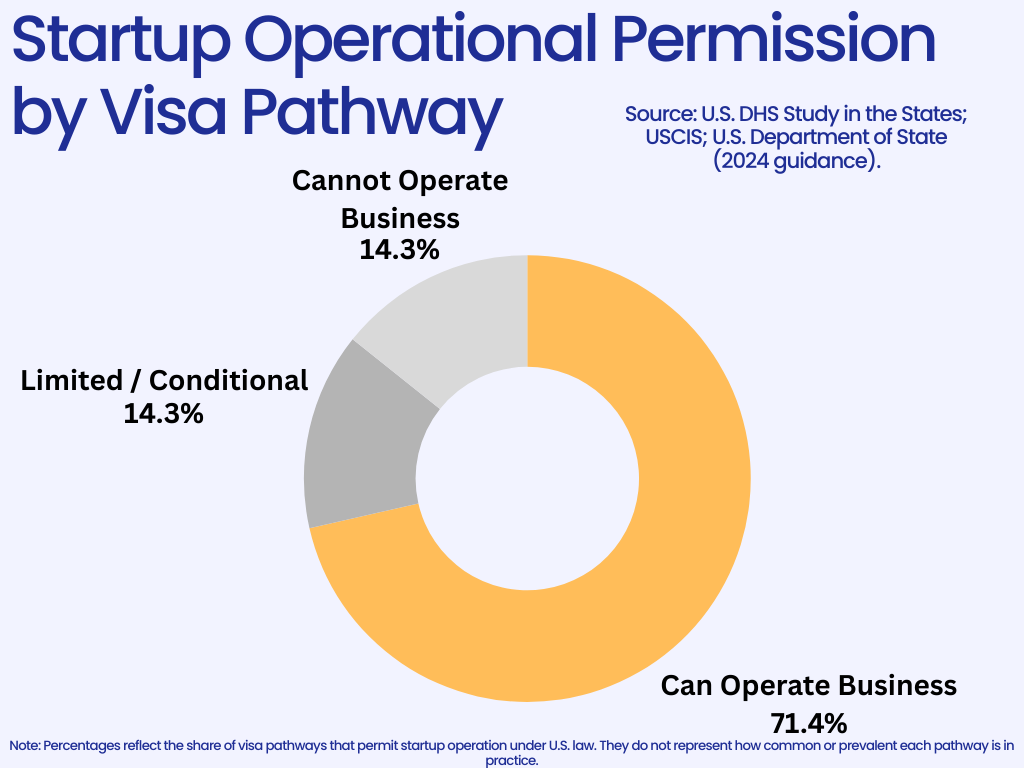
Effective career planning requires understanding how CPT, OPT, and STEM OPT interact.
Curricular Practical Training (CPT)
CPT authorizes off-campus employment that is integral to your degree program. Key points from DHS federal regulations:
You must have completed one full academic year of study (graduate exceptions exist)
Work must relate directly to your major
Authorization is employer-specific and date-specific
Part-time CPT (20 hours or fewer) does not affect OPT eligibility
Twelve months or more of full-time CPT eliminates OPT eligibility
Most co-op programs operate under CPT authorization. Students should track their full-time CPT usage carefully to preserve OPT options.
Optional Practical Training (OPT)
OPT provides 12 months of work authorization at each education level. Unlike CPT, you do not need a job offer to apply. USCIS processes applications and issues an Employment Authorization Document (EAD) upon approval.
Students can use pre-completion OPT while enrolled (part-time during school, full-time during breaks) or post-completion OPT after graduating. Most students reserve OPT for post-graduation employment.
STEM OPT Extension
USCIS allows qualifying STEM graduates to extend OPT by 24 months. Eligibility requirements include:
A degree in an eligible STEM field from an accredited, SEVP-certified institution
Employment with an E-Verify registered employer
A completed Form I-983 training plan signed by both student and employer
Application filed before the initial 12-month OPT expires
The DHS STEM Designated Degree Program List includes fields in engineering, biological sciences, mathematics, physical sciences, and related areas. Students can apply for up to two STEM extensions based on degrees at different educational levels.
Building Your U.S. Career Strategy
Success requires planning that begins before enrollment. The students who build lasting U.S. careers approach their education as a multi-year strategy, not a series of disconnected decisions.
Choose Your Institution Carefully
Your university selection directly affects your employment outcomes. Prioritize institutions with established co-op programs, strong employer networks in your target industry, and dedicated international student career services.
Location matters more than many students realize. Proximity to industry hubs improves internship and job access. If you want to work in technology, universities near San Francisco, Seattle, or Austin connect you to concentrated job markets. Finance careers benefit from proximity to New York or Chicago. Healthcare and biotech cluster around Boston, San Diego, and the Research Triangle in North Carolina.
Look beyond rankings. Investigate specific metrics: What percentage of international graduates find employment within six months? Which employers recruit on campus? Does the career services office have staff who understand international student work authorization? Some universities maintain databases showing which companies have sponsored H-1B visas in the past. Tools like GoinGlobal, accessible through many university career centers, allow you to research employer sponsorship histories before applying.
Map Your Work Authorization Timeline
Calculate how CPT, OPT, and STEM OPT fit together across your degree before you enroll. A common mistake is using full-time CPT liberally during the academic program, then discovering that 12 months of full-time CPT eliminates OPT eligibility entirely.
For most students, the optimal approach reserves OPT for post-graduation employment when it provides maximum career leverage. Use part-time CPT during the academic year if your program requires or allows it. Part-time CPT does not affect OPT eligibility regardless of duration.
STEM students have a significant advantage. The initial 12-month OPT plus the 24-month STEM extension provides 36 months of work authorization. This timeline creates space to demonstrate value to an employer, build relationships with decision-makers, and position yourself for H-1B sponsorship before your authorization expires.
Consider the H-1B lottery timing. The annual H-1B registration period typically opens in March for employment starting October 1 of that year. Students whose OPT ends between April and September may qualify for a Cap-Gap extension, allowing continued employment while their H-1B petition is pending. Plan your graduation date and OPT start date with this calendar in mind.
Build Employer Relationships Early
Co-op and internship placements often convert to full-time offers. More importantly, employers who know your work are significantly more likely to sponsor H-1B visas. The H-1B process requires employers to file paperwork, pay fees, and navigate government procedures. They take on this burden for candidates they trust and value.
Treat every practical training opportunity as a long-term interview. Document your contributions. Quantify your impact. Build relationships not just with your direct supervisor but with senior leaders who influence hiring decisions.
Research employer sponsorship patterns before applying. Large technology companies like Amazon, Google, Microsoft, Apple, and Meta sponsor H-1B visas at high volumes and have established infrastructure for the process. Professional services firms like Deloitte and EY also sponsor regularly. Smaller companies may sponsor selectively or lack the resources to manage the process.
During interviews, timing matters when discussing sponsorship. Career advisors at the University of Colorado Boulder recommend building rapport first and highlighting your skills before raising visa questions. If sponsorship is essential to your decision, clarify the employer's position early in the hiring process rather than waiting until an offer arrives. Ask recruiters directly: "Does your company sponsor H-1B visas, and have you done so recently?"
Understand Reporting Requirements
STEM OPT students face ongoing compliance obligations that can jeopardize immigration status if ignored. The U.S. Department of Homeland Security requires reporting to your DSO every six months. You must confirm the validity of your SEVIS information, including your legal name, address, employer name, and employment status.
At the 12-month and 24-month marks, you must submit formal self-evaluations documenting your training progress. Both you and your employer sign these evaluations, which become part of your immigration record and are subject to DHS review.
Report any material changes within 10 days. This includes changes to your address, employer name or address, job duties, compensation reductions not tied to reduced hours, or loss of employment. The consequences of non-compliance are severe: failure to report can result in loss of legal status and inability to remain in the United States.
Stay organized. Create a calendar with every reporting deadline. Set reminders weeks in advance. Keep copies of all submitted documents. Your university's international student services office can help you understand requirements, but the responsibility for compliance rests with you.
Develop a Backup Plan
Even with perfect preparation, the H-1B lottery introduces uncertainty. Demand consistently exceeds the 65,000 annual cap (plus 20,000 additional visas for U.S. advanced degree holders), meaning luck plays a role regardless of your qualifications.
Consider contingencies. Some students pursue additional degrees to extend their student visa and OPT eligibility. Others explore alternative visa categories such as the O-1 (for individuals with extraordinary ability) or seek employment with cap-exempt employers like universities, nonprofit research organizations, or government research institutions. Some build experience internationally and reapply in subsequent years.
The students who succeed long-term are those who remain proactive about their options rather than assuming a single path will work.
Taking Action
Global learning programs represent the most direct path from international student to U.S. professional. The combination of structured work experience, extended authorization for STEM graduates, and employer relationships built during co-op placements creates advantages that persist throughout your career.
Research institutions carefully. Understand federal work authorization rules before you enroll. Build relationships with employers who value international talent. The students who plan strategically graduate with more than degrees. They graduate with careers already in motion.
 Choosing Between Online and Classroom Learning? Here’s What Affects Your Future
 Rethinking Online Learning Strategy: What Today’s Students Demand
 Career Shock vs Culture Shock: What Shapes the First Job Abroad
 Best Platforms for Video-Based Learning on Mobile in 2026
 How Student Expectations Are Forcing U.S. Universities to Rethink Tech Strategy in 2026