
Canada's international student cap 2026 marks another step down from an already restrictive 2025. Immigration, Refugees and Citizenship Canada (IRCC) expects to issue up to 408,000 study permits in 2026: 155,000 to newly arriving international students and 253,000 extensions for current and returning students. That figure is 7% lower than the 2025 target and 16% lower than 2024. If you're planning to apply, understanding the system before you submit is no longer optional.---
2026 Study Permit Targets at a Glance
Source: IRCC, November 2025
Why Canada Introduced the Cap
The cap arrived in 2024 in response to a system under strain. Canada had more than 1 million study permit holders in January 2024. By September 2025, that number had fallen to about 725,000, and IRCC plans to keep pushing it down. The target is to reduce Canada's temporary resident population to below 5% of the total population by the end of 2027. International students are a major part of that calculation, so permit numbers are being cut to reduce pressure on housing, healthcare, and public services.
The cap controls the flow by requiring most applicants to get a Provincial Attestation Letter (PAL) or Territorial Attestation Letter (TAL) before IRCC will process their study permit application. Each province receives a fixed allocation of PAL/TAL spaces. Once a province hits its cap, IRCC stops accepting applications from that province's designated learning institutions (DLIs) and returns any processing fees paid.
The 2026 National Target and Study Permit Allocations
Of the 408,000 total permits, 180,000 are intended for applicants who require a PAL/TAL. These spaces are allocated to provinces and territories based on population size and historical approval rates, with each province distributing its allocation across its DLIs.
Ontario receives the largest allocation with 104,780 application spaces, followed by Quebec with 93,069 and British Columbia with 32,596. According to IRCC's cap analysis, institutions in Atlantic Canada, which received proportionally higher allocations, may attract students displaced from oversubscribed provinces.The total application ceiling for PAL/TAL-required students is 309,670 nationally. As the Canada Gazette confirms, once the maximum number of applications allocated to a province is reached, any further applications from that province's DLIs will not be accepted for processing and fees will be returned. This makes timing critical, particularly in Ontario and British Columbia where demand is highest.
Who Is Exempt from the Cap
Not everyone is subject to the PAL/TAL process. Exempt groups in 2026 include master's and doctoral degree students at public DLIs, primary and secondary students, existing study permit holders extending their status at the same DLI and level of study, and certain government priority groups and vulnerable cohorts.
The graduate exemption is a meaningful shift. As of January 1, 2026, master's and PhD applicants at public DLIs no longer need a PAL/TAL at all, which removes a major administrative barrier and means their applications sit outside the capped allocation entirely. If you're eligible for a graduate program at a public university, this is now a materially easier path than undergraduate study in Canada.
For undergraduate and college applicants, the picture is different. You still need a PAL/TAL, compete within provincial allocations, and face a system with fewer available spaces than two years ago. Your odds depend on which province you're applying to, which DLI you've chosen, and how quickly that province's allocation fills.
Approval and Rejection Rates: What the Data Shows
2026 Provincial Allocations (PAL/TAL-Required Students)
Source: IRCC provincial allocations, November 2025
Rejection rates have climbed sharply since 2023. The study permit approval rate dropped from 57.9% in 2021 to 44.9% in 2024, then fell to 35.7% in 2025. According to immigration.ca, study permit refusal rates climbed to 65.4% by mid-2025, up from 40.5% in 2023.
There is some reason to expect modest improvement in 2026. IRCC's allocation model is based on average provincial approval rates from 2024 and 2025, which suggests the government is accounting for refusals in its calculations and expects approval rates to trend back toward historical norms above 50%. That said, this is not a guarantee for individual applicants.
For Indian students specifically, the situation has been difficult. Roughly four out of five Indian applicants received rejections in Q2 2025, according to BorderPass data. India continues to lead as Canada's top source country, followed by China, Nigeria, and the Philippines, though significant declines in student numbers were recorded across most nationalities due to the cap and tighter financial requirements.
Common reasons for refusal include insufficient proof of funds, an officer's assessment that the applicant does not have strong ties to their home country, and applications that appear inconsistent with a temporary stay.
What 2026 Applicants Should Do
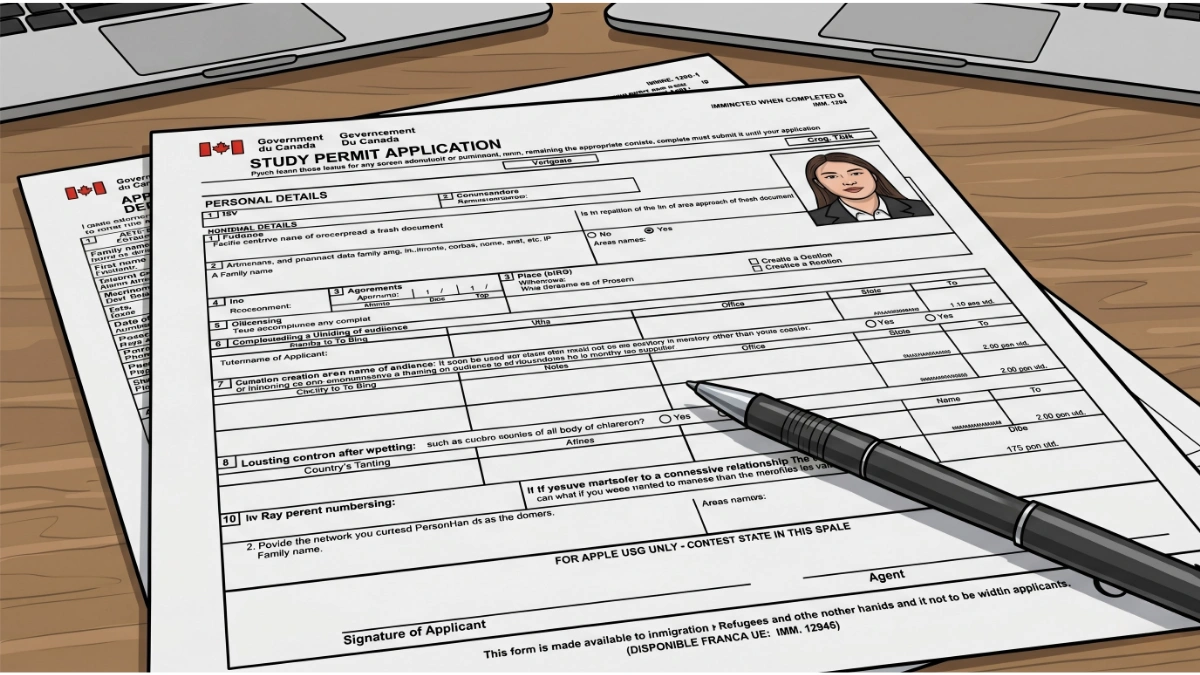
The system has real constraints, but it still moves. Here's how to position your application:
Apply to graduate programs if eligible. Master's and PhD applicants at public DLIs bypass the PAL/TAL process entirely and sit outside the national cap.
Confirm your DLI's allocation status before applying. Contact the institution directly to ask whether it still has PAL/TAL spaces for your intake year and program level.
Consider Atlantic Canada provinces. Proportionally higher allocations and lower competition than Ontario or BC.
Get your financials right. IRCC has increased proof-of-funds requirements significantly since 2023. Weak financial documentation is a consistent refusal reason.
Submit early. Provincial allocations are first-come, first-served. Once they're gone, IRCC stops accepting applications from that province.
Disclose everything accurately. Inconsistencies in your application are a red flag for officers. Previous visa refusals must be declared.
The Outlook for International Students Beyond 2026
IRCC has not committed to increasing future permit numbers. The government intends to meet its 2027 temporary population target first, and any future growth in study permits depends on policy changes and the success of broader reforms to the International Student Program.
The Canada international student cap 2026 is likely a floor, not a ceiling, through at least 2027. The graduate pathway remains the clearest route for those who qualify. For everyone else, a strong, well-documented application submitted early gives you the best realistic chance under the current system. Check the IRCC allocations page for the latest provincial numbers before you apply.
 The Tightest Job Market in Years for College Grads
 How Universities Are Adapting Health Programs to a Moderating Job Market
 How Flexible Are PhDs in a Changing Job Market
 Understanding the Decline of International Enrollment in American Universities
 Why AI Writing Polish Can Flatten Student Expression