
Disclaimer & Editorial Disclosure: This article is for general informational purposes only and does not constitute legal, financial, or immigration advice. The 2025–2026 economic data and enrollment figures represent preliminary research and market projections that are subject to final audit by government agencies.
As an independent analysis by Scholaro Research, this piece explores systemic financial structures in global education; readers should verify specific tuition, visa fees, and policy requirements with official university or government sources before making enrollment decisions.
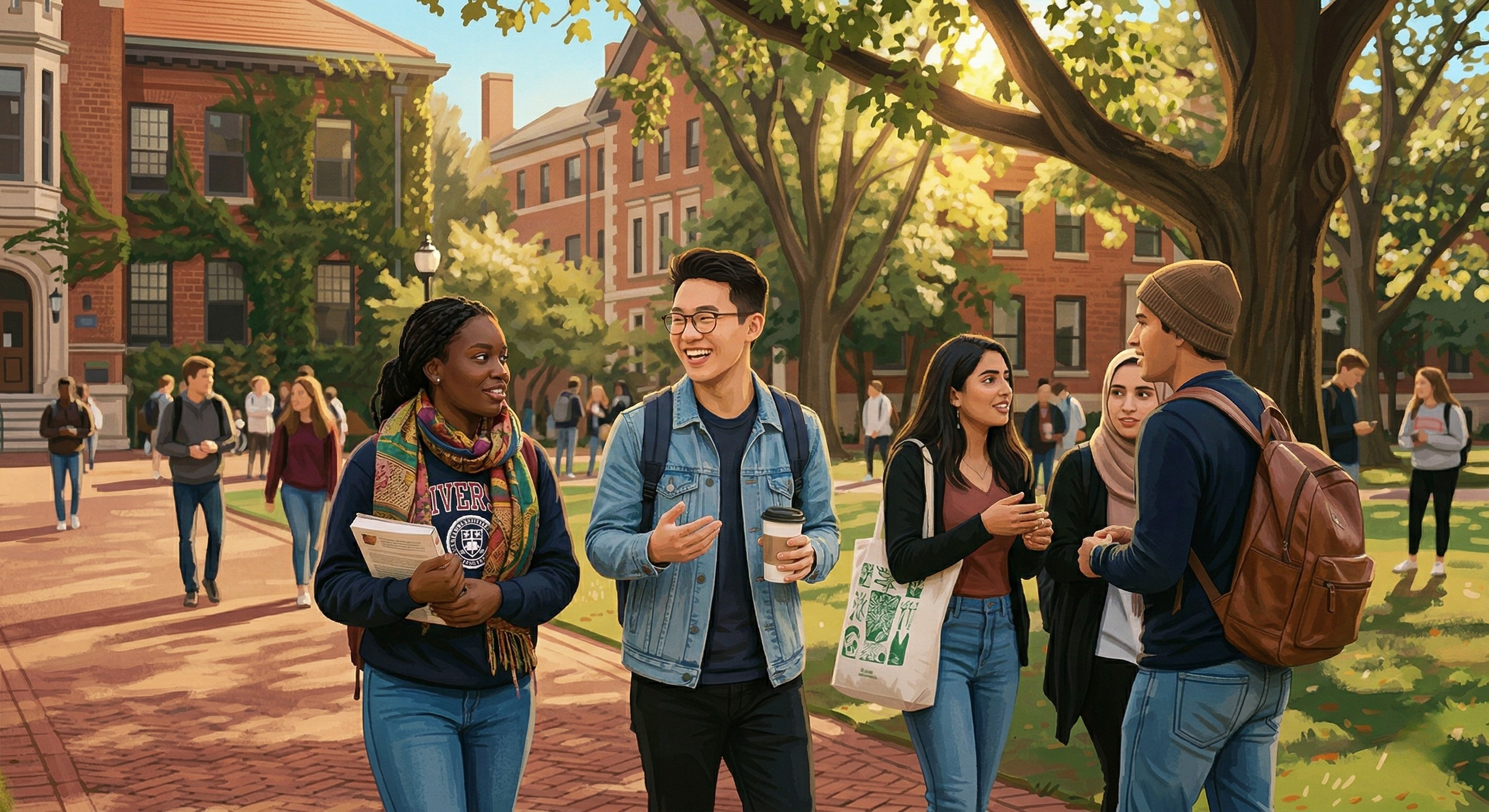
International students contributed nearly $55 billion to the U.S. economy in 2024, according to the U.S. Department of Commerce. The UK reports over £41 billion in economic benefit. Australia counts international education as its fourth-largest export. Statistics Canada puts the figure at over $37 billion in annual economic activity. These numbers prompt an uncomfortable question: who actually captures this money, and who bears the real costs?
The global international education market now exceeds $200 billion annually, with nearly 7 million students pursuing higher education outside their home countries. Financial flows remain deliberately opaque. Universities celebrate the revenue while downplaying their dependence on it. Governments debate immigration while ignoring economic contributions. Students and their families absorb costs that extend far beyond tuition bills — often discovering the true price only after they arrive.
The money trail reveals a system designed to extract maximum value from mobile students. Universities, landlords, insurance companies, visa processors, banks, and local businesses all take their cut. Students sit at the bottom of this arrangement, paying premium prices for an education that comes with restrictions their domestic classmates never face.
Why Tuition Sticker Prices Tell Only Part of the Story
International students pay more than domestic classmates, and this is by design. They must enroll full-time to qualify for a visa. At public universities they pay out-of-state rates regardless of how long they've lived nearby, and they cannot access federal financial aid. Most end up paying full tuition while domestic students receive discounts, grants, and subsidized loans funded partly by international student fees.
The base tuition gap is substantial and growing. At many public research universities, international undergraduates pay two to three times what in-state students pay for identical instruction. Private universities charge the same headline rate to everyone but offer far less institutional aid to international applicants. The sticker price is the real price for foreign students.
The table below shows the full estimated annual cost for an international undergraduate at the University of Iowa (2025–26), broken down by program. It shows how quickly fees stack up beyond base tuition.
Source: University of Iowa, Office of Admissions, 2025–26
Then come the fees buried in fine print. One public university lists a $250 international student fee, $120 international orientation fee, $250 records and documents fee, $286 student health fee, and a technology fee ranging from $622 to $907. These appear on top of base tuition. The "international student fee" is particularly cynical — a surcharge for the privilege of being foreign.
Visa costs add another layer of extraction. The U.S. Department of State sets the F-1 student visa application fee at $160 plus $510 for the visa itself. The U.S. Department of Homeland Security requires a SEVIS fee of $350 for F-1 students. Students pay all of these fees before boarding a plane, with no guarantee of approval.
Health insurance is mandatory and expensive. Most universities require international students to carry coverage through school-sponsored plans or private insurance, with annual premiums often exceeding $2,600. Unlike domestic students who may remain on family plans until age 26, international students must purchase coverage immediately upon arrival.
Why Work Options Fall Short
Federal regulations restrict F-1 students to on-campus work only, for up to 20 hours per week during the academic year. Off-campus work requires special authorization through Curricular Practical Training or Optional Practical Training — both involving paperwork, processing time, and restrictions that limit real earning potential.
The 20-hour limit applies to total work across all jobs. A student with two part-time positions cannot work 15 hours at each, and averaging is not permitted. Universities track payroll hours and report discrepancies to immigration officials, leaving students under constant scrutiny of their work activity.
Other countries impose similar constraints. In the UK, Tier 4 visa holders can work up to 20 hours weekly during term time. Canada raised the limit to 24 hours per week, and Australia allows 48 hours per two-week period. None of these limits reflect the actual cost of living in destination cities.
The consequences of violations are severe. Under U.S. immigration law, unauthorized employment constitutes failure to maintain status. Students found working without authorization risk visa revocation and removal from the country. The system offers no second chances.
A student working 20 hours at $15 per hour earns $300 weekly before taxes. In cities like New York, Boston, or San Francisco, this barely covers rent. The work limits create dependence on outside money while universities collect full tuition.
Expenses That Accumulate Quietly
The first month hits hardest. Flights, bedding, groceries, phone plans, and a laptop can cost $1,000 to $2,000 before classes begin. Students arrive without the household goods domestic students accumulate over years, and everything must be purchased at once, often at premium prices near campus.
Technology requirements add ongoing costs that universities rarely mention upfront. Many programs mandate specific software licenses, lab fees, or equipment not included in tuition estimates. Engineering students often need laptops costing $1,500 or more. Textbooks add hundreds per semester.
Housing poses challenges that universities do little to address. International students cluster in expensive metropolitan areas and compete for limited housing with domestic students and local residents. Many lack the rental history or credit scores landlords require. Some pay several months' rent upfront; others accept substandard housing because they cannot navigate the local market.
Banking Barriers and Currency Risks
Students arrive without U.S. credit history, limiting their options for banking, housing, and phone contracts. Credit history does not transfer internationally, and building credit from scratch takes time. The system treats international students as financial risks while gladly accepting their tuition payments.
Opening a checking account requires documentation that newly arrived students struggle to provide. Banks typically ask for a passport, visa, I-20 form, and proof of U.S. address. Students without a Social Security Number face additional hurdles.
Sending money internationally involves multiple fees that compound quietly. Banks charge for wire transfers, intermediary banks take a cut, and currency conversion adds hidden markups beyond published exchange rates. Students receiving funds from home often lose 3 to 5% of each transfer. Over four years, those losses add up to thousands of dollars taken from family savings.
Currency fluctuations create budget uncertainty that no planning can eliminate. A student from a country with volatile currency might plan expenses at one exchange rate only to find purchasing power reduced months later.
The Price of Cultural Transition
International students face compounded difficulties as they adapt to life abroad — often for the first time and without immediate support from family and friends. Research published in Frontiers in Psychiatry found that cultural adjustments, language barriers, and isolation contribute to heightened stress. Universities recruit these students aggressively but invest little in supporting them after arrival.
The mental health burden is measurable. A study published in Nature Scientific Reports found that 59% of international first-year students showed depression symptoms and 36% showed symptoms of anxiety. These rates exceed those of domestic students facing similar academic pressures.
University counseling services consistently fall short. Many institutions lack culturally competent counselors who understand international student pressures, and wait times stretch weeks. Students from cultures where mental health carries stigma may avoid seeking help entirely.
NAFSA research identifies loneliness as the fourth most common stressor among international students, with more than 25% reporting such feelings. Many students end up socializing primarily with compatriots, limiting the cross-cultural exchange universities claim to value.
Financial stress compounds all of this. Some students skip meals, overwork, or delay medical care. Food insecurity affects roughly one in four college students, including international students who face additional barriers to assistance programs.
How Students Adapt and Cut Costs
Students from the same country or region pool resources because institutions will not help them. They share housing, exchange job leads, and buy furniture from departing classmates. These networks form despite institutional indifference, not because of institutional support.
Digital tools help where universities do not. Banking apps designed for international students offer lower transfer fees and credit-building products. Services like Flywire and Convera allow students to lock in rates and reduce currency risk.
Program choice increasingly reflects cost consciousness. Some students choose community colleges before transferring to four-year universities. Others select regional institutions over expensive urban campuses. Shorter graduate programs reduce total expenses.
A growing number reject traditional English-speaking destinations entirely. Germany offers tuition-free public universities. France charges modest fees. Asian institutions have strengthened their recruitment and reputation. The "Big Four" destinations are beginning to pay for years of treating international students as revenue sources.
Employment Created by International Students
The job creation numbers are substantial, though rarely acknowledged in policy debates. NAFSA calculates that international students supported 355,000 jobs in the U.S. during the 2024–25 academic year, with one job created for every three international students enrolled. These jobs depend directly on foreign tuition.
Those jobs span sectors that would suffer without international enrollment. Faculty, administrative staff, food service workers, landlords, and local retailers all benefit. The spending ripples into communities that often resent the students whose dollars support local employment.
Small towns benefit alongside major cities. In Mankato, Minnesota, roughly 1,700 international students contributed $45.9 million to the local economy and supported around 190 jobs.
Benefits extend beyond direct spending. International graduates start businesses at higher rates than native-born populations. Countries that restrict international graduates lose this entrepreneurial potential without any mechanism to recover it.
How Institutions Have Come to Rely on Foreign Enrollment
Public universities now depend on international enrollment to offset declining state funding. NBER research found that reductions in state appropriations led to significant increases in foreign enrollment at public research universities. When governments cut funding, universities recruit students who pay full freight. International students subsidize domestic education.
Revenue concentration has reached dangerous levels. In Australia, international student fees accounted for over a quarter of all university revenue on average, with some institutions reaching 30 to 40% dependence. The UK Office for Students warned dozens of providers with high recruitment from China to develop contingency plans.
When international enrollment dropped sharply in 2025, some institutions faced immediate budget crises. Layoffs and program cuts followed, harming domestic students who had no idea their education depended on foreign classmates.
Competing Interests and Policy Tensions
The fall 2025 numbers are a warning sign. New international student enrollment in the U.S. fell 17%, translating to over $1.1 billion in lost economic activity and nearly 23,000 fewer jobs, according to NAFSA and JB International. If that trend continues into 2026, the losses will be significantly larger. NAFSA's scenario modeling suggests a 30 to 40% decline in new enrollment could cost the U.S. economy nearly $7 billion and more than 60,000 jobs.
Australia, Canada, and the UK have introduced restrictive student policies since 2023. Governments face conflicting goals they refuse to reconcile: managing immigration numbers while protecting an export industry worth tens of billions. International students absorb the contradictions.
International students have become convenient scapegoats. They've been blamed for driving up housing costs, using education visas for permanent residency, and crowding out domestic applicants. Some accusations have basis in fact; many do not. But students cannot vote, making them easy political targets.
Canada has capped international student permits. Australia has proposed new enrollment limits. Universities warn restrictions will force layoffs that harm domestic students. Those warnings are accurate — but also self-serving. Institutions created the dependence, and now they demand protection when politics shift.
The Bottom Line
The hidden economy of international students is an extraction system disguised as opportunity. Universities receive premium tuition while landlords collect inflated rent. Insurance companies sell mandatory coverage. Banks charge fees at every step. Visa processors take their cut before students arrive. Local businesses benefit from spending while communities complain about the students doing the spending.
Students and their families sit at the bottom of this arrangement. They pay premium prices, navigate work restrictions designed to limit independence, manage currency risk that institutions ignore, and handle cultural transition largely alone. They are recruited aggressively, supported minimally, and blamed publicly when politics demand a scapegoat.
Destination countries face a reckoning. Years of treating international students primarily as revenue sources have created institutions dependent on foreign tuition, communities resentful of foreign presence, and policies that shift unpredictably. Students have noticed — and applications to traditional English-speaking destinations are falling.
The students this system depends on are not captive. They have options, and increasingly they are choosing to exercise them.
 The Real Economics Behind Entry-Level Gigs
 Can 3-Year Degrees Solve the Teacher Shortage?
 Does College Public Speaking Really Matter in Today’s Job Market?
 Strategies for Communicating Tuition and Outcomes to Prospective Students
 How Politics Is Shaping College Enrollment