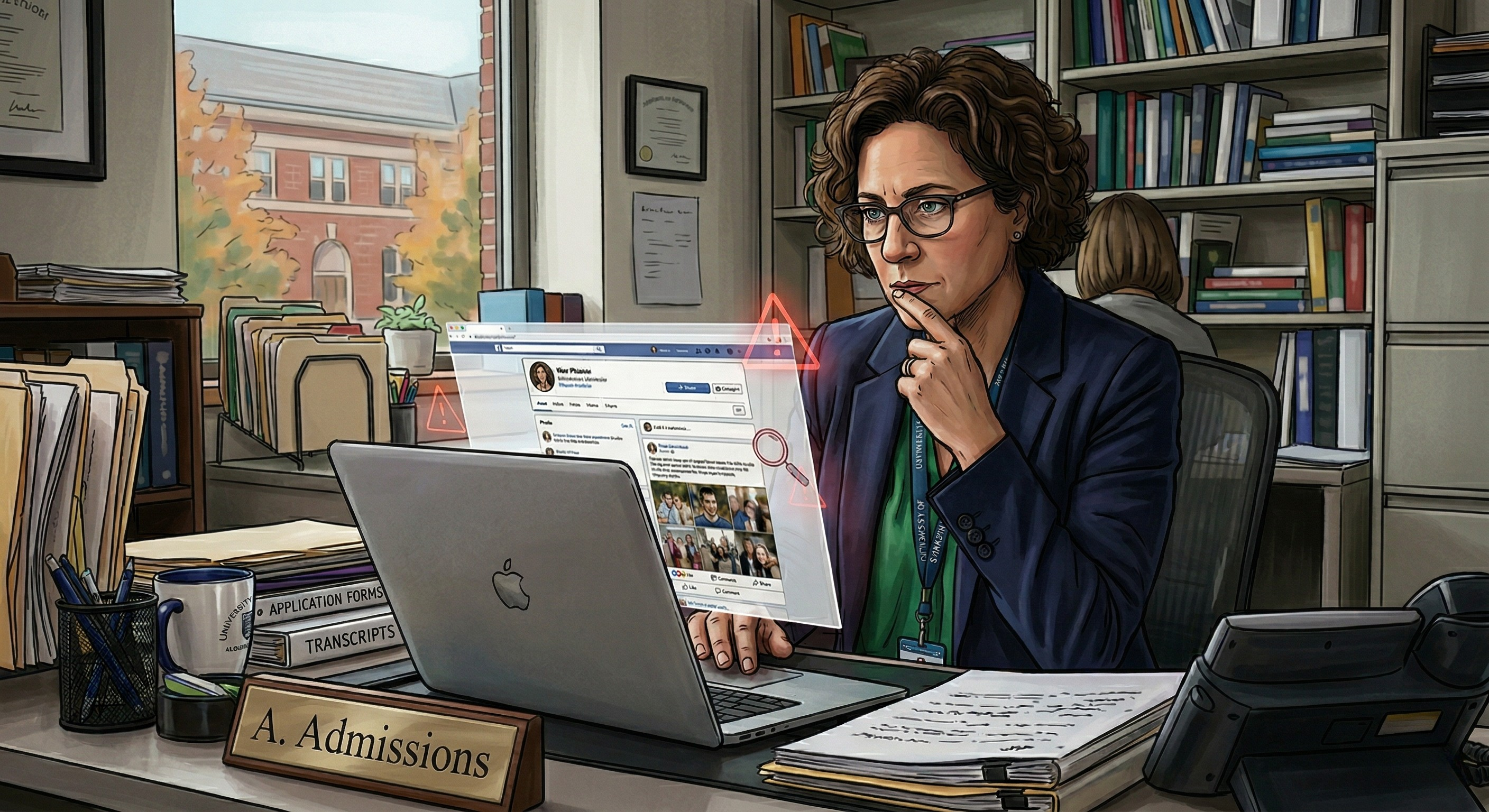
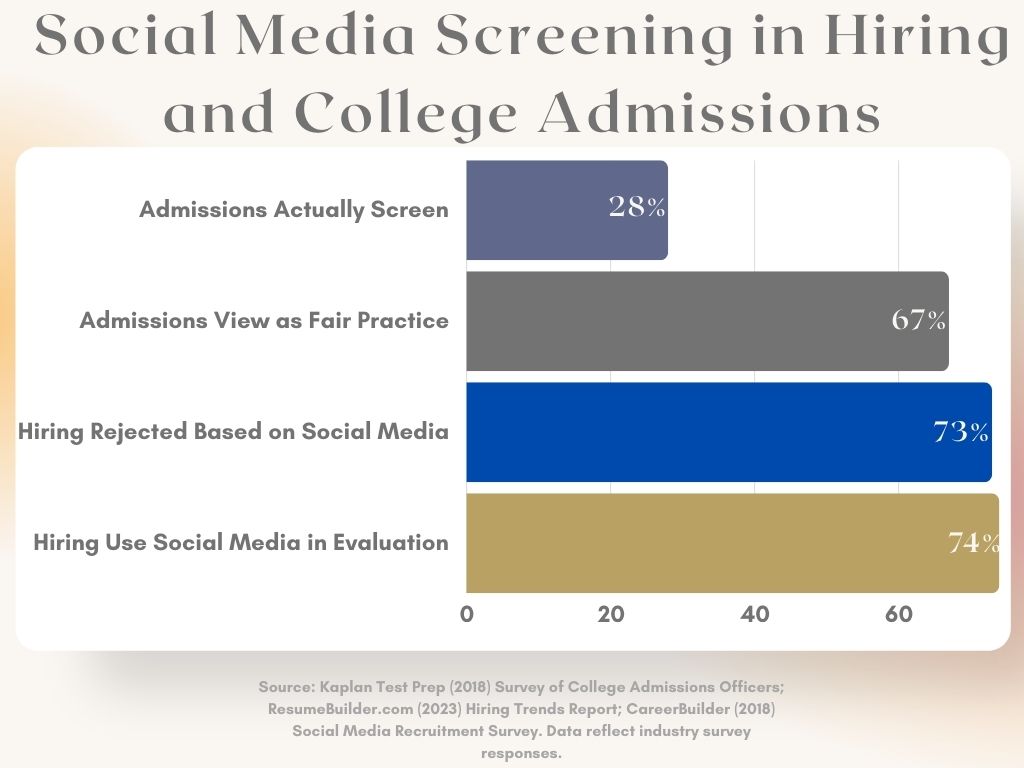
Social media screening has moved from occasional practice to standard procedure. A 2023 ResumeBuilder survey found 73% of hiring managers use social media to evaluate applicants, primarily to verify credentials and assess cultural fit. On the admissions side, Kaplan surveys show 66% of admissions officers consider reviewing applicants' social media fair game.
The rationale is straightforward: a faculty member's public statements reflect on the institution, and an applicant's posts can reveal character concerns a transcript never will. But the practice carries risks that most universities underestimate.
The Core Legal Problem
The biggest legal risk is exposure to protected characteristics. Access to candidates' social media profiles can increase the likelihood of violating federal, state, and local laws that prohibit discrimination based on race, religion, disability status, and other protected characteristics.
A candidate's photos might reveal pregnancy, religious attire, or a disability. Once a screener sees that information, defending a rejection becomes much harder.
The NLRB protects workers' rights to discuss wages and working conditions on social platforms, meaning certain posts may be legally off-limits to use against candidates. The leading case is Gaskell v. Kentucky, where a top candidate was passed over after an online search revealed information about his religious beliefs, and the court allowed the discrimination claim to proceed.
Federal and State Requirements
The Fair Credit Reporting Act governs third-party background checks, and the FTC has confirmed it applies to social media screening conducted by outside vendors. That means:
Written candidate consent before screening
Copies of reports provided to candidates used in adverse decisions
Formal adverse action procedures before rejecting someone based on findings
The EEOC requires screening criteria to be job-related and consistently applied.
State law adds complexity. Laws vary by state, so legal counsel should review requirements in each jurisdiction where you operate. Over 25 states prohibit employers from requesting passwords to private accounts. California's CCPA and similar state laws impose data handling requirements on information collected during screening.
The Accuracy Problem
Social media screening assumes online content accurately represents the candidate. Research shows that assessments based on social media screening are generally inconsistent with information provided by applicants themselves, and inaccurate or false information about candidates is one of the most serious issues in the practice.
Common names compound this. A search returns multiple profiles, and attributing the wrong post to the wrong person can end a candidacy based on someone else's behavior entirely.
Admissions-Specific Risks
The chart below shows how frequently hiring managers and admissions officers use social media to evaluate candidates.
College admissions officers face additional complications. Problematic content often surfaces through screenshots of private group chats or photos posted by others. Harvard rescinded ten acceptances in 2017 after offensive content from a private Facebook group was discovered, then took similar action in 2019 when private messages surfaced.
FERPA does not prohibit social media review, but the absence of a clear institutional policy means screening decisions are hard to defend when challenged. Random spot-checking across applicants is especially difficult to justify.
What Proper Screening Looks Like
Policy first. Document which roles or applicant categories will be screened, which platforms you review, what criteria apply, who conducts searches, and how adverse findings are handled before you screen anyone.
Separate screeners from decision-makers. Have someone other than the hiring decision-maker conduct searches and filter results. They report only job-relevant findings and remove protected characteristics before passing information up. Legal experts also recommend waiting until after the first interview to review social profiles, keeping early evaluation focused on qualifications.
Use third-party vendors for FCRA compliance. Compliant vendors provide built-in consent workflows, automatic redaction of protected information, consistent application across all candidates, and documentation trails for legal defense.
Never request private account access. Do not attempt to "friend" or follow candidates to bypass privacy settings. Apply screening consistently across all candidates for a given role.
Platforms Screeners Review
Platform | Why It Gets Reviewed |
|---|---|
Verifies credentials, employment history, professional endorsements | |
Large user base; privacy settings determine visibility | |
X (Twitter) | Public statements are permanent; impulsive posts surface frequently |
Lifestyle content, tagged photos | |
TikTok | Increasingly relevant for younger and entry-level candidates |
Third-party vendors extend searches beyond major platforms to include blogs, forums, news archives, and public records.
Data Security Requirements
The process involves compliance with FCRA, EEOC, GDPR, and CCPA regulations, plus concerns about privacy, discrimination, and unconscious bias. GDPR and FCRA apply to screening candidates from EU countries, and state privacy laws create parallel domestic requirements.
Establish data retention and deletion policies before you collect anything. Use vendors with ISO 27001 or ISO 27701 certifications. Encrypt stored data, limit access to authorized personnel, and maintain audit trails.
Organizational Liability
Organizations face exposure in both directions. Screening without proper protocols creates discrimination and FCRA claims. Failing to screen at all can create negligent hiring liability if a candidate causes harm and warning signs were publicly visible. Document your rationale either way.
For Candidates
A professional online presence can strengthen your application rather than hurt it.
Keep your LinkedIn current and consistent with your application materials
Search your own name to see what screeners find
Set personal accounts to private or review all visible content
Check tagged photos and untag yourself from questionable images
Don't delete your entire presence: a complete absence of social media profiles can raise questions for hiring managers
For roles involving communications, marketing, or public engagement, strong social media presence demonstrates relevant skills directly.
Final Word
Social media screening can identify legitimate concerns, but it can also create legal exposure, security vulnerabilities, and reputational damage that outweigh any benefits. The organizations that benefit from screening are those with formal policies, trained staff, compliant vendors, and consistent application across candidates. Those that screen informally or inconsistently create liability that outweighs any insight gained.
 Choosing Between Online and Classroom Learning? Here’s What Affects Your Future
 Rethinking Online Learning Strategy: What Today’s Students Demand
 Career Shock vs Culture Shock: What Shapes the First Job Abroad
 Best Platforms for Video-Based Learning on Mobile in 2026
 How Student Expectations Are Forcing U.S. Universities to Rethink Tech Strategy in 2026