Thousands of college credits go unclaimed each year. Students simply don't know that earning academic credit outside traditional classroom enrollment is possible. If you've gained knowledge through work, military service, certifications, or self-study, you may qualify for credit that accelerates your degree and cuts tuition costs. Students who use these methods save nine to 14 months on their degree timeline and $1,500 to $10,200 in tuition.
Seven proven methods exist for turning real-world learning into academic credit. Here's how each one works and how to pursue them.
Why Alternative Credit Matters
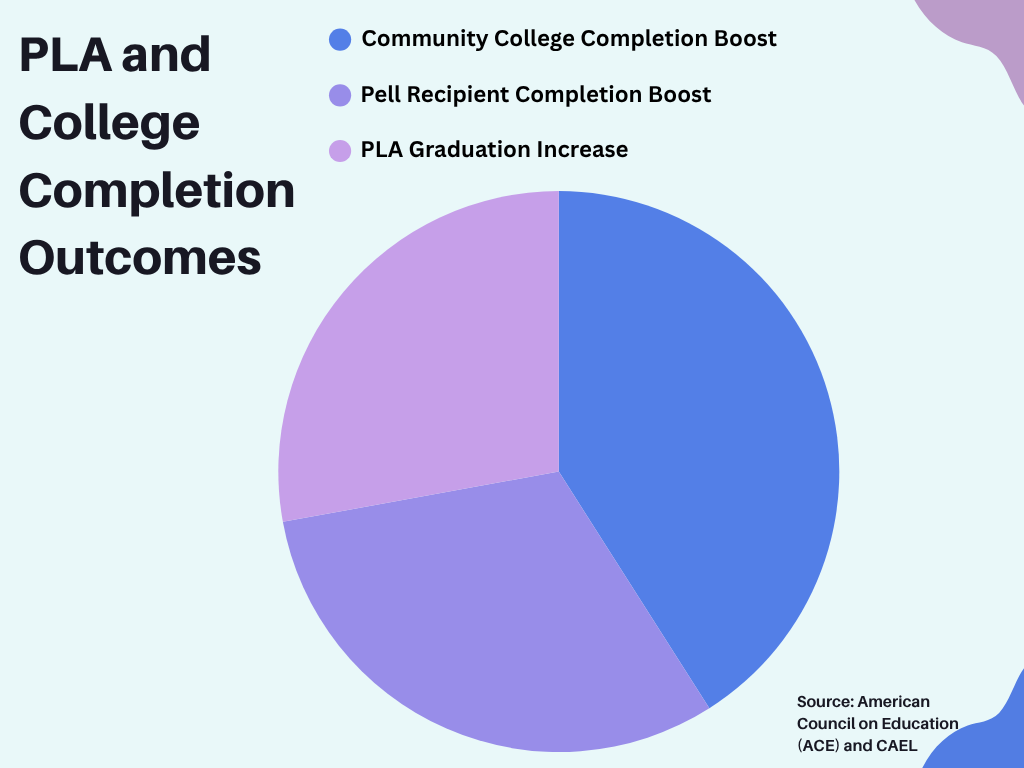
The numbers tell a compelling story. Adults who earn credit for prior learning are 17% more likely to graduate than those who don't. For community college students, that completion boost jumps to 25%. Hispanic adults see a 24% improvement, and Pell Grant recipients gain a 19% advantage.
Yet despite these benefits, only about 10% of adult college students earn credit through these methods. Nine out of ten students leave potential credits on the table simply because they don't know these pathways exist.
Research consistently shows that students with PLA demonstrate higher graduation rates, better persistence, and shorter time to degree. The effect holds across institution types, demographics, and degree levels.
Credit by Examination: CLEP and DSST
Often the fastest path to alternative credit is testing out of courses you've already mastered. Two major programs dominate this space: the College-Level Examination Program (CLEP) and DANTES Subject Standardized Tests (DSST).
CLEP offers 34 exams covering introductory college subjects. Over 3,000 colleges now accept CLEP scores for credit. Each exam costs $97 plus test center fees, compared to $500 to $1,500 for a typical three-credit course. DSST exams provide more than 30 options, including upper-level coursework, at $85 to $100 per exam plus administration fees. Approximately 1,900 institutions participate. Both programs carry credit recommendations from the American Council on Education (ACE).
The process is straightforward. You study independently using whatever materials work for you, then schedule an exam at a testing center. Modern States offers free CLEP prep courses and will cover your exam fee if you complete their course. A passing score typically earns you three credits.
Before registering, confirm your target school's acceptance policy. Some institutions accept all CLEP and DSST exams. Others accept only select subjects or require minimum scores above the standard passing threshold. Contact the registrar's office for specifics. Several states, including Florida and Texas, mandate that public institutions accept CLEP credit.
The following comparison shows key differences between major credit-by-examination programs.
Program | Number of Exams | Exam Cost | Institutions Accepting | Best For |
|---|---|---|---|---|
CLEP | 34 | $97 + test center fee | 3,000+ | Introductory courses |
DSST | 30+ | $85–$100 + admin fee | 1,900+ | Upper-level coursework |
Challenge Exams | Varies by school | $40–$100 | Issuing institution only | School-specific courses |
CLEP offers the widest acceptance and lowest per-exam cost, while DSST covers more advanced subjects. Challenge exams work only at the institution that administers them but can fill gaps where standardized tests don't exist.
Prior Learning Assessment via Portfolio
Portfolio assessment lets you document learning gained through work, volunteer service, military training, or independent study. Faculty evaluate your evidence and award credit when it matches specific course outcomes.
Thomas Edison State University pioneered this approach. Their program allows students to demonstrate that existing knowledge equals what they would have learned in an equivalent college course. Many other institutions now offer similar programs.
The process typically works like this: you enroll in a PLA development course, identify courses that match your experience, compile evidence (work samples, certifications, employer letters, reflective essays), and submit for faculty review.
Students with at least five years of experience in a single industry benefit most from portfolio assessment. The process rewards depth of knowledge, not just time served.
Limitations exist. Most schools cap PLA credits at 25 to 30, though some allow more. Certain courses don't qualify, including lab sciences, physical education activities, and experiential courses like student teaching. English composition and math courses are often excluded because standardized exams already cover them.
Workplace Training and Professional Certifications
Your employer's training programs may already carry college credit recommendations. The American Council on Education evaluates corporate training, and learners may receive credit recommendations for workplace programs, apprenticeships, and professional certifications.
The National College Credit Recommendation Service (NCCRS) performs similar evaluations. NCCRS provides credit recommendations for training and education programs offered outside traditional classrooms.
IT certifications translate particularly well. CompTIA, Cisco, and Microsoft credentials commonly carry ACE recommendations. Project management certifications, healthcare licenses, and trade certifications also qualify. Wilmington University maintains agreements for many industry-recognized IT certifications that apply directly toward degree programs.
To verify your training's credit value, search the ACE National Guide. If your program appears, request an official transcript from ACE or the sponsoring organization. Submit that transcript to your institution's registrar for evaluation.
Military Experience
Veterans and service members hold a significant advantage. The Joint Services Transcript (JST) describes military schooling, training, and work history in civilian terms, making credit transfer straightforward.
The JST includes military course completions evaluated by ACE, occupational training assessments, and any CLEP or DSST scores earned during service. More than 2,300 colleges and universities accept ACE credit recommendations from the JST, with over 5,600 individual credit recommendations available. Active-duty service members can take CLEP and DSST exams free through DANTES funding.
Army, Marine Corps, Navy, and Coast Guard members access the JST through the official DoD portal. Air Force personnel use the Community College of the Air Force (CCAF) transcript instead.
To maximize military credit, send your JST directly to your target institution. Work with a military-friendly admissions counselor who understands how to match your training against degree requirements. Credits may satisfy general education, electives, or major-specific courses depending on your service record and chosen program. Transfer policies vary by institution, so verify acceptance before enrolling.
University Challenge Exams
Beyond standardized tests, many universities offer their own departmental challenge exams. These are locally developed examinations that test whether you can demonstrate the learning outcomes of a specific course.
Challenge exams differ from CLEP and DSST in important ways. Faculty create them to match their exact curriculum, not a national standard. Some include practical demonstrations, oral components, or portfolio reviews alongside written tests.
Foreign language departments commonly offer challenge exams. Heritage speakers or those who studied abroad can often test into intermediate or advanced courses, earning credit for elementary levels they've already surpassed. Computer science, writing, and technical subjects also frequently allow challenge testing.
Restrictions apply. Challenge exams allow one attempt at most institutions. You cannot use challenge exams to improve a grade in a course you've already taken or to bypass a prerequisite for a course you've already completed. Fees typically range from $40 to $100 per exam.
Contact individual departments to learn which courses allow challenge testing and what format the exam takes.
MOOCs and Alternative Providers
Massive Open Online Courses have evolved beyond free auditing. EdX offers credit pathways through MicroMasters and MicroBachelors programs. Coursera partners with universities to offer credit-bearing options as well.
Arizona State University's Global Freshman Academy stands out. Students can complete an entire freshman year through edX, paying only after receiving their final grades. Each credit costs a fraction of traditional tuition, and ASU doesn't distinguish between MOOC and in-person credits on transcripts.
The challenge with MOOCs is transferability. Institutions remain largely in control of which MOOC credits they'll accept. ACE has evaluated select courses for credit recommendations, but acceptance varies widely.
Before investing time in a MOOC for credit purposes, verify transferability with your target school's registrar. The safest approach is pursuing MOOCs offered by the institution where you plan to complete your degree.
Service-Learning Projects
Service-learning combines community service with academic coursework. It's a teaching methodology where organized service activities provide both community benefit and credit-bearing educational experience.
This differs from volunteer hours or internships. Service-learning ties directly to course objectives and requires structured reflection through journals, portfolios, or papers. The service must connect to what you're studying.
Credit structures vary. Some programs offer add-on credits linked to existing courses. Others provide standalone service-learning courses worth one to three credits. El Paso Community College allows students to agree on 10 to 20 hours of service in exchange for academic credit, with the specific requirement depending on course length.
Check your institution's service-learning office or look for "SL" designations in course schedules.
Making Alternative Credit Work for You
Success with alternative credit requires research and documentation.
Before you start: Investigate your target institution's policies. Understand maximum transfer credit limits. Get pre-approval in writing whenever possible. Policies change, and verbal assurances don't protect you.
Document everything: Keep records of training, certifications, and work experience. Request official transcripts promptly. Build a portfolio of evidence even before you need it. When opportunities arise, you'll be ready.
Work with advisors: Meet with academic advisors early in your planning. Ask specific questions about how alternative credits apply to your degree requirements. Request course-by-course evaluations rather than vague assurances.
Competency-Based Education: Another Option
Beyond individual credit methods, some universities have rebuilt their entire model around demonstrated learning. Competency-based education measures what you know, not how long you sat in class.
Western Governors University pioneered this approach. Students progress by passing assessments that prove mastery. If you already understand the material, you move forward immediately. No waiting for semesters to end. No sitting through lectures on topics you've already mastered. Tuition runs approximately $8,300 per year for most bachelor's programs.
The model works particularly well for working adults. WGU charges flat-rate tuition per six-month term. Complete more courses in that window, and you pay the same amount. Students who enter with strong backgrounds in their field often finish faster and cheaper than traditional programs allow.
Competency-based programs accept transfer credits from all the methods discussed earlier. CLEP and DSST scores, military transcripts, professional certifications, and prior college work all apply. The combination of transferred credits and accelerated completion can dramatically reduce both cost and time.
Other institutions now offer competency-based options as well. Purdue University Global, Southern New Hampshire University, and several state university systems have launched similar programs. The approach continues gaining traction as more adults return to complete degrees.
Building Your Credit Strategy
Start by taking inventory. List every training program, certification, military course, and work experience that might qualify for credit. Check the ACE National Guide and NCCRS database for evaluated programs. Review your target institution's transfer policies.
Then prioritize. Credit by examination offers the fastest path for subjects you know well. Portfolio assessment works best for specialized professional experience. Military credit transfers at most participating institutions. Challenge exams fill gaps where standardized tests don't exist.
Combine methods strategically. There's no rule limiting you to one pathway. A single student might transfer military credit, test out of general education through CLEP, earn credit for professional certifications, and complete remaining coursework through a competency-based program.
The goal isn't to avoid learning. It's to avoid redundancy. These pathways exist because educators recognize that learning happens everywhere, not just in classrooms. Your job is to document what you know and match it to academic requirements.
Every credit you earn through alternative methods is a credit you don't pay full tuition for. Every course you test out of is time you can spend on advanced material. The system rewards initiative. Use it.
Final Thoughts
Earning academic credit doesn't require sitting through courses that cover material you've already mastered. Credit by examination, portfolio assessment, workplace training, military experience, challenge exams, MOOCs, and service-learning all provide legitimate pathways to recognized credit.
The common thread is proof. You must demonstrate college-level learning, whether through test scores, documented evidence, or faculty evaluation. These methods reward knowledge regardless of where you gained it.
Audit your own experience against these options. You may have more credit waiting than you realize.
 Choosing Between Online and Classroom Learning? Here’s What Affects Your Future
 Rethinking Online Learning Strategy: What Today’s Students Demand
 Career Shock vs Culture Shock: What Shapes the First Job Abroad
 Best Platforms for Video-Based Learning on Mobile in 2026
 How Student Expectations Are Forcing U.S. Universities to Rethink Tech Strategy in 2026