How to Apply for College as an International Student: A Comprehensive Guide

By


(image 1)

The decision to pursue higher education in the United States represents both an exciting opportunity and a significant undertaking. Each year, over one million international students choose American colleges and universities, drawn by academic excellence, research opportunities, and the promise of a transformative educational experience. However, the path to U.S. admission differs markedly from application processes in other countries, and understanding these differences is critical to your success.

This comprehensive guide will walk you through every stage of the application journey, from understanding the American higher education system to securing your student visa. You'll learn what challenges to anticipate, how to communicate effectively throughout the process, where to find support, and what documents you need to prepare. Most importantly, you'll discover that while the process is complex, it becomes manageable when you start early, stay organized, and leverage the resources available to you.

Understanding the U.S. Higher Education System

Before you begin applying, you need to understand what makes American higher education distinctive. The United States offers an exceptional diversity of institutions, each with its own character, mission, and academic approach. Community colleges provide two-year associate degrees and often serve as affordable pathways to four-year institutions. Liberal arts colleges emphasize undergraduate education with small class sizes and close faculty interaction. Research universities offer extensive graduate programs alongside undergraduate education, with opportunities to participate in cutting-edge research. The distinction between public and private institutions primarily affects funding sources and often (though not always) tuition costs.

Degree programs span associate degrees (two years), bachelor's degrees (typically four years), master's degrees (one to three years), and doctoral programs (four to seven years or more). Understanding these options helps you target institutions that match your educational goals and timeline.

What sets U.S. admissions apart is the holistic review process. Unlike systems that rely primarily on examination scores, American institutions evaluate your entire profile. They consider academic performance, standardized test scores, extracurricular involvement, leadership experiences, personal qualities, and the strength of your essays and recommendations. This approach allows admissions committees to assess not just your academic capability but your potential to contribute to campus life and succeed in an American educational environment.

The academic calendar typically follows either a semester system (fall and spring terms) or a quarter system (fall, winter, spring). Most institutions begin their fall term in August or September, which is when the majority of international students start their programs. Understanding application deadlines, which fall months before the start date, is crucial for proper planning.

Finally, accreditation matters significantly. Accredited institutions meet rigorous quality standards set by independent accrediting bodies recognized by the U.S. Department of Education. Your student visa and future employment opportunities may depend on graduating from an accredited institution, so verify accreditation status during your research.

Building Your College List

Creating a balanced college list requires thoughtful research and self-assessment. Start by identifying what matters most to you. Consider academic fit first: Does the institution offer strong programs in your intended field of study? What research opportunities or specialized facilities are available? Look beyond rankings to understand teaching quality, class sizes, and faculty accessibility.

Location significantly impacts your experience. Do you prefer urban, suburban, or rural settings? Climate varies dramatically across the United States. Some students thrive in the energy of New York or Los Angeles, while others prefer smaller college towns. Geographic location also affects cost of living, internship opportunities, and proximity to specific industries.

Size matters too. Large universities may offer more course variety and research opportunities but can feel impersonal. Smaller institutions provide closer relationships with faculty and peers but may have fewer resources. Consider which environment suits your learning style and personality.

Cost cannot be ignored. Research the full cost of attendance, including tuition, fees, housing, meals, health insurance, books, and personal expenses. Remember that international students have limited access to financial aid, so understand what each institution offers. Some schools are more generous with merit scholarships for international students than others.

When evaluating institutions, pay attention to their international student support services. Strong international student offices provide immigration advising, cultural programming, and help navigating practical challenges. Look for schools with active international student populations and organizations. Read testimonials from current international students if available.

Create a list of eight to twelve schools categorized as reach schools (where your qualifications fall below their typical admitted student profile), target schools (where your qualifications match their profile), and safety schools (where your qualifications exceed their profile). If you're applying to highly competitive institutions, consider increasing your list to twelve schools to maximize your chances of acceptance.

Excellent resources for research include EducationUSA advising centers, which offer free guidance in over 175 countries. University websites provide detailed information about programs, requirements, and student life. College fairs, both virtual and in-person, allow you to meet representatives and ask questions directly. Online platforms like College Board, Peterson's, and individual university portals offer searchable databases to explore options.

Essential Documents: What You Need to Prepare

Successful applications require careful preparation of numerous documents. Understanding what you need and when you need it prevents last-minute scrambling and missed deadlines.

Your academic records form the foundation of your application. Official transcripts from your secondary school or previous university must be submitted directly from the institution to each college on your list. These documents should show all courses taken and grades received. If your transcripts are not in English, you'll need certified translations. Many U.S. institutions require credential evaluation through organizations like World Education Services (WES) or Educational Credential Evaluators (ECE). These services convert your grades to the U.S. system and verify the authenticity of your documents. Check each institution's specific requirements, as some handle evaluation internally while others require third-party assessment.

Standardized testing requirements vary by institution and program level. Undergraduate applicants typically take either the SAT or ACT. The SAT emphasizes analytical skills, particularly mathematics, while the ACT focuses more on verbal skills. Both tests measure college readiness, and most institutions accept either one. Competitive schools often expect scores in the higher percentiles, so research target score ranges for your schools. Some institutions have adopted test-optional policies, but international students should carefully evaluate whether submitting scores strengthens their application.

Graduate programs require different tests depending on the field. The Graduate Record Examination (GRE) is required for many master's and doctoral programs. Business schools typically require the Graduate Management Admission Test (GMAT). Medical schools require the Medical College Admission Test (MCAT), and law schools require the Law School Admission Test (LSAT). Research your specific program's requirements early, as these tests require months of preparation.

English proficiency testing demonstrates your ability to succeed in an English-language academic environment. The Test of English as a Foreign Language (TOEFL) and International English Language Testing System (IELTS) are most commonly accepted. Some institutions also accept the Duolingo English Test. Minimum score requirements vary significantly by institution. Competitive universities like Cornell might require TOEFL scores of 100 or higher, while less selective institutions might accept scores of 70 or above. You may be exempt from English testing if you attended a school where English was the primary language of instruction or if you're from certain English-speaking countries, but policies vary, so verify with each institution.

Plan your testing timeline carefully. Register for tests well in advance, allowing time for retakes if needed. Test scores must be sent directly from the testing agency to your chosen institutions, and this process takes time.

Letters of recommendation provide external validation of your abilities and character. Undergraduate applicants typically need two to three letters, usually from teachers who taught you in core academic subjects. Graduate applicants should obtain letters from professors who can speak to your research potential and academic capabilities. Choose recommenders who know you well and can provide specific examples of your strengths. Give them ample notice (at least six to eight weeks before deadlines) and provide context about the U.S. application process, including information about the schools you're applying to and why. Many recommenders outside the United States are unfamiliar with American expectations, so guidance helps them write more effective letters.

Personal statements and essays are your opportunity to speak directly to admissions committees. These pieces should reflect your authentic voice and experiences while addressing the specific prompts provided. Avoid generic statements that could apply to anyone. Instead, share specific stories that illuminate your values, growth, and motivations. Cultural considerations matter here. Some cultures emphasize humility and group achievement over individual accomplishment, but American admissions expects you to advocate for yourself while remaining genuine. Write multiple drafts, seek feedback from teachers or advisers, and ensure your English is clear and polished.

Your resume or curriculum vitae should highlight academic achievements, extracurricular activities, leadership roles, work experience, and community service. Format it clearly and emphasize accomplishments with specific examples and outcomes rather than just listing positions held.

Certain programs require additional materials. Art, architecture, and design programs typically require portfolios showcasing your work. Music programs may require audition recordings. Research programs might ask for writing samples or research proposals. Identify these requirements early and allocate sufficient time for preparation.

Financial documentation proves you can afford your education without unauthorized employment. The certification of finances form asks for detailed information about your funding sources, typically your parents or other sponsors. You'll need bank statements showing sufficient funds to cover at least your first year of expenses, and often signed letters from your bank confirming these funds. Sponsors must attest to their willingness and ability to pay for your education throughout your studies. Some institutions require this documentation for admission, while others only require it for visa processing. Accuracy is crucial, as consular officers will scrutinize these documents when you apply for your student visa.

Application forms themselves vary by institution. The Common Application is accepted by over 900 colleges and allows you to complete one application for multiple schools. The Coalition Application serves a similar purpose for participating institutions. Some universities use only their own application systems. These platforms guide you through providing biographical information, academic history, activities, and other required information. Application fees typically range from fifty to one hundred dollars per school, though fee waivers may be available for students with demonstrated financial need.

The Application Timeline: When to Do What

Timing is everything in the college application process. Most successful applicants begin planning eighteen to twenty-four months before their intended enrollment date. This early phase focuses on research and self-assessment. Explore different institutions, understand the U.S. higher education system, and reflect on your academic interests and career goals. Connect with EducationUSA advisers in your country or school counselors who can guide you through the process.

Twelve to eighteen months before enrollment, shift your focus to testing preparation. Both academic admissions tests and English proficiency tests require significant preparation time. Take practice tests to identify areas for improvement, consider preparatory courses if available, and register for your first test attempts. Remember that scores must be sent directly from testing agencies, and this process can take several weeks.

At the ten to twelve month mark, finalize your college list and begin the more intensive application work. Request official transcripts from your school. Identify and approach potential recommenders, providing them with necessary information and deadlines. Some schools use automated systems for recommendation letters, so you'll need to enter recommender email addresses in the application portal.

Six to ten months before enrollment, dedicate substantial time to application completion. Draft and revise your personal statements and supplemental essays. Complete the biographical and academic sections of your applications. Prepare your activity lists and resumes. Begin working on financial aid applications if applicable. Many schools require additional financial aid forms beyond the main application, such as the CSS Profile or the International Student Financial Aid Application (ISFAA).

Understanding application deadlines is crucial for strategic planning. Early Decision is a binding agreement where you commit to attending if admitted. You can only apply Early Decision to one school, and if accepted, you must withdraw all other applications. Deadlines typically fall in early November, with decisions released in mid-December. This option suits students with a clear first-choice school who don't need to compare financial aid offers.

Early Action is non-binding but also has November deadlines with December decisions. You can apply Early Action to multiple schools and have until the regular decision deadline to accept an offer. This option lets you demonstrate strong interest and potentially receive decisions earlier, reducing anxiety during the application season.

Regular Decision deadlines typically fall between December and February, with decisions released in March or April. Most applicants use Regular Decision, which allows time for additional academic achievements, stronger test scores, and more refined applications.

Rolling Admission means institutions review applications as they receive them and make decisions continuously until their class is full. Large state universities often use this system. Apply as early as possible with rolling admission, as spaces become scarce later in the cycle.

After submitting applications, monitor your application portals regularly. Schools use these portals to communicate about missing materials, interview invitations, and ultimately, admission decisions. Respond promptly to any requests for additional information. Some institutions conduct interviews, either with admissions staff or alumni. These conversations help schools learn more about you and give you opportunities to demonstrate interest and ask questions.

When admission decisions arrive, compare offers carefully. Consider not just prestige but also financial aid packages, academic programs, campus culture, and support services. Visit campuses if possible, or attend virtual admitted student events. Once you've made your decision, submit your enrollment deposit by the stated deadline to secure your place. This deposit is typically several hundred dollars and confirms your intention to attend.

Financing Your Education

(image 2)

Understanding the financial reality of U.S. higher education is essential for international applicants. Costs vary significantly by institution type and location. Public universities generally charge international students out-of-state tuition, which averages around twenty to thirty-five thousand dollars annually. Private universities can cost forty-five to seventy-five thousand dollars or more per year. These figures cover only tuition and fees. Housing, meals, health insurance, books, supplies, transportation, and personal expenses add substantial amounts to your total cost. A moderate annual budget at a private institution can easily exceed seventy thousand dollars.

Financial aid for international students exists but is limited compared to aid for domestic students. Most federal financial aid programs exclude international students, so you're largely dependent on institutional funding. Merit-based scholarships recognize academic achievement, special talents, or specific qualities institutions value. These scholarships don't consider financial need and reward excellence. Research which schools offer significant merit aid to international students, as this varies dramatically by institution.

Some highly selective universities practice need-blind admissions for international students, meaning they don't consider your ability to pay when making admission decisions and commit to meeting your full demonstrated need. However, only a handful of institutions (including Harvard, Yale, Princeton, MIT, and Amherst) follow this policy. Most schools practice need-aware admissions, where your financial need can affect admission chances, or offer no need-based aid to international students at all.

If you're applying for need-based financial aid, you'll likely complete the International Student Financial Aid Application (ISFAA) or the CSS Profile, depending on the school's requirements. These forms collect detailed information about your family's financial situation. Be thorough and honest, as schools verify information and discrepancies can result in aid withdrawal or admission rescission.

Explore scholarship opportunities in your home country. Some governments sponsor students to study abroad. Private foundations, corporations, and nonprofit organizations offer scholarships for students from specific countries or pursuing particular fields. Your EducationUSA adviser can point you toward these opportunities. Start researching early, as many scholarships have application deadlines months before college applications are due.

Understand your limited work options while studying. F-1 visa holders can work up to twenty hours per week on campus during the academic year and full-time during breaks. This helps with personal expenses but won't cover substantial education costs. Curricular Practical Training (CPT) allows work directly related to your major during your studies, while Optional Practical Training (OPT) permits up to twelve months (or thirty-six months for STEM fields) of work authorization after graduation. These programs provide valuable experience but shouldn't be viewed as primary funding sources for education.

Plan financially for all four years of undergraduate study or the full duration of your graduate program, not just the first year. Many students underestimate future expenses or assume they'll find funding later, which creates significant stress and potential visa complications. Discuss realistic budgets with your family and ensure everyone understands the long-term financial commitment.

Navigating the Visa Process

(image 3)

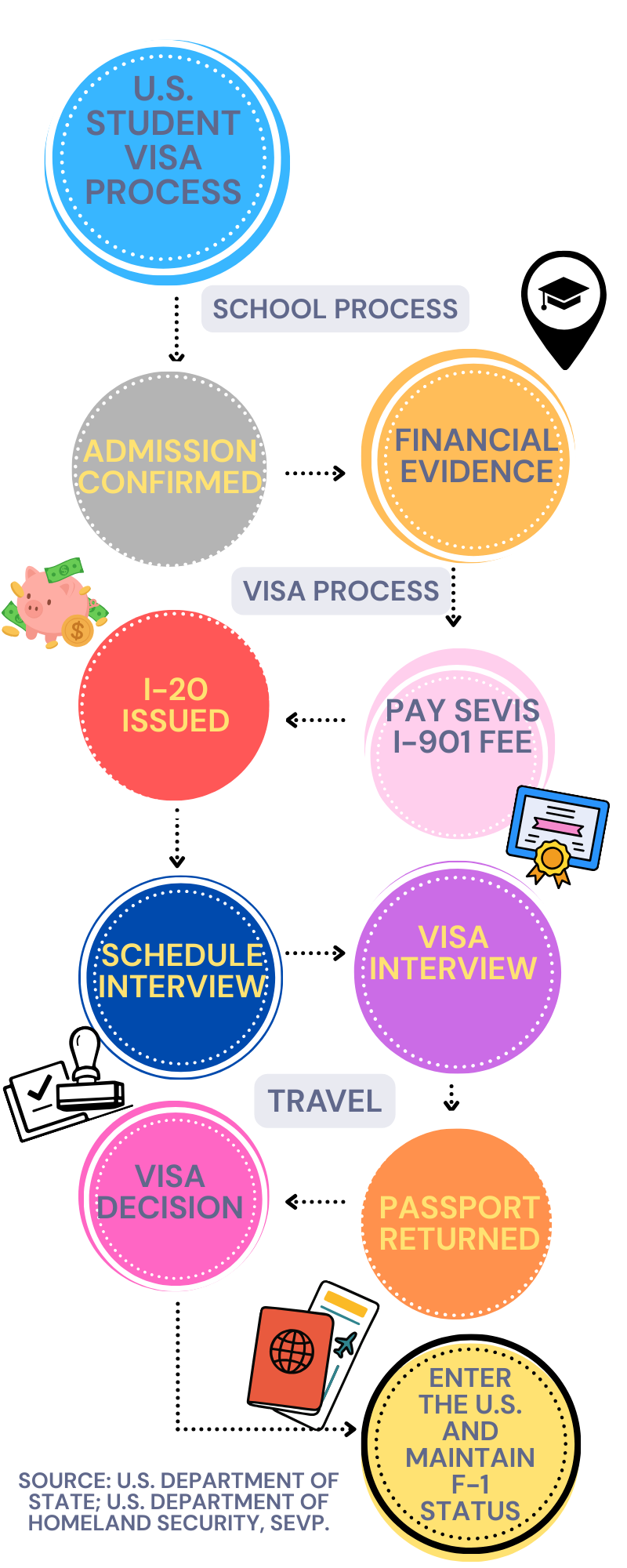
Once you've been admitted and confirmed your enrollment, the visa application process begins. Most students pursue an F-1 student visa, which allows full-time academic study at an accredited institution. The M-1 visa applies to vocational or technical programs. Understanding the process and preparing thoroughly increases your chances of approval.

After you accept admission and submit your enrollment deposit, the institution will request your financial documentation. Once verified, the school's international student office issues a Form I-20, the Certificate of Eligibility for Nonimmigrant Student Status. This document confirms your admission, outlines your program of study, and verifies you have sufficient financial resources. You'll also be registered in the Student and Exchange Visitor Information System (SEVIS), which tracks international students in the United States. You must pay the SEVIS I-901 fee before applying for your visa.

Schedule your visa interview at the U.S. embassy or consulate in your home country as soon as you receive your I-20. Appointments can fill up quickly, especially during peak summer months, so don't delay. Prepare thoroughly for the interview. Common questions include why you chose this specific school and program, how you'll finance your education, what you plan to study, and what your intentions are after graduation. Consular officers assess whether you genuinely intend to study and whether you have strong ties to your home country that will bring you back after your program concludes.

Bring all required documentation to your interview: your valid passport, Form I-20, SEVIS payment receipt, admission letter, financial documents, academic transcripts, and any other materials demonstrating your preparedness. Dress professionally, arrive early, and answer questions clearly and confidently. Be honest. If you don't know an answer, say so rather than guessing or fabricating information.

The interview typically lasts only a few minutes. Most applicants receive approval, though processing times vary. If approved, your passport will be returned with the visa stamp within a few days to a few weeks. You can enter the United States up to thirty days before your program start date listed on your I-20.

If your visa is denied, the consular officer should explain the reason. Common grounds for denial include insufficient financial documentation, weak ties to your home country, or concerns about your intentions. You can reapply, addressing the issues that led to denial. Your school's international student office can advise you on strengthening your application.

Once you arrive in the United States, maintaining your visa status is crucial. This means enrolling full-time, making normal academic progress, keeping your documents current, and following all F-1 regulations. Your designated school official at the international student office can guide you through these requirements. Violations can result in losing your status and being required to leave the country.

What Challenges and Barriers Do International Students Face?

Understanding potential obstacles helps you prepare strategies to overcome them. International students encounter challenges before they even arrive on campus. The application process itself can be confusing when navigating from thousands of miles away without direct access to guidance counselors familiar with U.S. admissions. Information overload from countless websites and forums can create as much confusion as clarity. Financial constraints limit options for many talented students, as the high cost of American education and limited financial aid eliminate certain institutions from consideration. Visa denials occur for various reasons, leaving students with acceptances they cannot pursue. Time zone differences complicate communication with universities when you need to ask questions or resolve issues in real-time. Many applicants underestimate how fundamentally different the U.S. education system is from what they know, leading to missteps in applications.

Academic challenges often surprise international students despite strong academic records in their home countries. Language barriers persist even for students with high English proficiency test scores. Academic English differs significantly from conversational English, with specialized vocabulary, complex sentence structures, and discipline-specific terminology. Accents, whether your own or your professor's, can initially impede comprehension. Idioms, slang, and cultural references in lectures or readings may confuse you. The pace of spoken English in academic settings, especially during rapid-fire class discussions, takes adjustment.

American academic expectations differ from educational systems elsewhere. U.S. classrooms emphasize participation, discussion, and debate. Professors expect students to voice opinions, ask questions, and challenge ideas respectfully. This contrasts with educational cultures that emphasize listening and deference to authority. Collaborative learning through group projects is common, requiring interpersonal skills and cultural navigation. Academic integrity standards, particularly regarding plagiarism and citation, may be more stringent than what you're accustomed to. Understanding these standards from the start prevents serious academic misconduct charges.

Time management challenges arise from balancing coursework with the adjustment period. The American system often requires more independent learning and self-directed study than structured educational systems elsewhere. You'll need to develop new strategies for managing your schedule, meeting deadlines, and seeking help when needed.

Social and cultural challenges affect virtually all international students to varying degrees. Culture shock is real and often follows a predictable pattern: initial excitement, followed by frustration and homesickness, then gradual adaptation and acceptance. This is normal. Homesickness can be intense, especially during holidays when other students go home and you remain on campus. Time zone differences make calling family difficult. You're limited to two suitcases worth of possessions, so your living space lacks personal touches that make it feel like home. You miss familiar foods, languages, and the comfort of understanding all the social cues around you.

Building friendships across cultural differences requires patience and openness. American students may have limited understanding of your home country beyond stereotypes or may conflate your identity with broader regional or cultural categories. You might gravitate toward other international students from your country or region, which provides comfort but can limit your integration into the broader campus community. Finding balance between maintaining your cultural identity and engaging with American campus culture takes conscious effort.

Understanding American social norms, which differ significantly from those in many other countries, requires observation and sometimes trial and error. Informal relationships with professors might feel uncomfortable if you're from a culture emphasizing formality and hierarchy. Co-educational dormitories might challenge your expectations. Dating norms, social drinking culture, and approaches to personal space and communication vary dramatically across cultures.

Some international students experience discrimination or prejudice, whether overt or subtle. Microaggressions, stereotyping, and assumptions based on your accent or appearance occur. Those with visible religious or cultural markers may face additional scrutiny. Building resilience and knowing where to report concerning behavior helps you navigate these difficult situations.

Practical and administrative challenges complicate daily life. The U.S. healthcare system confuses even Americans, and international students must navigate insurance requirements, finding providers, and understanding costs. Opening a bank account requires documentation you may not initially have. Building credit history starts from zero, affecting your ability to rent apartments or get loans. Finding appropriate housing, whether on-campus dormitories or off-campus apartments, involves understanding lease terms and tenant rights. Transportation can be challenging, especially at universities in areas without good public transit, as international students cannot drive without proper licensing and may face obstacles obtaining driver's licenses. Legal work restrictions limit your ability to earn money, creating dependence on financial support from home. Part-time on-campus jobs have limited availability and may not accommodate your schedule.

How Can Communication Make or Break Your Application?

(image 4)

Effective communication throughout the application process and afterward significantly impacts your success. Understanding when to reach out, how to present yourself professionally, and what constitutes appropriate communication helps you build positive relationships with admissions officers, faculty, and university staff.

When communicating with universities, timing and relevance matter. Admissions offices receive thousands of inquiries, so they appreciate concise, well-researched questions. Before contacting them, thoroughly review the university's website, as most basic questions are answered there. Ask thoughtful questions that demonstrate genuine interest and cannot be easily answered through public information. Appropriate questions might include inquiries about specific research opportunities in your field, how the university supports students with your particular background, or clarification about conflicting information you encountered. Inappropriate questions include those with answers readily available on the website ("What is your application deadline?") or requests for admissions chances predictions ("Can you tell me if I'll be admitted?").

Use professional email etiquette. Address recipients appropriately (usually "Dear Admissions Office" or "Dear Professor [Last Name]"), use clear subject lines, write in complete sentences with proper grammar and punctuation, and sign with your full name. Avoid text-speak, excessive informality, or overly emotional language. Keep messages concise and organized.

Demonstrate genuine interest in institutions without becoming excessive. One or two well-timed, substantive communications show interest. Constant emails about minor issues or already-answered questions annoy admissions staff and may harm your application. Follow institutional protocols for communication. If the website says to contact the general admissions email rather than individual counselors, respect that instruction.

Time zone differences require patience. Admissions offices operate during their local business hours, so responses may take twenty-four to forty-eight hours or longer during busy seasons. Plan accordingly rather than expecting immediate replies.

When application portals indicate missing materials, follow up appropriately. Sometimes items are in processing and will be marked received shortly. If materials remain missing after a reasonable period (one to two weeks), contact the admissions office politely to confirm receipt or ask about next steps.

Communication with your recommenders deserves special attention. Many recommenders outside the United States are unfamiliar with American application processes. Provide clear information about requirements, deadlines, and how to submit letters (usually through online portals). Explain what makes effective recommendations in the U.S. context: specific examples, detailed observations about your abilities, and strong endorsements rather than mere description. Give recommenders substantial lead time and send gentle reminders as deadlines approach. Always thank them for their support regardless of your admission outcomes.

Family communication shapes your experience before and during your studies. Have honest conversations with your parents about costs, ensuring everyone understands the full financial commitment. Discuss concerns about distance and safety before making decisions. Managing parental expectations about outcomes helps prevent disappointment if you're not admitted to the most prestigious institutions. Your parents' support, both emotional and financial, is crucial for your success.

Leverage support resources through proactive communication. Build relationships with EducationUSA advisers who can guide you through the process. Connect with current international students at your target schools through social media or email to learn about their experiences. Join online communities and forums where you can ask questions and learn from others' experiences, but verify information from official sources rather than relying solely on anonymous forum posts.

Communication red flags can seriously damage your application. Never plagiarize essays or other materials. Admissions officers read thousands of essays and can identify unoriginal work. They also use plagiarism detection software. Getting caught results in automatic denial and potentially reporting to other institutions. Never misrepresent your achievements, experiences, or any information in your application. Integrity is fundamental, and dishonesty discovered at any point can result in admission rescission or even dismissal after enrollment. Avoid aggressive or entitled communication with admissions staff. Demanding special treatment, becoming argumentative, or displaying arrogance leaves lasting negative impressions. Finally, never ignore official communication channels by attempting to go around established processes to reach decision-makers directly. This shows poor judgment and disrespect for institutional protocols.

Where Can International Students Find Support and Advocacy?

No international student should navigate this journey alone. Numerous organizations and resources exist specifically to support you through the application process and beyond.

Before you even arrive in the United States, EducationUSA provides invaluable support. This U.S. Department of State network operates over 430 advising centers in more than 175 countries and territories. EducationUSA advisers offer free, accurate, comprehensive information about studying in the United States. They provide individual advising sessions where you can discuss your goals and receive personalized guidance. They conduct workshops on essay writing, test preparation, and application strategies. They organize college fairs where you can meet representatives from U.S. universities directly. Pre-departure orientations help you prepare practically and mentally for your transition. The advisers understand both American admissions and the specific context of your home country, making them ideal guides through the process. Find your nearest center through the EducationUSA website.

NAFSA: Association of International Educators is the world's largest nonprofit organization dedicated to international education and exchange. While NAFSA primarily serves education professionals, their policy advocacy work benefits all international students. They advocate for sensible immigration policies, fight against discriminatory regulations, and promote international education's value. Their research and publications help shape how institutions support international students. Understanding the broader policy context affecting international students helps you appreciate the systemic challenges and ongoing advocacy efforts.

The U.S. for Success Coalition brings together more than fifty organizations from higher education, business, policy think tanks, and advocacy groups. This multi-sector coalition advocates for policies that attract and retain international talent in the United States. They focus on issues like Optional Practical Training, employment-based visas, and competitive positioning compared to other countries. They work to ensure the U.S. remains an attractive destination for global talent. While they work at the policy level, their efforts directly affect the opportunities available to you during and after your studies.

Once you arrive on campus, your primary support comes from your institution's International Student Services office, sometimes called International Student and Scholar Services. Every school enrolling international students has dedicated staff who specialize in supporting your needs. International student advisers help with immigration and visa matters, ensuring you maintain legal status. They guide you through practical challenges like obtaining Social Security numbers, understanding tax obligations, and navigating travel. They organize cultural programming, orientation sessions, and social events that help you connect with other international students. They serve as advocates within the institution when you encounter difficulties. Make the international student office your first stop whenever you have questions or concerns. These professionals exist specifically to support your success.

Community organizations extend support beyond campus boundaries. International Students, Inc. (ISI) operates nationwide, connecting international students with local community members for friendship and cultural exchange. While ISI has a faith-based foundation, they welcome students of all backgrounds. Their volunteer network can help you experience American culture, practice English in informal settings, and build relationships outside the university bubble. The Presidents' Alliance on Higher Education and Immigration brings together college and university presidents committed to supporting immigrant and international students. Their advocacy focuses on immigration policy, and they provide resources to institutions about best practices for supporting international students.

Student-led organizations on campus provide peer support and community. Most universities have International Student Associations that organize cultural events, provide mentorship, and advocate for international student interests. Cultural clubs celebrate specific countries or regions, helping you maintain connections to your heritage while sharing your culture with others. Many campuses have International Student Advocacy Committees that work with administrators to improve international student experiences. Joining these organizations helps you find community, develop leadership skills, and effect change on your campus.

Online communities offer connection and information sharing, though you should verify important information through official sources. Forums like College Confidential have sections dedicated to international students where you can ask questions and learn from others' experiences. Reddit communities such as r/IntltoUSA and r/ApplyingToCollege provide informal peer advice. Social media groups organized by country, region, or specific universities connect you with students sharing similar backgrounds and experiences. These platforms can reduce feelings of isolation and provide practical tips, but remember that advice from anonymous internet users may not always be accurate or appropriate for your specific situation.

How Can Universities Better Support International Students?

While you focus on your application, it's valuable to understand what distinguishes institutions that excel at supporting international students. This knowledge helps you evaluate schools during your selection process and understand what to expect. It also provides perspective on areas where advocacy can improve the international student experience.

Pre-arrival support sets the foundation for success. Universities should provide clear, comprehensive information about international student requirements on their websites, organized logically and updated regularly. Virtual campus tours, information sessions, and question-and-answer opportunities scheduled for various time zones help students research from abroad. Connecting admitted students with current international students from similar backgrounds provides authentic perspectives and reduces anxiety. Transparent information about all costs, including hidden fees like health insurance and course materials, helps families plan accurately. Simplified financial documentation processes reduce bureaucratic burden while maintaining necessary verification.

Strong arrival and orientation programs ease the transition to campus life. Extended orientation programs designed specifically for international students provide time to adjust before regular orientation begins. Airport pickup services eliminate the stress of navigating transportation in an unfamiliar place immediately upon arrival. Early arrival options give you time to settle, overcome jet lag, and address practical needs before the semester rush. Welcome kits containing essential information about campus resources, local area details, and practical guides to American life demonstrate institutional care. Support setting up bank accounts, purchasing phone plans, understanding public transportation, and other logistics helps you become independent quickly.

Academic support must address language and cultural differences in learning. English language support should extend beyond proving initial proficiency. Writing centers with staff trained to work with multilingual students help you improve academic writing throughout your studies. Conversation partner programs or English language discussion groups provide informal practice. Tutoring services should be sensitive to language barriers and avoid making assumptions about academic capability based on language proficiency. Faculty training on effectively teaching international students helps professors understand different educational backgrounds and adjust their pedagogy accordingly. First-year seminar courses designed for international students create cohorts of peers facing similar adjustments. Academic advising that understands international credentials and can guide course selection appropriately ensures you make informed decisions.

Cultural integration requires intentional programming and institutional culture change. Universities should mandate cultural competency training for all students, faculty, and staff, not just those working directly with international students. This training builds awareness about different communication styles, values, and expectations. Structured programs connecting domestic and international students, such as conversation partner programs or buddy systems, foster genuine friendships rather than leaving integration to chance. Recognizing and celebrating international holidays and traditions, not just American ones, validates international students' identities. Creating international student lounges and dedicated spaces provides gathering places for community building. Cultural events that authentically celebrate diversity, rather than perpetuating stereotypes, educate the entire campus community.

Mental health and wellness support must be culturally competent and proactive. Counseling services should include staff trained in cross-cultural counseling who understand the specific stressors international students face. Peer support groups specifically for international students provide safe spaces to share experiences without judgment. Proactive outreach from counseling services, rather than waiting for students to seek help, is essential since many cultures carry stigma around mental health services. Resources addressing unique stressors like visa anxiety, family separation across great distances, and pressure from family expectations help students navigate these challenges. Wellness programming that considers different cultural attitudes toward self-care and mental health makes services more accessible.

Career development services must understand international students' unique situations. Specialized career counseling acknowledging visa restrictions helps students plan realistically. Workshops on American job search strategies, resume conventions, and workplace culture prepare students for unfamiliar employment landscapes. Facilitating connections to employers who sponsor H-1B visas increases post-graduation employment opportunities. Ensuring internship opportunities comply with immigration regulations while providing valuable experience requires careful coordination. Alumni mentorship programs connecting current students with international graduates who successfully launched careers provide role models and networks.

Immigration and legal support deserves adequate resources. Dedicated full-time immigration advisers, not staff juggling this responsibility among many others, ensure expertise and availability. Proactive communication about maintaining visa status prevents violations that could jeopardize students' ability to remain in the United States. Efficient travel signature processes that accommodate academic schedules allow students to travel without unnecessary delays. Clear guidance about Optional Practical Training, Curricular Practical Training, and work authorization helps students maximize opportunities within legal constraints.

Finally, institutions should collect and analyze data about international student outcomes. Tracking graduation rates, retention rates, and satisfaction among international students separately from domestic students reveals specific areas needing improvement. Regular surveys identifying pain points help administrators understand student experiences. Using data to continuously improve services ensures that support evolves based on evidence rather than assumptions. Institutions that excel in these areas create environments where international students don't just survive but truly thrive.

International Student Application Checklist

(image 5)

Two Years Before Enrollment ? Research U.S. higher education system and types of institutions
? Identify your academic interests and potential majors
? Connect with EducationUSA adviser or school counselor
? Begin preparing for standardized tests (SAT/ACT/GRE/GMAT)

One Year Before Enrollment ? Take or retake standardized tests
? Take English proficiency test (TOEFL/IELTS)
? Request official transcripts
? Create preliminary college list (reach, target, safety schools)
? Identify recommenders and request letters
? Research scholarship opportunities

6-8 Months Before Deadline ? Finalize college list
? Send test scores to chosen schools
? Complete financial aid applications (if applicable)
? Draft personal statements and supplemental essays
? Obtain necessary financial documents (bank statements, sponsor letters)

Application Period ? Submit applications before deadlines
? Complete certification of finances for each school
? Monitor application portals for missing materials
? Prepare for potential interviews
? Send mid-year grade reports (if required)

After Acceptance ? Compare financial aid offers
? Accept admission offer and submit deposit
? Apply for student visa (F-1)
? Attend pre-departure orientations
? Arrange housing
? Purchase health insurance
? Book travel to campus

Conclusion

(image 6)

The journey to studying in the United States as an international student is undeniably complex, filled with unfamiliar requirements, significant financial considerations, and the challenge of navigating systems designed primarily for domestic applicants. Yet hundreds of thousands of students successfully complete this process each year, and you can too. The key lies not in having perfect credentials or unlimited resources, but in starting early, staying organized, asking for help when you need it, and maintaining persistence when obstacles arise.

Remember that the extensive resources described in this guide exist specifically to support you. EducationUSA advisers in your home country provide free guidance grounded in deep knowledge of both American admissions and your local context. International student services offices at universities across the United States employ professionals dedicated to your success. Online communities connect you with peers sharing similar experiences. National organizations advocate for policies that benefit international students. You are not alone in this process.

American colleges and universities actively seek international students because you bring invaluable perspectives that enrich campus communities. Your different educational background challenges domestic students to think more broadly. Your cultural insights foster cross-cultural understanding that prepares all students for an interconnected world. Your presence makes campuses more dynamic, innovative, and globally engaged. Institutions want you to succeed not just for enrollment numbers but because they genuinely believe in international education's transformative power.

As you embark on this journey, maintain perspective. Rejection from one institution doesn't define your worth or potential. The most prestigious school isn't necessarily the best fit for your specific goals and needs. Success comes from finding an institution where you can thrive academically, grow personally, and build the foundation for your future. Trust the process, believe in yourself, and know that the challenges you overcome during this application journey are building resilience and skills that will serve you throughout your life.

Your international education experience begins not when you step onto campus but right now, as you take the first step toward this ambitious goal. Start early, use the checklist provided to stay organized, reach out to support resources without hesitation, and approach each phase of the process with diligence and authenticity. The destination is worth the journey, and thousands of alumni who walked this path before you stand as proof that this dream is achievable. Your story is about to begin.


© 2025, Scholaro, Inc. All Rights Reserved. Your use of this service is subject to our Terms of Service and Privacy Policy.